
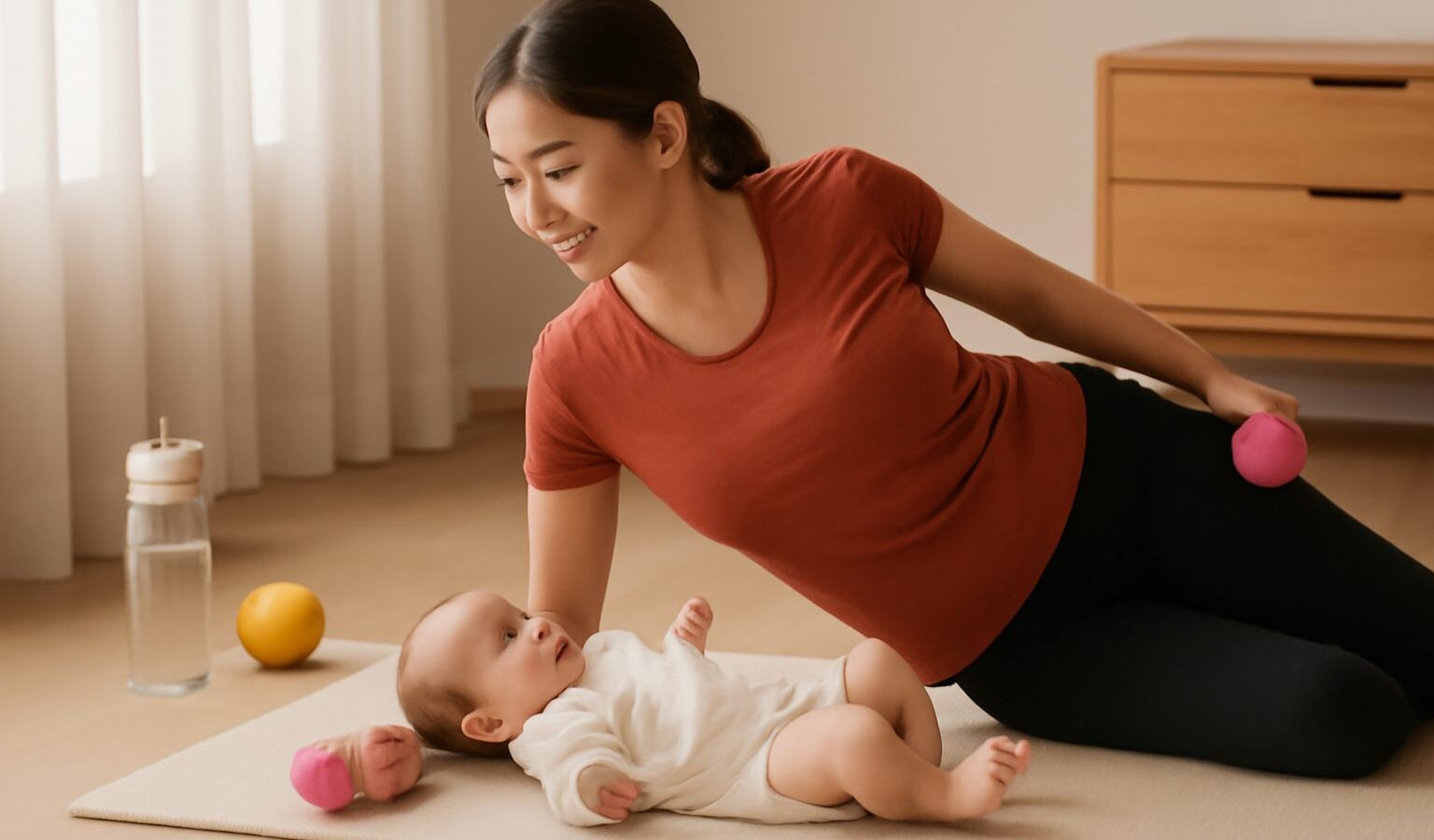
For many mothers in Singapore, the postnatal check at around six weeks after delivery feels like a starting line. Confinement is over, the baby has some sort of routine, and you may be itching to move again. Postnatal fitness in Singapore is not about “bouncing back”, though. It is about rebuilding strength in a body that has just done something enormous, at a pace that fits broken sleep, feeding schedules and our hot, humid weather.
This guide walks through how to approach exercise after that check, in stages, with local practicalities in mind. It is general information, not medical advice. Your obstetrician, polyclinic doctor or a women’s health physiotherapist is the right person to clear you for specific activities.
What the Six-Week Check Does and Does Not Mean
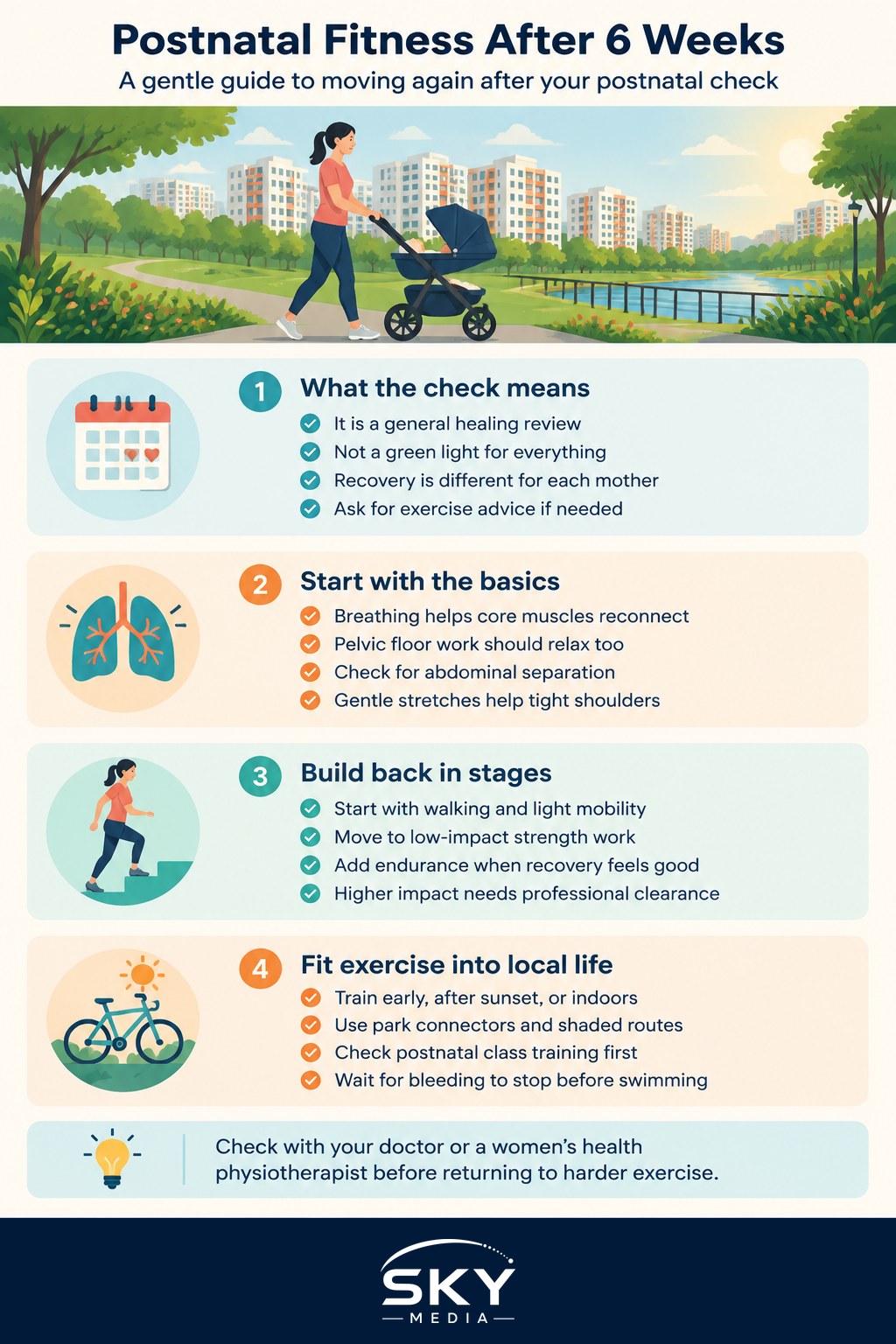
The six-week postnatal review is a general check on how you are healing. Your doctor may look at your blood pressure, any stitches or caesarean wound, bleeding, mood and contraception. If you ask, many will also give guidance on exercise.
What the check is not:
- It is not a green light for everything. Being cleared to exercise usually means you can start building back gradually, not that you can return straight to running, heavy lifting or high-intensity classes.
- It is not the same for everyone. Recovery after a caesarean section, an assisted delivery, significant tearing or a complicated pregnancy can take longer.
- It may not include a pelvic floor or abdominal check. If you want those assessed, ask your doctor for a referral to a women’s health physiotherapist. Many hospitals in Singapore offer this service, and some private clinics do too.
Before your appointment, write down the activities you want to return to. “Can I go back to my spin class?” gets a far more useful answer than “Can I exercise?”
Start With the Foundations: Breathing, Pelvic Floor and Core
The first stage of postnatal exercise is quiet and unglamorous, and it is the most important. Pregnancy and birth stretch and strain the pelvic floor muscles and the abdominal wall. Skipping this stage is a common reason women later struggle with leaking, back pain or a bulging tummy during exercise.
- Breathing and core connection. Gentle diaphragmatic breathing, where you breathe into your ribs and let the pelvic floor relax, then lightly lift it as you breathe out, helps the deep core muscles work together again.
- Pelvic floor exercises. Often called Kegels, these involve squeezing and lifting the muscles you would use to stop passing urine or wind, then fully relaxing. A physiotherapist can confirm you are doing them correctly, because many people bear down instead of lifting.
- Checking for abdominal separation. Diastasis recti is a widening of the gap between the two sides of the abdominal muscles. It is common after pregnancy. A physiotherapist can assess it and suggest suitable exercises; avoid self-diagnosing from videos.
- Gentle mobility. Feeding and carrying a baby leave many mothers with tight shoulders and upper back. Simple stretches and posture work help.
Build Back in Stages
Every woman’s timeline differs, but most postnatal programmes follow a similar order. Use the table as a rough guide to what each stage looks like, and move on only when the current stage feels easy and symptom-free.
| Stage | Typical activities | Signs you may be ready to progress |
|---|---|---|
| Foundations | Breathing, pelvic floor work, gentle stretching, short walks | Walking feels comfortable, no heaviness or leaking |
| Low-impact strength | Bodyweight squats, glute bridges, modified planks, light weights, postnatal pilates | Exercises feel controlled, no doming of the tummy or back pain |
| Building endurance | Longer brisk walks, swimming once cleared, cycling, low-impact classes | You recover well the next day despite poor sleep |
| Higher impact | Jogging, jumping, HIIT, running clubs, heavier lifting | A professional has cleared you and you have no pelvic symptoms |
Many physiotherapists suggest waiting until at least a few months postpartum before running, and only after strength work has been in place for a while. Ask your own physiotherapist what applies to you.
Making Exercise Work in Singapore
The local environment adds a few practical considerations.
Heat and humidity. Walk or train early in the morning or after sunset, especially if you are breastfeeding, since you need extra fluids. Air-conditioned gyms, community club studios and shopping mall walks are reasonable alternatives on very hot days.
Pram walks in the neighbourhood. Park connectors, HDB estate loops and neighbourhood parks make easy routes for walks with a pram. Choose shaded paths, bring water and avoid the midday sun for both you and your baby.
Postnatal classes. Gyms, studios and some hospitals run postnatal pilates, mum and baby classes, and pelvic floor workshops. When choosing, check whether the instructor has specific postnatal training, whether they ask about your delivery and symptoms, and whether babies are welcome in the room. We do not recommend specific providers, so compare a few and ask about trial sessions and cancellation terms.
Swimming. Doctors commonly advise waiting until bleeding has stopped and any wounds have healed before swimming. Confirm with your doctor first.
Confinement traditions. Some families follow confinement practices that discourage activity for the first month. Our guide to postnatal and confinement care explains these. Once that period ends, a gradual return to movement can sit comfortably alongside family traditions. Some mothers also find postnatal massage a helpful complement to exercise for relaxation and muscle tension.
Fitting Workouts Around a Newborn
Time is the biggest barrier for most new parents. Realistic approaches work better than ambitious plans.
- Think in ten-minute blocks. A short pelvic floor and core session during a nap counts.
- Exercise with your baby. Pram walks, floor play with gentle stretches, and baby-wearing walks (once cleared and if comfortable) all add up.
- Feed first. If you are breastfeeding, feeding or pumping before exercise is usually more comfortable. A supportive sports bra matters.
- Share the load. Ask your partner, family or helper to take the baby for half an hour a few times a week.
- Rest counts too. On nights with very little sleep, a walk or stretching session may be wiser than a hard workout. Recovery weeks are a normal part of training at any stage.
Warning Signs to Stop and Get Help
Stop exercising and speak to your doctor or physiotherapist if you notice any of these:
- Leaking urine or stool during exercise or when coughing or sneezing
- A feeling of heaviness, dragging or bulging in the vagina
- Pain in the pelvis, back, hips or caesarean scar
- Bleeding that increases or returns after it had settled
- Doming or bulging along the middle of the tummy during movement
- Dizziness, chest pain or unusual shortness of breath
These symptoms are common and often treatable, so there is no need to feel embarrassed. Seek urgent medical help for heavy bleeding, chest pain or breathlessness.
Look After Your Mind as Well as Your Body
Exercise can lift mood, but it is not a cure for postnatal depression or anxiety. If you feel persistently low, anxious or unable to cope, talk to your doctor or polyclinic. Our article on postnatal depression and mental health covers the signs and where to find support in Singapore.
Be patient with yourself. Your body took nine months to change, and it is reasonable to give it many months to rebuild. Progress that feels slow is still progress.
Frequently Asked Questions
Can I breastfeed and do postnatal exercise at the same time? Yes, most mothers can, but comfort and fluids matter. Feeding or pumping beforehand usually feels better, and a supportive sports bra helps. Drink extra water, especially in Singapore’s heat, and tell your doctor or lactation consultant if you notice a drop in supply or breast pain.
Is postnatal pilates better than going to the gym? Neither is automatically better; what matters is the stage you are at. Postnatal pilates often suits the early low-impact phase because it focuses on breathing, the pelvic floor and the deep core. A gym works later for strength once you are cleared. Check the instructor has postnatal training.
When can I start running again after giving birth? Running usually comes late in the process. Many physiotherapists suggest waiting at least a few months and building strength first, with no leaking, heaviness or pain during daily activity. Your doctor or a women’s health physiotherapist can say when your own body is ready.
Do I need to see a women’s health physiotherapist after a caesarean? It is worth considering, though not compulsory. A caesarean still involves the abdominal wall, and pregnancy itself strains the pelvic floor. A physiotherapist can check your scar, core and pelvic floor, then give a tailored plan. Ask your obstetrician for a referral.
Is it normal to leak urine when I jump or cough months after birth? It is common, but it is not something you simply have to live with. Leaking often improves with guided pelvic floor training. Stop high-impact activity until it is assessed, and see your doctor or a women’s health physiotherapist rather than relying on pads alone.
Official sources: HealthHub