

Plans change. A family illness, a work posting overseas, a pregnancy, a ROM (Registry of Marriages) date that no longer lines up, or simply needing more time can all mean you have to postpone a wedding in Singapore. Postponing is very different from cancelling. When you move the date rather than call it off, most of your money can often be carried forward, as long as you act quickly, read your contracts and talk to vendors in the right order.
This guide focuses on rescheduling, step by step, so you keep as much of your deposits as possible and your guests stay in the loop.
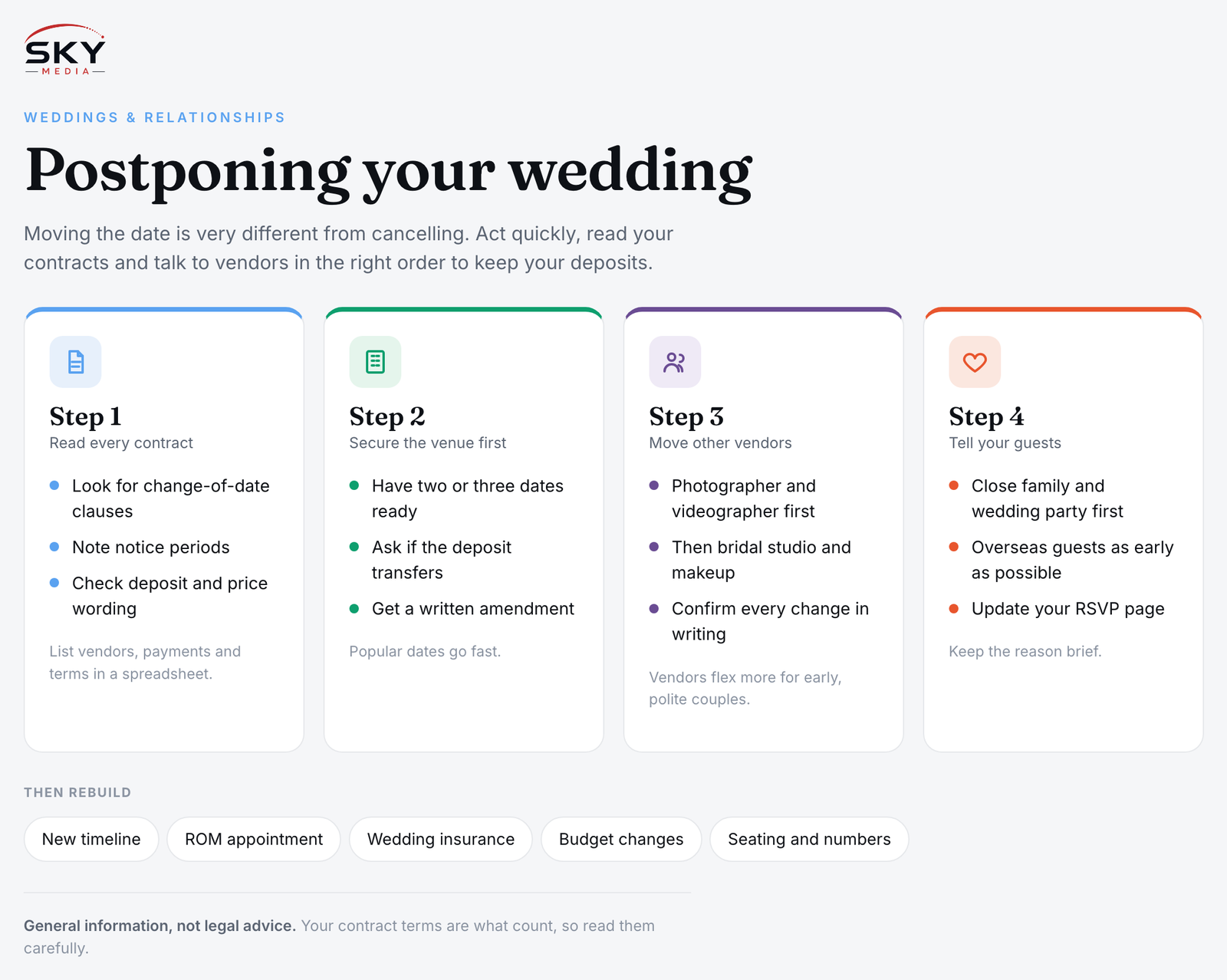
Step 1: Pause and Read Every Contract First
Before you call anyone, gather all your agreements: banquet or venue, bridal studio, photographer and videographer, makeup artist, decor, band or emcee, transport and any hotel room blocks. For each one, look for:
- Postponement or change-of-date clause. Some contracts allow one free date change within a set period, others charge an admin fee, and some treat any change as a cancellation.
- Notice period. Many clauses only apply if you give notice a minimum number of days or months ahead.
- Deposit wording. Check whether deposits are “non-refundable”, “non-refundable but transferable”, or refundable in part.
- Price adjustment. Venues may charge the prevailing rate for the new date, especially if you move from a weekday to a Saturday or into an auspicious month.
- Force majeure. This covers events outside anyone’s control. It may or may not apply to your reason, so read it carefully.
Make a simple spreadsheet listing each vendor, amount paid, balance due, notice needed and what the contract says about postponement. Our guide on understanding wedding vendor deposits and refunds explains the common deposit terms in more detail.
This is general information, not legal advice. If a contract is unclear or a large sum is involved, consider getting advice before you sign anything new.
Step 2: Secure the Venue Date Before Anything Else
The venue is usually the hardest booking to move and the one your whole plan hangs on. Contact the venue first and ask:
- Which alternative dates are available within the window your contract allows.
- Whether the deposit transfers in full to the new date.
- Whether the package, menu and pricing stay the same or change.
- Whether there is a written amendment or new agreement to sign.
Have two or three candidate dates ready. If you follow Chinese almanac dates or need to avoid Ramadan, the seventh lunar month or exam periods for younger relatives, sort that out with family before you call, so you can commit quickly. Popular dates go fast, and a hesitant day can cost you the slot.
Step 3: Move Your Other Vendors in Order of Difficulty
Once the venue date is held, work through the rest from the hardest to rebook to the easiest.
- Photographer and videographer. Popular teams book out far ahead. If they are unavailable, ask whether they can send an associate or transfer your deposit to an engagement or anniversary shoot.
- Bridal studio and gowns. Check whether alterations can be paused and whether a gown rental can be rescheduled.
- Makeup artist and hair. Freelancers may have a fixed policy, so ask early.
- Emcee, live music and entertainment.
- Decor, florist and cake. Perishable orders may need cancelling and re-ordering; ask whether any non-perishable items already made can be kept.
- Transport and hotel room blocks.
When you speak to each vendor, be polite, give as much notice as possible and ask what they can do rather than demanding a refund on the spot. Vendors are far more flexible with couples who are reasonable and early. Our article on managing wedding vendors and contracts has templates for keeping these conversations organised.
Get everything in writing. Even if a vendor agrees by phone, follow up with a short email or message confirming the new date, what has been paid, what remains and any extra charges. Save these with your contracts.
What Usually Happens to Common Deposits
| Vendor type | Common outcome when postponing | What to ask |
|---|---|---|
| Banquet or venue | Deposit often transferable within a set window, price may be adjusted | Is there a change-of-date fee, and is the package rate locked? |
| Photographer or videographer | Often transferable if they are free; else credited to another shoot | Can an associate cover the new date? |
| Bridal studio | Usually transferable, but fittings and alterations may restart | Do any ordered items need to be re-made? |
| Florist, cake, decor | Perishables may be forfeited; design fees often carried over | What has already been bought for us? |
| Hotel room block | Depends on the hotel’s attrition and cancellation terms | Can the block move with the banquet? |
These are typical patterns only. Your contract is what counts.
Step 4: Tell Your Guests Clearly and Kindly
Once the venue and key vendors are confirmed, tell your guests. If you send word before the new date is fixed, you will just have to update everyone again.
- Close family and the wedding party first, by phone or in person.
- Everyone else next, with a short message or a printed or digital change-of-date card. Include the new date, venue (if it changed) and when they will hear more.
- Overseas guests need extra care. They may have flights and hotels booked. Tell them as early as possible so they can check their own change policies.
- Keep the reason brief. You do not owe anyone a detailed explanation. “We have decided to move our wedding to a new date” is enough.
- Update your wedding website or RSVP form so the old date disappears everywhere.
If your guest list shrinks or grows with the new date, revisit your seating and numbers with the venue.
Step 5: Rebuild the Timeline for the New Date
A postponement resets a lot of deadlines. Work backwards from the new date and set fresh reminders for final payments, menu tasting, gown fittings, invitation printing and the RSVP cut-off. Check also:
- Your ROM solemnisation. If you had planned to solemnise on the wedding day or close to it, check the current rules on the Registry of Marriages website for how and when you can change an appointment or the solemnisation date. Requirements can change, so confirm directly.
- Wedding insurance. If you bought a policy, read its wording on postponement and contact the insurer before making changes. Coverage depends on the policy terms.
- Budget. Add up any change-of-date fees, price increases and lost perishables. Decide where to absorb them, perhaps by trimming decor or favours.
Postponing vs Cancelling: Knowing Which You Are Doing
Moving the date keeps the plan alive and lets vendors carry your money forward. Cancelling usually triggers forfeiture clauses and very different conversations. If you are unsure whether the wedding will go ahead at all, be honest with yourselves before telling vendors it is “just a postponement”, since a later cancellation may cost more. If a vendor goes out of business between the two dates, see our guide on what to do if your bridal studio or wedding vendor closes down.
A Short Checklist
- Read every contract and note postponement terms.
- Hold the venue’s new date in writing first.
- Contact the remaining vendors from hardest to easiest to rebook.
- Confirm every change by email or message.
- Tell family first, then all guests, with overseas guests prioritised.
- Rebuild the timeline, budget and ROM plans for the new date.
A postponed wedding still ends in a wedding. Handled calmly and in the right order, it can feel less like a setback and more like extra time to enjoy the planning.