
Taking your own car to Batam, Bintan or further into Indonesia by vehicle ferry is a very different experience from driving into Malaysia. There is no causeway to cross. Instead, you drive car onto ferry ramps, park on a moving vessel, and arrive in a country with its own vehicle entry rules. Good preparation makes the whole trip smoother and safer for your car and your passengers.
This guide focuses on the car itself: getting it ready, securing what is inside, and knowing what usually happens at the port. For holiday ideas once you arrive, see our guide to Batam from Singapore.
A note before you start: vehicle ferry services, routes, schedules and booking rules change, and Indonesia’s requirements for foreign vehicles are set by Indonesian authorities. Check the current details with the ferry operator, the Indonesian embassy or relevant agency, your insurer, and the Singapore authorities before you plan dates. This article is general information, not legal advice.
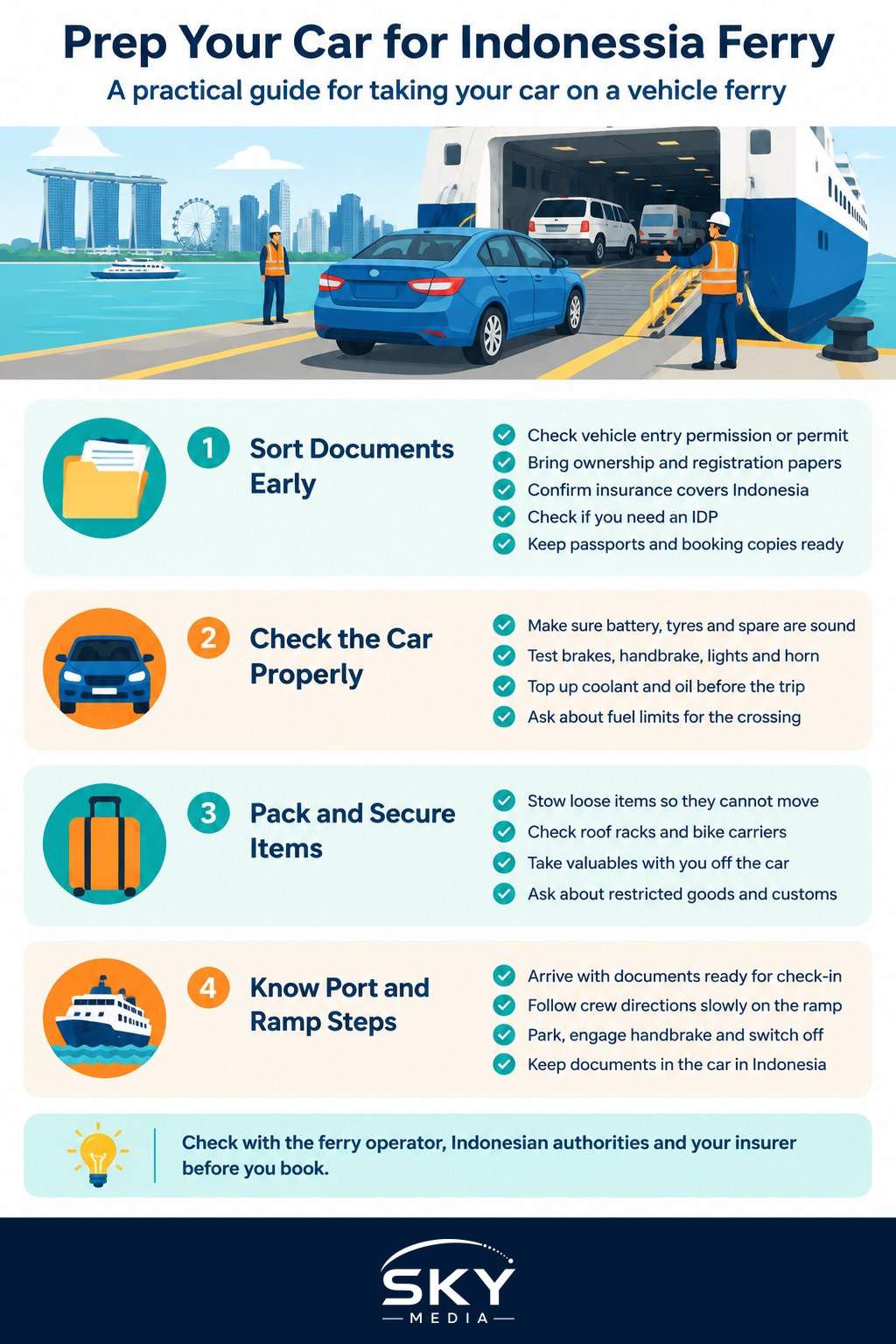
Paperwork to Sort Out Weeks Before
Most problems at the port come from missing documents rather than the car. Start early.
- Vehicle entry permission for Indonesia. Foreign-registered vehicles generally need approval or a permit to enter Indonesia temporarily. Ask the ferry operator and the relevant Indonesian authority what applies to your route and how long it takes.
- Ownership and registration documents. Bring your vehicle log card details and proof of ownership. If the car is under hire purchase or company-owned, check whether you need a letter of authorisation.
- Insurance that works in Indonesia. Many Singapore motor policies do not automatically cover Indonesia. Ask your insurer directly, in writing, whether you are covered and what you need to buy separately.
- Driving licence. Check whether you need an International Driving Permit alongside your Singapore licence.
- Passports. Everyone on board needs valid passports. Check the validity your destination requires.
- Ferry booking confirmation. Vehicle spaces are limited, so book well ahead, especially around long weekends and school holidays.
Keep printed and digital copies in a folder you can reach easily from the driver’s seat.
Mechanical Checks Before the Trip
Ferry decks have steep ramps, tight turns and long waits. Your car should be in good shape before you leave.
- Battery. You will switch the engine off on deck and may wait with lights or accessories on. A weak battery can leave you stuck on a ramp, holding up every car behind you.
- Tyres and spare. Check pressures, tread and that the spare and jack are present and working.
- Brakes and handbrake. Your handbrake will hold the car on a moving vessel. Make sure it is properly adjusted.
- Ground clearance. Lowered cars can scrape on ramp transitions. If your car is modified, ask the operator about ramp angles in advance.
- Fluids and fuel. Top up coolant and oil. For fuel, ask the operator about any limits on how full the tank can be for the crossing.
- Lights and horn. Indonesia’s traffic and roads may differ from what you are used to, so make sure everything works.
Our checklist for what to check before a long drive covers these points in more detail.
Securing Items Inside and Outside the Car
The vessel will move with the sea, and you may not be allowed to stay in the car during the crossing.
- Loose items in the cabin. Put bags, water bottles and gadgets in the boot or footwells so nothing slides or flies around.
- Roof racks and bike carriers. Check straps and locks, and confirm with the operator if overall height affects your booking.
- Valuables. Take passports, wallets, phones and anything precious with you when you leave the car on deck.
- Dashcam and accessories. Some drivers switch dashcams to parking mode or off, as the vessel’s movement may trigger constant recording.
- Restricted goods. Ask the operator and check customs rules on both sides about items like alcohol, tobacco, fuel cans, food and anything else that may be controlled.
What Usually Happens at the Port
Exact procedures vary by terminal and operator, but this table shows the general flow most drivers can expect.
| Stage | What usually happens | What you should do |
|---|---|---|
| Arrival at terminal | Queue for check-in and vehicle inspection | Arrive by the time the operator specifies, with documents ready |
| Immigration and customs | Officers check passports, vehicle documents and possibly the car | Have passengers ready; follow officer instructions calmly |
| Boarding the ferry | Crew direct you up the ramp to a parking spot | Drive slowly, follow hand signals, do not rush the ramp |
| Parking on deck | Cars are packed closely, sometimes chocked or strapped | Engage handbrake, leave in gear or park, switch off the engine |
| During the crossing | Passengers usually go to the passenger area | Take valuables, lock the car, note your deck and position |
| Disembarking | Crew release cars in order | Return when called, start only when told, drive off slowly |
Driving On and Off the Ramp Safely
Ramps can feel intimidating the first time. A few habits help.
- Drive at walking pace and keep both hands on the wheel.
- Watch the crew member guiding you rather than your mirrors alone. They can see your wheels and clearance.
- If you drive a manual, use first gear and avoid riding the clutch on the incline.
- Fold in your mirrors if asked, as vehicles may be parked very close together.
- Do not turn the engine on early while waiting to disembark. Fumes build up quickly in enclosed decks.
Arriving in Indonesia With a Singapore Car
Once you are off the vessel, remember that you are now driving in a different system.
- Indonesia drives on the left, like Singapore, but road conditions, signage and traffic behaviour can differ. Take it slowly at first.
- Keep your vehicle documents and permit in the car at all times while in Indonesia.
- Know how to contact your insurer and roadside help from Indonesia.
- Respect any time limit on your vehicle’s stay, and plan your return booking early.
If you want more context on life across the water, our guide to moving to Singapore from Indonesia shares useful background on the links between the two countries.
A Final Pre-Departure Checklist
The night before, run through this quick list:
- Ferry booking, passports, licence and permit copies in one folder
- Insurance confirmation that explicitly covers Indonesia
- Battery, tyres, spare and handbrake checked
- Loose items packed away, valuables in a carry bag
- Operator’s arrival time and terminal confirmed
- Emergency contacts saved on every adult’s phone
With the car prepared and paperwork sorted, the crossing itself is usually the easy part.
Frequently Asked Questions
Can I take my hire-purchase or company car on a ferry to Indonesia? You may need a letter of authorisation if the car is under hire purchase or company-owned, plus proof of ownership. Ask the ferry operator and the relevant Indonesian authority what applies, and sort this out weeks before the trip.
Will my Singapore car insurance cover me in Indonesia? Many Singapore motor policies do not automatically cover Indonesia. Ask your insurer directly, in writing, whether you are covered and what you must buy separately, before you book the ferry.
Can I stay inside my car during the ferry crossing? You may not be allowed to, and passengers usually go to the passenger area. Lock the car, take passports, wallets and phones with you, and note your deck and position. Follow the operator’s instructions.
What if my car is lowered or modified for the ramp? Lowered cars can scrape on ramp transitions, so ask the operator about ramp angles before you book. Also check with the operator if roof racks or bike carriers change your overall height.
Why should I avoid starting the engine while waiting to disembark? Fumes build up quickly on enclosed decks. Start the engine only when the crew tells you to, and then drive off slowly while following their hand signals. Starting early also blocks the cars around you with exhaust.