

Being offered a scholarship is a real achievement, and it can open doors to a funded education and a clear career start. But most scholarships in Singapore come with a bond, a commitment to work for the provider for a set period afterwards. A scholarship bond decision in Singapore deserves careful, unhurried thought, because it shapes not just your studies but the early years of your career. This article walks through what to weigh and the questions to ask. It is general information only, not financial or legal advice, so please read the actual contract and seek proper advice before you decide.
Understand What a Bond Actually Involves
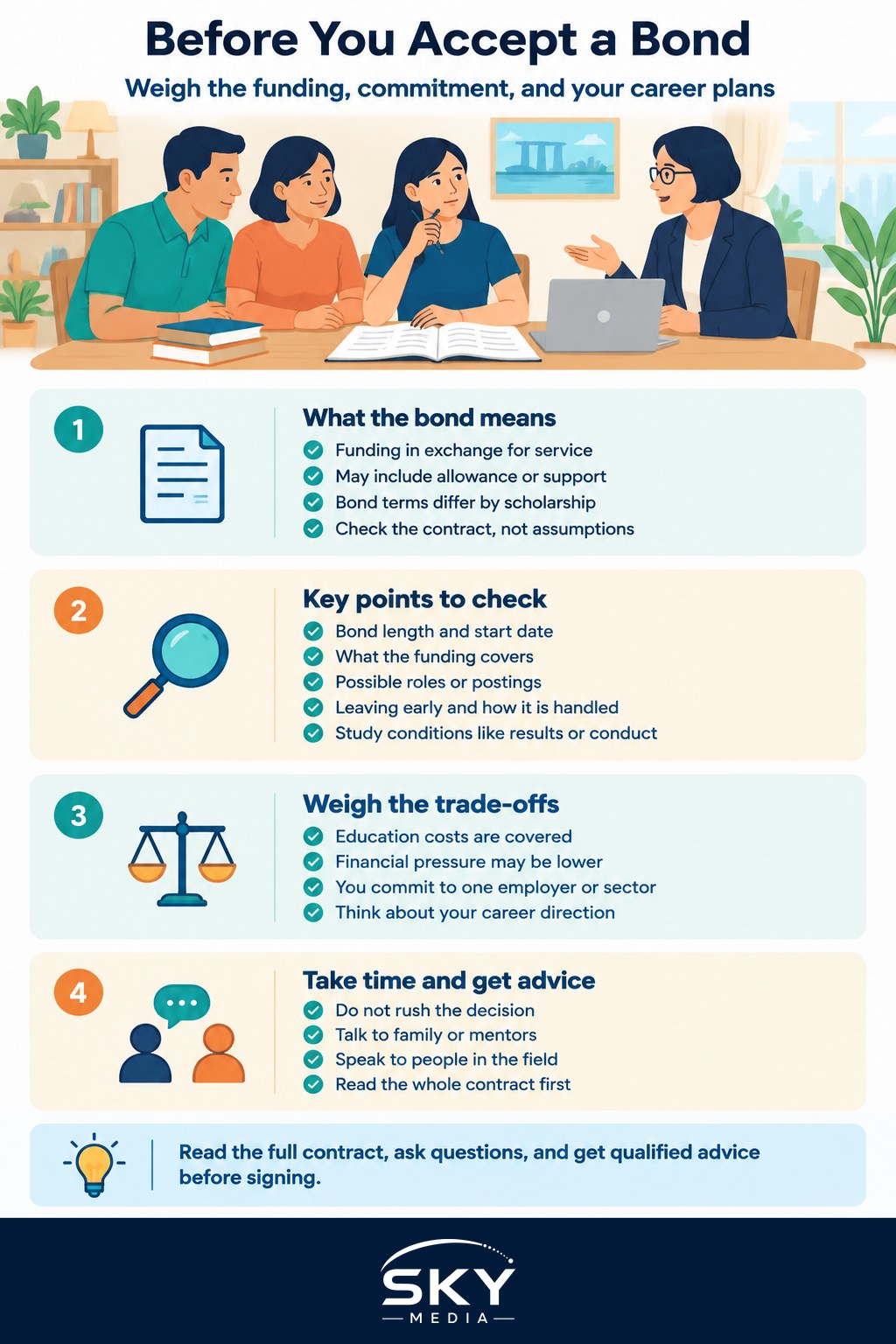
A scholarship bond is a two-way agreement. In return for funding your studies, and sometimes an allowance or other support, you agree to serve the provider for an agreed length of time after you graduate. The specific terms vary a great deal from one scholarship to another, and there is no single standard, so never assume the details based on what a friend’s bond looked like.
The only reliable source of the terms is the contract itself, together with what the provider tells you directly. When you have an offer in hand, read every clause slowly and ask the provider to explain anything unclear. In particular, get a clear picture of:
- The length of the bond and when it starts counting.
- What the funding covers, and whether an allowance or other benefits are included.
- The kind of work, roles, or postings you may be assigned.
- What happens if you want to leave early, and how any break of the bond is handled.
- Any conditions during your studies, such as results or conduct requirements.
Do not rely on rough figures or assumptions for any of these. Bond lengths, what counts as breaking the bond, and how an early exit is settled differ by provider, so read the exact wording and confirm it in writing. If a clause has serious financial or legal weight, it is worth having someone qualified look over it with you.
Weigh the Benefits Against the Commitment
A bond is not automatically good or bad. It is a trade, and whether it suits you depends on your own situation and plans. On one side sit real benefits: your education is funded, financial pressure eases, and you often step into a job with a clear path rather than a scramble after graduation. Many people find a scholarship gives them experience and stability they value.
On the other side is the commitment. A bond ties you to one employer or sector for a fixed stretch of your early career, which is exactly when many people like to explore, switch fields, or try something unexpected. Ask yourself honestly whether you can see yourself in that line of work for the whole bond period, and how you would feel if your interests shifted along the way. Think too about how the bonded role fits the direction you want your career to take. Our guide to choosing a course and career fit can help you think that through before you commit.
There is also the funding angle to consider alongside other ways of paying for study. A bond is one route, but not the only one, and it is worth understanding the alternatives so you are comparing fairly. Our overview of financing your university education sets out the wider picture, and if you are still choosing where to study, choosing a university in Singapore may help. The right choice balances the value of the funding against how much flexibility you are comfortable giving up.
Take Your Time and Get Good Advice
This is a big decision, so resist any pressure to rush. Talk it through with people you trust, such as family, mentors, teachers, or someone already working in the field. Others who have taken a similar path can offer honest, grounded perspectives on what the commitment really feels like day to day.
Where the terms carry significant financial or legal consequences, seek proper professional advice rather than guessing. Ask the provider directly about anything you are unsure of, and keep their answers in writing. Above all, do not sign until you have read and genuinely understood the whole contract.
A scholarship bond decision in Singapore is ultimately about matching a generous opportunity to your own goals, temperament, and plans for the years ahead. Understand the real terms from the contract, weigh the funding against the commitment, take your time, and lean on trusted and qualified advice. Decide with clear eyes and you can move forward with confidence, whichever way you choose.