
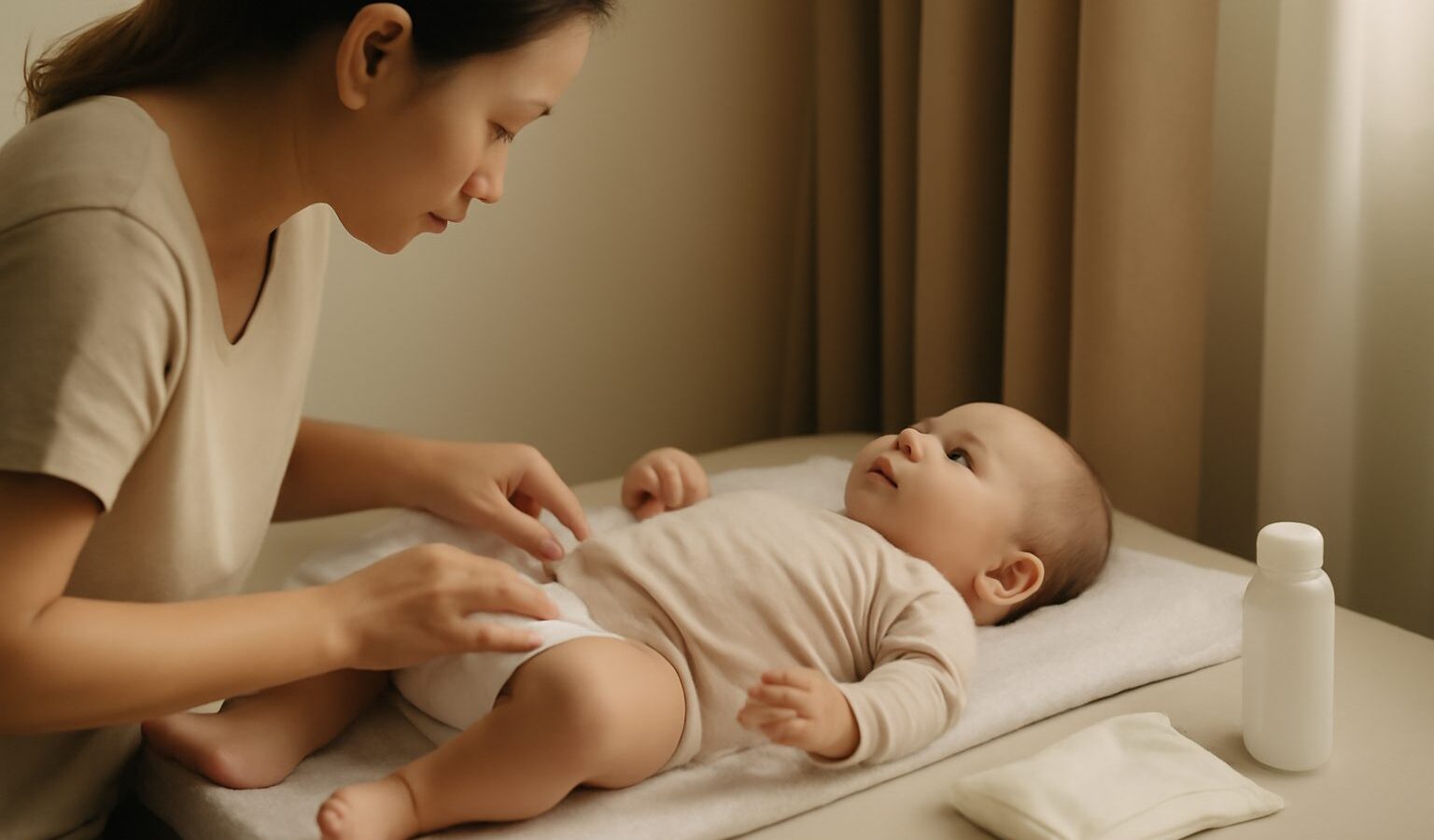
Almost every baby gets a sore, red bottom at some point, and it can tug at a parent’s heart to see. Nappy rash Singapore families deal with is common, usually mild, and very often preventable with a few simple habits. The warm, humid climate here can make the skin around the nappy a little more prone to irritation, so a gentle routine goes a long way. This is general information rather than medical advice, so please see your doctor if you are worried.
What causes nappy rash
Nappy rash is irritation of the delicate skin under the nappy. The most common trigger is prolonged contact with wee or poo, which breaks down the skin’s natural protection. A nappy that is left on too long, rubbing from a nappy that is too tight, and sensitivity to wipes or products can all play a part.
In our warm and humid weather, the nappy area can stay damp and warm, which the skin does not love. Teething, a change in diet, a course of antibiotics, or a bout of diarrhoea can also make a baby more likely to develop a rash. Sometimes what starts as simple irritation gets a secondary infection, which is worth knowing about and watching for.
The typical rash looks like red, sore or spotty skin over the bottom, genitals or thighs. Your baby may seem uncomfortable during changes or when the area is wiped. Most of the time it clears up quickly with good basic care.
Preventing nappy rash
Prevention really is the best approach, and it comes down to keeping the skin clean and dry. Change nappies promptly, as soon as they are wet or soiled, so the skin spends less time against moisture. With newborns this can mean frequent changes through the day and night.
At each change, clean the area gently. Warm water and cotton wool, or fragrance-free wipes, are kind to sensitive skin. Pat dry softly rather than rubbing, and make sure the skin is fully dry before putting on a fresh nappy. Avoid using too many products, since perfumed soaps and lotions can irritate delicate skin.
A thin layer of barrier cream at each change helps protect the skin from moisture. Choose a simple product designed for babies. Make sure the nappy fits well, snug but not tight, so it does not rub. And whenever you can, give your baby some nappy-free time to let the skin breathe.
The habits below make a real difference:
| Habit | Why it helps |
|---|---|
| Frequent nappy changes | Less time in contact with wee and poo |
| Gentle cleaning and patting dry | Avoids irritating tender skin |
| A thin layer of barrier cream | Protects skin from moisture |
| Nappy-free time | Lets skin dry and breathe |
| A well-fitting nappy | Reduces rubbing and chafing |
Treating a rash at home
If a rash appears, do not worry, as most cases settle within a few days with attentive care. Step up the same good habits: change nappies even more often, clean gently, and let the area dry fully before each fresh nappy.
Nappy-free time becomes especially valuable when there is a rash. Lay your baby on a towel or waterproof mat and let the air get to the skin for a while several times a day. Fresh air and dryness are powerful healers for sore skin.
Apply a barrier cream to soothe and protect the area. A simple protective cream creates a shield against moisture while the skin recovers. Keep products minimal and fragrance-free, and stop using anything that seems to make the rash worse. If you are unsure which cream to use, your pharmacist can point you towards a suitable one.
Try to be gentle at every change, since sore skin is tender. Take your time, use soft touches, and offer plenty of cuddles. Comfort matters just as much as the cream.
When to see a doctor
Most nappy rash clears with home care, but some situations need a doctor’s eye. See your GP or paediatrician if the rash is severe, if the skin is blistering, weeping or bleeding, or if it is simply not improving after a few days of good care.
Certain rashes are caused by a fungal or bacterial infection rather than plain irritation, and these need specific treatment. Signs that make a doctor’s visit worthwhile include a bright red rash with small spots spreading beyond the main area, raw or broken skin, swelling, or a rash that keeps coming back. If your baby also has a fever, seems unwell, or is very distressed, seek advice promptly.
A doctor can look at the rash, work out what is behind it, and recommend the right treatment. Never guess at strong creams or medicines for a baby’s skin, and avoid using leftover products from a previous rash without checking. It is always reasonable to have a rash checked if you are unsure, and you will feel better for the reassurance.
It can help to note when the rash started, whether anything new was introduced, such as a different wipe, food or nappy brand, and how it has changed day by day. These small details give your doctor useful clues and can speed up finding the cause. Take a quick photo at its worst too, in case the rash looks better by the time of the appointment.
A gentle everyday routine
Preventing and treating nappy rash is really about small, kind habits repeated often: prompt changes, gentle cleaning, thorough drying, a little barrier cream, and regular nappy-free time. In our warm climate, keeping the skin cool and dry is especially helpful.
With this simple routine, most babies stay comfortable, and the occasional rash clears quickly. Keep an eye on the skin, act early, and reach out to your doctor if a rash is severe, blistering or stubborn. A soothed, happy bottom makes for a happier baby and a calmer changing table.