

Almost every runner has done it. The gun goes, the crowd surges, adrenaline takes over, and you fly through the first couple of kilometres feeling unstoppable, only to be crawling and cramping by the end. Getting your race pacing singapore runners often overlook right is what separates a satisfying finish from a painful one. This is general information for healthy runners, not medical or personalised coaching, and the single most valuable idea in the whole sport of pacing is deceptively simple: start slower than you think you should.
What pacing and negative splits mean
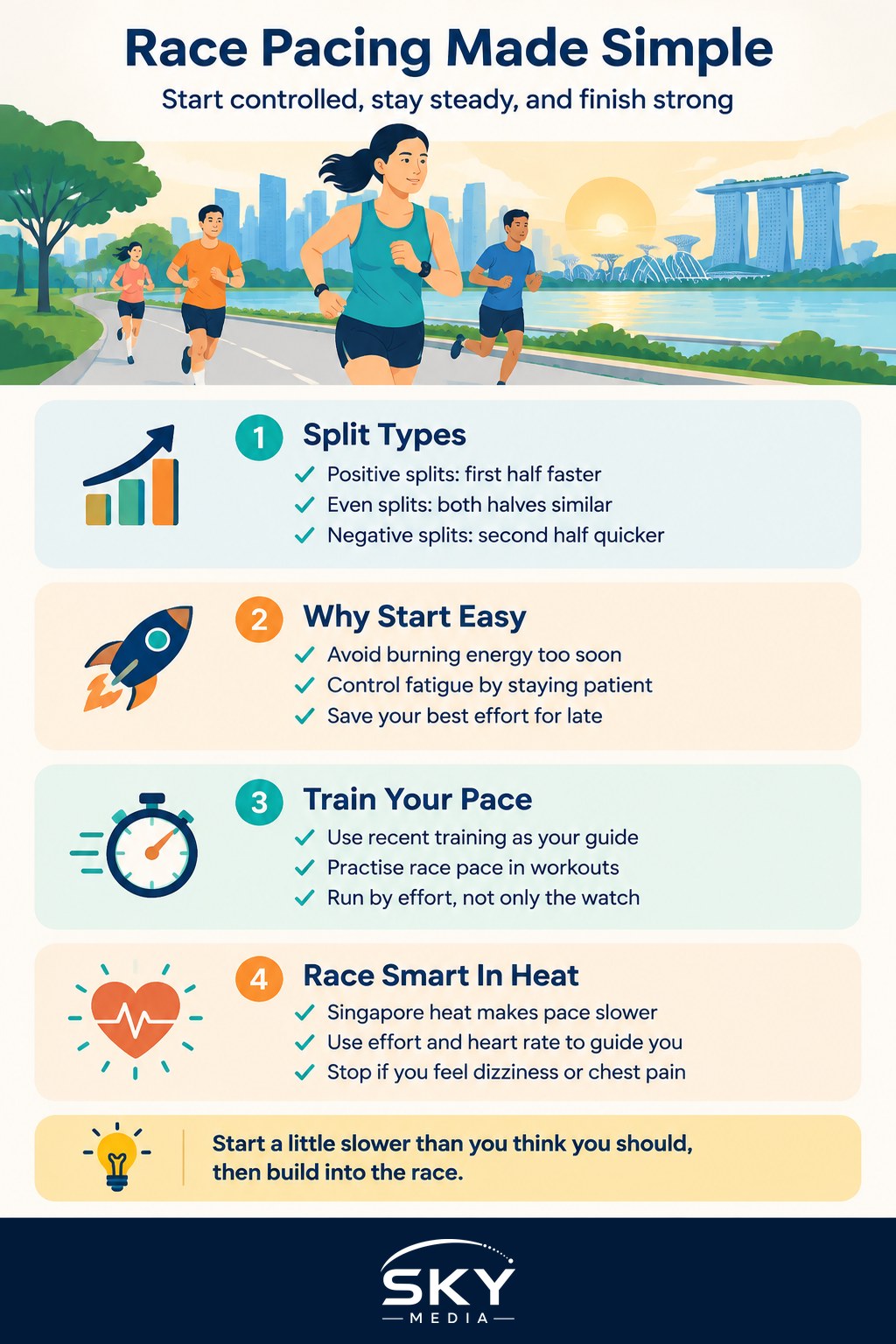
Pacing is how you distribute your effort across a race. A “split” is your time for a section, often each kilometre or each half of the race. There are three broad ways it can go:
- Positive splits: you run the first half faster than the second, usually because you went out too hard. This is the classic blow-up.
- Even splits: you run both halves at roughly the same pace. This is a solid, reliable goal.
- Negative splits: you run the second half slightly faster than the first. This is what many experienced runners aim for.
Negative splits work because they let you warm into the effort, keep something in reserve, and finish strong rather than fading. Running the second half a touch quicker feels far better mentally too, since you are overtaking people rather than being overtaken. Even splits are a perfectly good target if negative splits feel ambitious.
Why starting too fast backfires
When you sprint off the line, you burn through energy quickly and flood your muscles with fatigue by-products faster than your body can clear them. The early kilometres feel easy because you are fresh, so it is dangerously tempting to bank time. But that time is borrowed at a brutal interest rate. The slowdown later almost always costs you more than you gained.
Running physiology rewards patience. A controlled start keeps your effort sustainable, so those first kilometres should feel almost too easy, even slightly frustrating. That restraint is not weakness, it is exactly what lets you push in the closing stages when it counts.
How to pace your race
Pacing well starts long before race day.
Know your realistic pace
Base your target on your actual recent training, not on hope. Your paces from regular runs and any time trials give you a grounded starting point. If you are training for a specific distance, structured plans help you find realistic targets, and marathon and race training covers building towards a goal event, while newer runners will find training for your first 5K in Singapore a friendlier starting point.
Practise pacing in training
Pacing is a skill, and skills need rehearsing. Do some training runs at your intended race pace so your body learns how it should feel. Learn to read your effort rather than staring only at your watch, since course, crowd, and conditions all shift your pace.
Use effort and heart rate, not just the clock
In Singapore’s heat and humidity, your pace for a given effort will usually be slower than on a cool day, and that is completely normal. Rather than stubbornly chasing a number, run by feel and consider heart rate as a guide. Heart rate zone training explains how to use that signal so you do not overcook the early kilometres on a hot morning.
Break the race into thirds
A simple mental model: run the first third with your head, holding back deliberately. Run the middle third settling into a rhythm. Run the final third with your heart, spending whatever you have left. This keeps you disciplined early and gives you permission to dig deep late.
Racing in Singapore’s climate
Our heat and humidity deserve real respect. Many local races start very early to beat the worst of it, but conditions are still demanding. Adjust your expectations, do not be alarmed if goal paces feel harder than usual, and start conservatively. Hydration and pacing go hand in hand, since going out too fast in the heat drains you even quicker. Efficient running form also helps you hold pace as fatigue sets in, and running cadence and form is worth a look.
Listen to your body
Pacing is about managing effort, not ignoring warning signs. Normal race discomfort is one thing, but stop and seek help for dizziness, chest pain, confusion, nausea, or a sudden sharp pain. In hot conditions, symptoms of heat illness are a medical emergency, so do not run through them. If you have a health condition, are new to hard exercise, or have any concerns, see a doctor before racing, and see a doctor or physiotherapist for any persistent pain.
The practical takeaway
Good race pacing comes down to humility and patience. Start slower than your excited legs want to, aim for even or slightly negative splits, run by effort in the heat rather than chasing a stubborn number, and save something for a strong finish. Master that discipline and you will cross the line feeling proud rather than wrecked, having run a smarter race from the very first step.
Frequently Asked Questions
How do I stop myself going out too fast at the start? Remind yourself that early kilometres should feel almost too easy. Practise your race pace in training, keep an eye on effort and heart rate, and let the crowd surge past. Banking time early is borrowing it at a brutal interest rate.
Should I use a pace band or a running watch for racing? Either can be a useful guide, but conditions, crowds and heat shift your pace, so do not follow a number blindly. Learn to read your effort as well. Use whatever you have already tried in training.
How should I adjust my pacing on a hot, humid race morning? Expect your pace for a given effort to be slower, and do not be alarmed if goal paces feel harder. Run by feel, use heart rate as a guide and start conservatively. Stop for dizziness, confusion or other heat illness signs.
Are negative splits realistic for beginners? They can be, though even splits are a perfectly good target if negative splits feel ambitious. Starting conservatively and finishing strongly is a skill that develops with practice. Rehearse it on training runs before race day.