

For two or three decades, family life may have revolved around school runs, tuition schedules, exam stress and dinners planned around everyone’s timetable. Then one day the children move out, whether to their own BTO flat, to study overseas, for work or to start families of their own. The house is quieter, and many couples discover they are not quite sure how to be just the two of them again.
An empty nest marriage can be one of the most rewarding stages of a relationship, but it rarely happens by accident. This guide focuses on rebuilding the everyday routines that hold a couple together once the children are no longer the centre of the household. It is not about retirement planning, which is a separate transition, although the two may overlap.
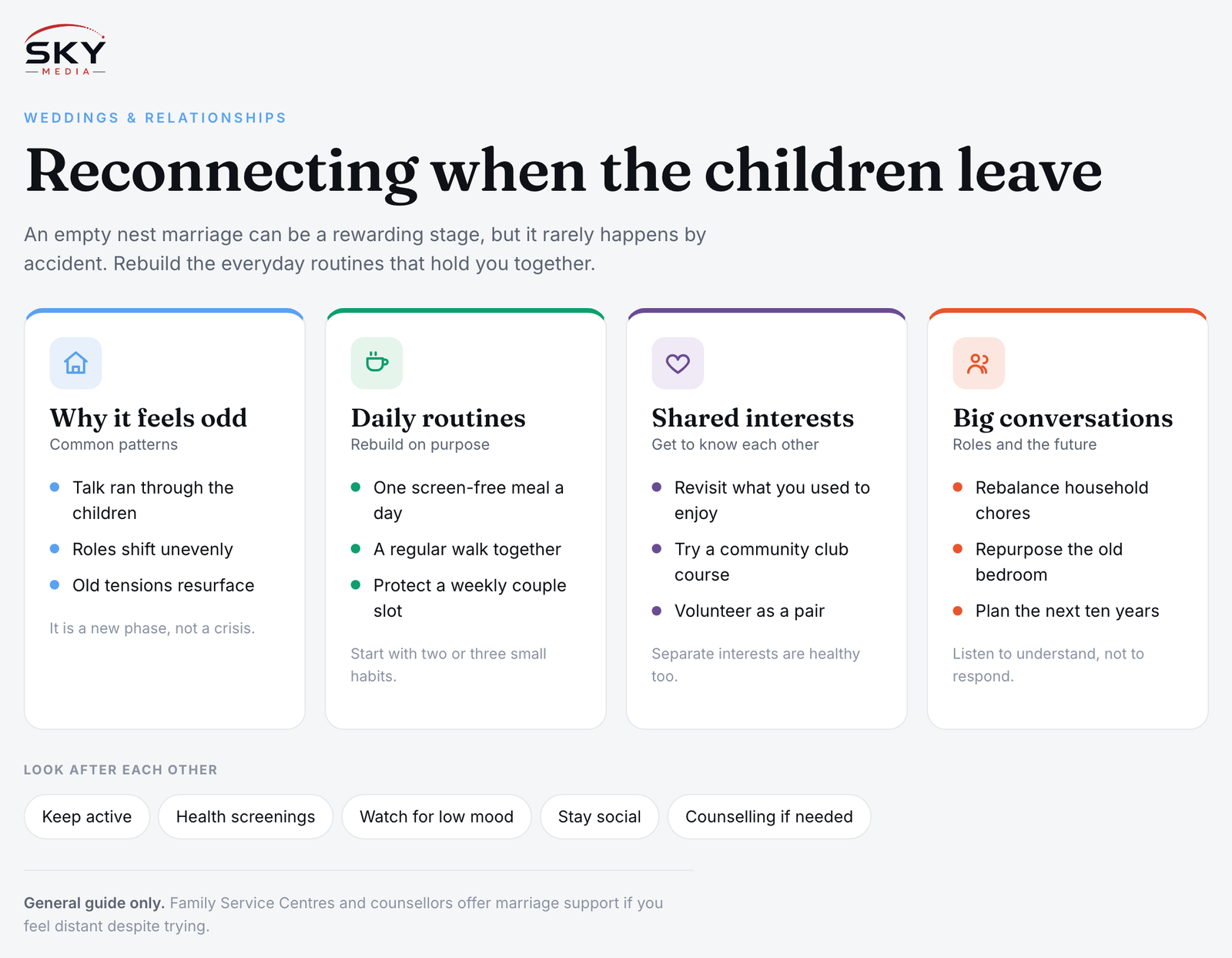
Why the Empty Nest Can Feel Unsettling
When children leave, many parents feel a mix of pride, relief and sadness. Some feel a loss of purpose. For couples, there are some common patterns:
- Conversations ran through the children. Many couples realise much of their talk was about logistics, grades and family plans.
- Roles shift unevenly. One partner may have carried more of the day-to-day parenting and feel the gap more strongly.
- Old habits fill the space. Partners may drift into separate rooms, screens or social circles without noticing.
- Unresolved issues resurface. Tensions that were set aside “for the children” can come back into focus.
None of this means the marriage is in trouble. It simply means the relationship is entering a new phase and may need some deliberate attention.
Rebuilding Daily Routines Together
Routines are the quiet structure of a relationship. When the household changes, it helps to redesign them on purpose rather than let them drift.
- Share one meal a day without screens. Breakfast or dinner together, at the table, with phones away, gives you a dependable daily touchpoint.
- Take a regular walk. A morning or evening walk around the estate, a park connector or a nearby reservoir gives you time to talk side by side, which many people find easier than face to face.
- Cook or market together. A weekly trip to the wet market or trying a new recipe turns a chore into shared time.
- Set a weekly “couple slot”. Pick one evening or morning each week for something you both enjoy, and protect it as you once protected the children’s activities.
- Check in briefly each day. Ask a real question beyond “what’s for dinner”, such as what was the best part of the other person’s day.
Start small. Two or three new habits that last are better than an ambitious plan that fades in a month.
Rediscovering Each Other’s Interests
You have both changed since you first met. It can be rewarding to get to know each other again.
- Revisit what you used to enjoy. Dancing, hiking, photography, old films or the music you listened to when you were dating.
- Try something new together. Community clubs and the People’s Association run a wide range of courses and interest groups, from cooking and line dancing to languages and gardening. Check the current listings online or at your nearest community club.
- Volunteer as a pair. Volunteering with a charity, grassroots group or religious organisation gives you a shared purpose and new friends.
- Travel differently. Short trips in the region, without planning around school holidays, can feel like a fresh start.
- Respect separate interests too. A healthy couple does not need to do everything together. Time apart with friends or hobbies gives you more to share.
Old Patterns Versus New Habits
The table below contrasts common habits from the busy parenting years with alternatives that suit the empty-nest stage.
| Parenting-years habit | What it can lead to now | A new habit to try |
|---|---|---|
| Talking mainly about the children | Silence or small talk at home | Daily check-in about each other’s day and plans |
| Separate schedules and screens | Living like housemates | One screen-free shared meal each day |
| Weekends built around children’s activities | Unstructured, empty weekends | A planned weekly outing or couple slot |
| Putting disagreements on hold | Old tensions resurfacing | Calm, regular conversations, with support if needed |
Talking About Roles, Space and the Future
The empty nest is a good time to have conversations you may have postponed:
- Household roles. Who does what now that there are fewer people at home? Rebalancing chores fairly can remove a quiet source of resentment.
- Space at home. A child’s old room can become a study, hobby room or guest room. Decide together, and include the children if they still have belongings there.
- Relationships with adult children. Agree on how often you will call, visit or help with grandchildren, so neither partner feels overloaded or left out. If a relationship with a grown child has become strained, our guide to reconnecting with estranged adult children may help.
- Plans for the next ten years. Health goals, travel wishes, work plans and where you want to live. Practical matters such as wills are easier to settle now; see making a will as a married couple.
Approach these talks with curiosity rather than as negotiations. Listen to understand what matters to your partner, not just to respond.
Looking After Yourselves and Each Other
Physical and emotional wellbeing affect how you relate to each other.
- Keep active together. Regular exercise, even brisk walking, supports mood and energy. Check with your doctor before starting anything strenuous.
- Go for health screenings. Encourage each other to keep up with the screenings recommended for your age; HealthHub has information on what is available.
- Watch for low mood. Some parents feel persistently sad, withdrawn or anxious after the children leave. If this lasts or affects daily life, speak to a family doctor or counsellor.
- Stay socially connected. Friendships outside the marriage take pressure off the relationship and protect against loneliness.
When to Get Outside Help
If you find you are arguing more, feel distant despite trying, or one of you feels deeply unhappy, couples counselling can help. Family Service Centres, some community and religious organisations and private counsellors offer marriage and relationship support. Asking for help is a sign of commitment, not failure.
Many couples find their empty nest marriage becomes closer and more relaxed than the busy years ever allowed. With a little intention, the quiet house can become a place where you rediscover why you chose each other in the first place.