

For many tenants, the most stressful part of renting is not moving in but the email a couple of months before the lease ends, when the landlord or agent names the renewal rent. If you have not planned ahead, a higher figure can force a rushed decision. Building a rent increase budget in Singapore well before renewal gives you time to decide calmly whether to stay, negotiate or move. This guide is aimed at newcomers renting a room, HDB flat or condo unit. It focuses on preparing your finances for the renewal moment, not on finding a home from scratch, and it is general information rather than financial advice.
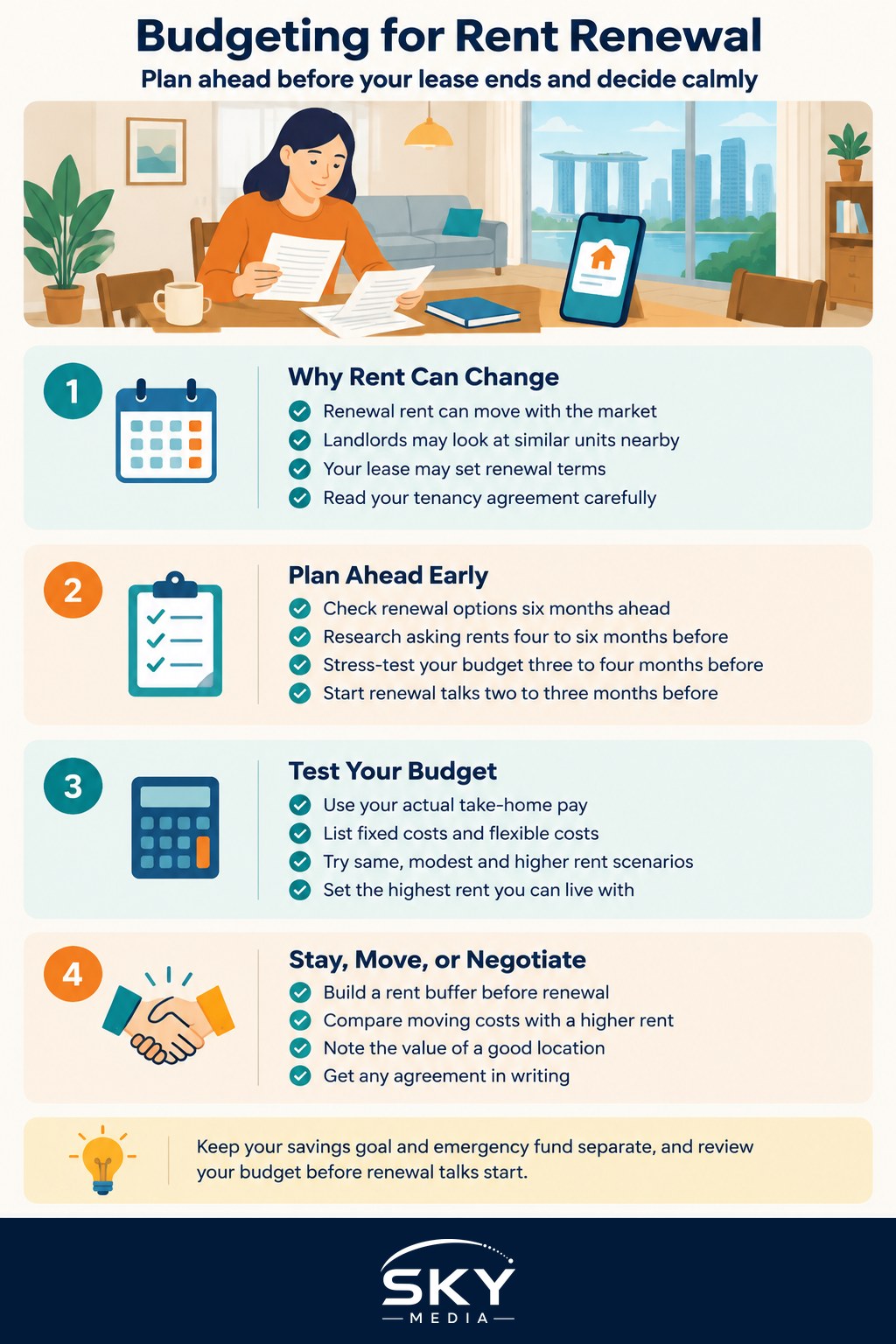
Why Renewal Rent Can Change
Rental prices in Singapore move with supply and demand, and they can rise or fall noticeably between one lease and the next. When your lease ends, the landlord can ask for a new rent based on current market conditions, their own costs or simply what similar units are being offered at. Some leases include clauses about renewal options or how the rent is set; others do not. Read your tenancy agreement carefully and, if anything is unclear, ask your agent or seek professional advice.
You cannot control the market, but you can control how prepared you are when the number arrives.
Start Planning Early: A Timeline
Renewal decisions are easier when they are not rushed. The exact timing depends on your lease and notice terms, so adjust this to fit your agreement.
| When | What to do | Why it helps |
|---|---|---|
| Six months or more before the lease ends | Check your agreement for renewal options and notice periods | You know your rights and deadlines |
| Four to six months before | Research current asking rents for similar homes nearby | You see what the market looks like |
| Three to four months before | Stress-test your budget with higher rent scenarios | You know your ceiling before talks begin |
| Two to three months before | Open the renewal conversation with your landlord or agent | You have time to negotiate or search |
| Final weeks | Sign the renewal or confirm your move | No last-minute scramble or overlap costs |
Stress-Testing Your Budget
The heart of rent increase planning is knowing, in advance, how much more you can afford without straining the rest of your life.
- Write down your current monthly rent and take-home pay. Use what actually lands in your account.
- List fixed costs. Utilities if not included, phone, transport, insurance, loan repayments and money sent home.
- List flexible costs. Food, entertainment, shopping and travel.
- Run scenarios. Calculate your monthly position if rent stays the same, rises modestly and rises significantly. Pick the percentages yourself based on what you see in your area.
- Set your ceiling. Decide the highest rent at which you would stay, and the point at which moving becomes the better option.
Budgeting apps can make this quicker; you can track spending for a few months beforehand so the numbers are realistic rather than guessed. Remember to include your savings goals and emergency fund as non-negotiable items, not leftovers.
Building a Rent Buffer Now
The months before renewal are the best time to prepare a cushion.
- Set aside the difference early. If you expect rent might rise, start saving that extra amount each month now. If the increase is smaller, or does not happen, you keep the savings.
- Trim one or two flexible expenses. Small, targeted cuts are easier to sustain than a dramatic overhaul.
- Avoid new commitments. Hold off on large purchases or new instalment plans until the renewal is settled.
- Check any employer support. Some employment packages include housing allowances. Ask HR how these work and whether they are reviewed when your contract or pass renews.
Newcomers on work passes should also line up the lease end with their pass timeline. If your pass renewal is uncertain, signing a long new lease may carry risk. See our guide on renewing your work pass in Singapore, and check any diplomatic or early termination clause in your tenancy agreement.
Weighing Stay Versus Move
A higher rent is not automatically a reason to move. Moving has its own costs and disruption.
Costs and effort of moving can include:
- A new security deposit, often paid before your old deposit is returned.
- Possible agent fees, depending on the arrangement.
- Movers, transport, cleaning and any repairs needed to hand back your current home.
- Overlap rent if the two leases do not line up neatly.
- Setting up utilities and internet again.
- Time off work and a longer commute if you move further away.
Reasons staying may be worth a higher rent:
- You get on well with the landlord and repairs are handled promptly.
- The location suits your work, school or family routines.
- The increase is less than the total one-off cost of moving.
Write the full costs of both options side by side. Sometimes a modest increase is cheaper than moving; sometimes a large increase makes a slightly smaller or further home the sensible choice.
If you do decide to move, take care with new listings. Our guide to spotting rental scams explains common warning signs such as requests for deposits before viewing.
Negotiating the Renewal
Landlords often value a reliable tenant who pays on time and looks after the home, because finding a new tenant takes time and money. You can use that in a polite, fact-based conversation.
- Come prepared. Share what similar units nearby are currently asking for, if they are lower.
- Highlight your record. Mention on-time payments and how you have kept the home.
- Offer something in return. A longer lease term, or flexibility on timing, may be worth a smaller increase to the landlord.
- Discuss what is included. If the rent rises, ask whether repairs, furniture replacement or aircon servicing could be adjusted.
- Get everything in writing. Any agreed rent, term or change should appear in the renewed agreement.
Stay courteous even if the answer is no. A respectful exchange keeps your options open and makes the handover smoother if you leave.
Thinking Longer Term
Repeated rent increases sometimes prompt bigger questions, such as whether to rent a smaller place, share, or eventually buy if you are eligible. Our guide to renting versus buying your home walks through that decision. Whatever you choose, treating each renewal as a planned financial event rather than a surprise keeps your rent increase budget in Singapore under your control, and leaves you calmer when the renewal email lands.