
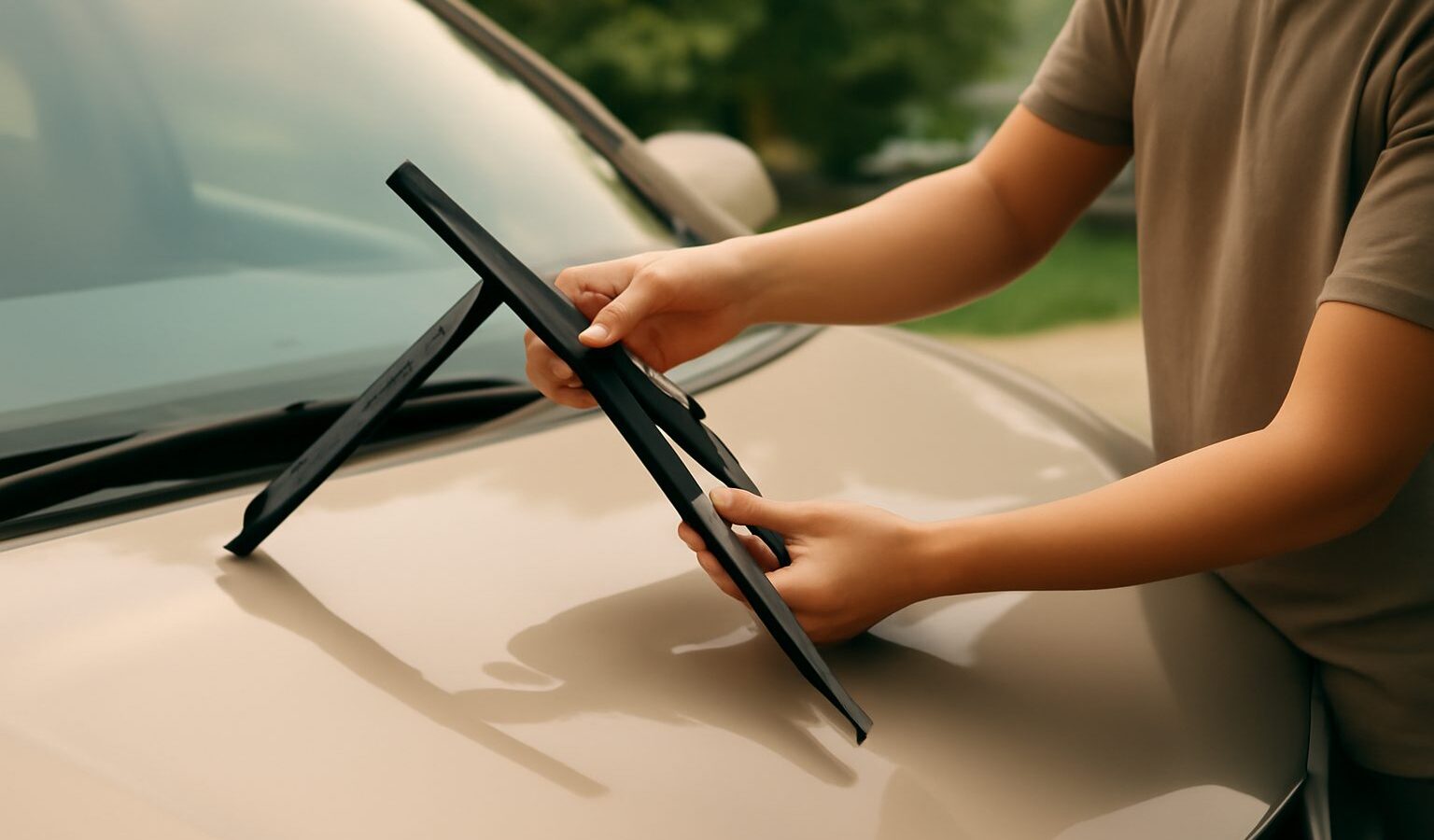
Few things test your nerves like a monsoon downpour on the expressway with wipers that smear rather than clear. In Singapore’s climate, wipers work harder and wear out faster than most drivers expect, yet replacing wiper blades is one of the cheapest and easiest bits of car maintenance you can do yourself. No tools, no workshop appointment, and usually just a few minutes in the carpark. This guide covers why they degrade so quickly here, how to find the right size, and the simple steps to swap them yourself.
As with any DIY task, this is general information rather than professional advice. If your wiper arm, motor or linkage seems damaged, or the blades will not seat properly, have a qualified workshop take a look.
Why Wipers Wear Out So Fast Here
A wiper blade is essentially a strip of rubber, and rubber is no match for our weather over time. The relentless equatorial sun bakes the rubber whenever the car is parked in the open, hardening it and causing tiny cracks. Then the heavy, frequent rain forces the blades into action far more often than in a drier climate. The combination of ultraviolet damage and constant heavy use means blades here often need changing well before they would elsewhere.
You will usually notice the decline before it becomes dangerous. Watch for these signs:
- Streaking: the blade leaves long smears across the windscreen instead of a clean sweep.
- Skipping or chattering: the blade judders and bounces, missing patches of glass.
- Squeaking: a persistent squeal on each pass, even when the screen is wet.
- Visible damage: splits, a rounded or torn rubber edge, or a bent frame.
Any of these during a downpour is a genuine safety issue, because a clear view of the road is non-negotiable in heavy rain. As a rough guide, many drivers here find they replace blades once or twice a year, more often if the car lives outdoors rather than in a sheltered carpark. Parking in the shade where you can, and giving the rubber an occasional wipe with a damp cloth to clear grit, both help them last a little longer.
Finding the Right Wiper Size
Wiper blades come in specific lengths, and the two blades on most cars are often different sizes, with the driver’s side usually longer than the passenger’s. Fitting the wrong length leaves part of the screen uncleared or lets the blades clash in the middle, so getting the size right is the key step.
There are three reliable ways to find your sizes:
- Check the owner’s manual. It lists the correct blade lengths for your model, and often the fitting type too.
- Measure the old blades. Lift each wiper arm and measure the existing blade from end to end with a tape measure. Note that the two sides may differ.
- Use an in-store or online size finder. Most retailers let you look up blades by your car’s make, model and year. Bring these details, or a note of your measurements, when you buy.
Beyond length, blades attach to the arm with different connector types. The traditional hook (J-hook) fitting is the most common, but newer cars may use other clips. Many replacement blades come with a set of adaptors to fit various arms, which makes buying easier. When in doubt, take a photo of how your current blade clips on before removing it.
The table below outlines the main blade styles you will come across.
| Blade type | How it looks | Best suited to |
|---|---|---|
| Conventional (framed) | Metal frame with several joints | Older cars; usually the cheapest option |
| Beam (frameless) | Single curved rubber strip, no visible frame | Modern cars; hugs the screen evenly in heavy rain |
| Hybrid | Framed blade wrapped in a shell | Drivers wanting a middle ground on cost and feel |
How to Replace the Blades, Step by Step
The swap itself is genuinely simple. Work on one blade at a time so you always have the other as a reference.
- Lift the wiper arm away from the windscreen until it locks upright. Support it so it does not spring back, as an arm snapping onto bare glass can crack the screen. Laying a folded towel on the windscreen guards against this.
- Find the release. On a J-hook fitting, there is usually a small tab or clip where the blade meets the arm. Press it to unlock the blade.
- Detach the old blade. Slide or pivot it off the hook. Take a moment to note the direction it faced.
- Fit the new blade. Attach the correct adaptor if needed, then slide the new blade onto the arm until it clicks firmly into place. A secure click means it is seated; give it a gentle tug to confirm.
- Lower the arm gently back onto the screen. Never let it drop.
- Repeat on the other side, and remember the two blades may be different lengths.
- Test them with the washer fluid running so the screen is wet. Check for clean, quiet, streak-free sweeps across the whole glass.
If a blade skips or streaks straight away, it may not be clipped in fully, or the connector may not match your arm. Recheck the fitting before driving in the rain.
Getting the Most From New Blades
A fresh set of blades transforms wet-weather visibility, and a little care keeps them at their best for longer. Top up your windscreen washer reservoir and use a proper screen wash rather than plain water, which does little to shift the oily film and grime that build up on the glass. Running dry wipers on a dusty screen is one of the fastest ways to wear the rubber and scratch the glass, so always wet the screen first.
Give the windscreen itself an occasional clean, as tree sap, insect residue and road film all make blades work harder and streak sooner. Lifting the wiper arms when you park in the sun is a small habit that spares the rubber some heat. And while the rear wiper on a hatchback or SUV is easy to forget, it deserves the same attention before the wet season.
Replacing wiper blades is one of the most satisfying quick wins in car care: low cost, no special tools, and an immediate payoff the next time the sky opens up. Keep an eye on them, change them at the first sign of streaking, and you will never be caught peering through a smeared windscreen on the way home. If anything about the wiper mechanism itself seems off, leave that to a qualified workshop rather than force it.