
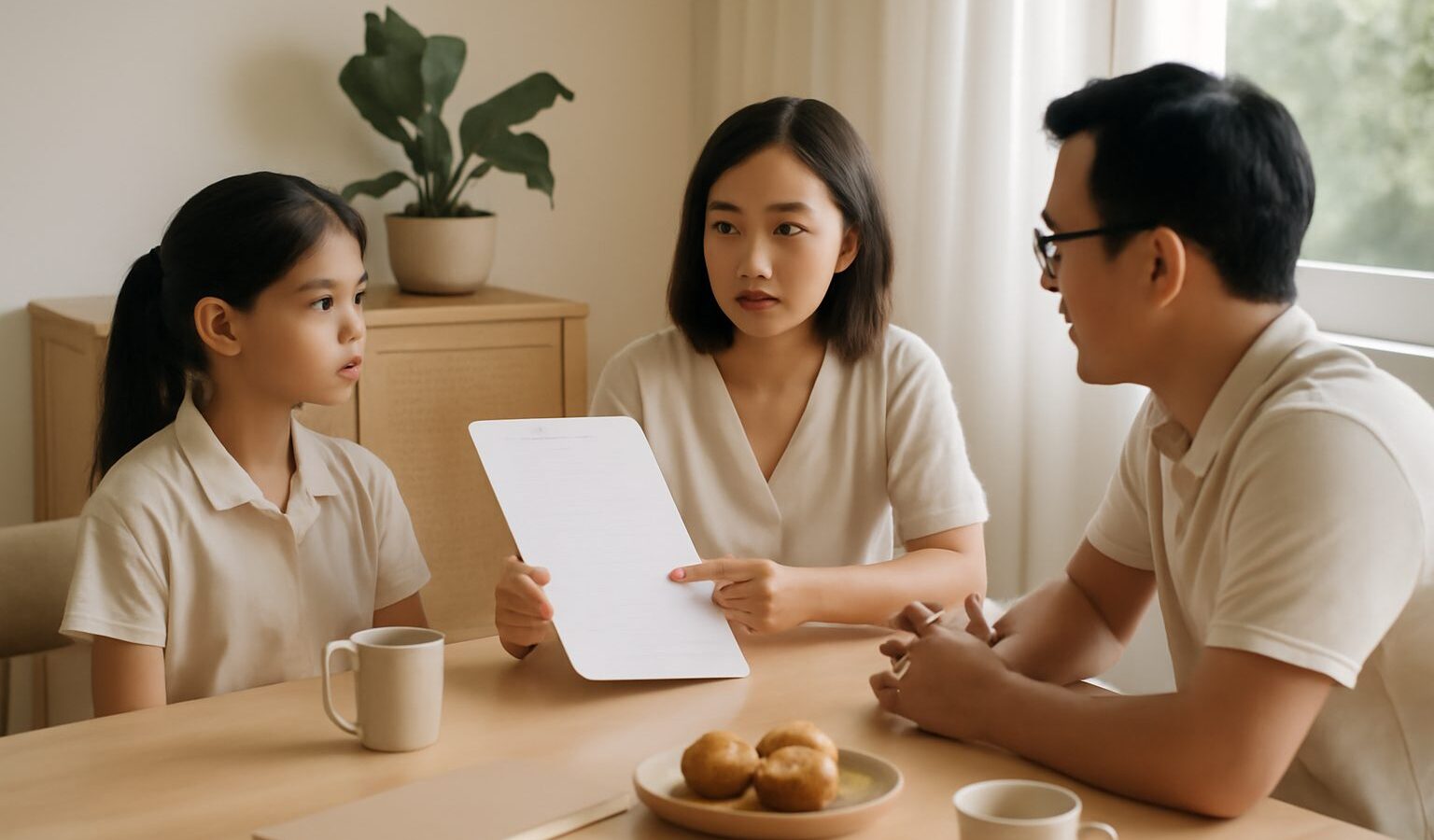
When your child starts school in Singapore, you will soon receive report cards and be invited to meet their teacher. For newcomer parents from the mainland, these moments can feel both exciting and a little uncertain, especially if the format differs from what you knew back home. Understanding how report cards work and how to make the most of a parent teacher meeting Singapore schools arrange helps you support your child with confidence. This guide walks you through both, gently and practically.
How Schools Share Your Child’s Progress
Singapore schools keep parents informed about how a child is doing in several ways, and report cards are the most familiar of these. A report card is a summary of your child’s progress over a term or school year, usually covering how they are doing in their subjects along with comments about their attitude, effort, and conduct.
You may notice that the emphasis is not only on marks. Singapore has, over the years, moved towards a more holistic view of a child, one that values effort, character, and wellbeing alongside academic results. In the early years of primary school especially, the focus is often on building a love of learning rather than on heavy testing. As children grow older, assessments become more structured, leading eventually to national milestones such as the PSLE, the Primary School Leaving Examination, near the end of primary school.
Because approaches to grading and reporting can differ between schools and can change over time, the report card itself, and your child’s teacher, are always the best guide to what the marks and comments actually mean. If anything on the report is unclear, that is a perfectly good reason to ask.
What a Parent-Teacher Meeting Is For
A parent teacher meeting, sometimes shortened to PTM, is a scheduled conversation between you and your child’s teacher. Its purpose is simple and kind, which is to help you and the teacher work together for your child’s benefit.
In the mainland, meetings with teachers can sometimes feel formal or focused mainly on results. In Singapore, a PTM is best approached as a friendly, two way conversation. The teacher will share how your child is doing, not only academically but also socially and emotionally, and you are warmly encouraged to share what you see at home. Teachers genuinely value a parent’s insight, because you know your child in ways the classroom cannot show.
These meetings are usually short, so it helps to come prepared. Knowing what you want to ask means you leave with the information that matters most to you, rather than thinking of questions on the way home.
Here is a simple overview to help you get ready.
| Before the meeting | During the meeting | After the meeting |
|---|---|---|
| Read the report card | Listen and take notes | Share the key points with your child |
| Write down your questions | Ask about strengths and struggles | Agree small steps to support at home |
| Note anything you see at home | Share your own observations | Follow up with the teacher if needed |
Making the Most of the Conversation
A little preparation turns a brief meeting into a genuinely useful one. Start by reading the report card beforehand and jotting down anything you would like to understand better. Think about your child’s whole experience, not just grades, including whether they seem happy, whether they have friends, and whether they enjoy going to school.
During the meeting, listen carefully and feel free to take notes, since it is easy to forget details later. Ask open questions such as what your child does well, where they find things harder, and how you can help at home. Share your own observations too, for example if your child mentions worries or if something at home might be affecting their learning. If there is a language barrier, it is completely reasonable to ask whether support can be arranged, and to speak slowly and simply so nothing is lost.
Above all, approach the teacher as a partner. You both want the same thing, which is a happy, growing child. A warm, respectful tone makes it easier to talk honestly, including about any concerns.
Turning Feedback Into Support
The value of a report card or a meeting lies in what you do afterwards. Once you have the teacher’s feedback, share the encouraging parts with your child first, so they feel proud of their efforts. Then, gently, talk together about any areas to work on, framing them as things you will tackle as a team rather than as failings.
Keep any home support light and steady. This might mean a calm regular time for homework, reading together, or simply asking about the school day with real interest. Avoid piling on pressure, since a child who feels supported usually tries harder than one who feels criticised. If the teacher suggested specific steps, put a couple into practice and see how they go.
Remember too that you can reach out to the teacher between meetings if a real concern arises. You do not have to wait for the next scheduled PTM. A short, polite note is usually welcome, because teachers would rather hear about a worry early than late.
A Warm Closing Thought
Report cards and parent teacher meetings are not tests of you as a parent. They are simply tools that keep home and school working together for your child. Approached with curiosity and warmth, they become a chance to understand your child better and to show them that the adults in their life are on the same team.
Read the report thoughtfully, come to the meeting prepared, and treat the teacher as a partner. When any detail is unclear, ask the school directly, because they know your child and their classroom best. With that gentle, steady involvement, your child will feel supported on both sides of the school gate.
Explore more
Music Lessons and ABRSM Exams for Children
Homeschooling Your Child in Singapore
Special Education (SPED) Schools in Singapore