
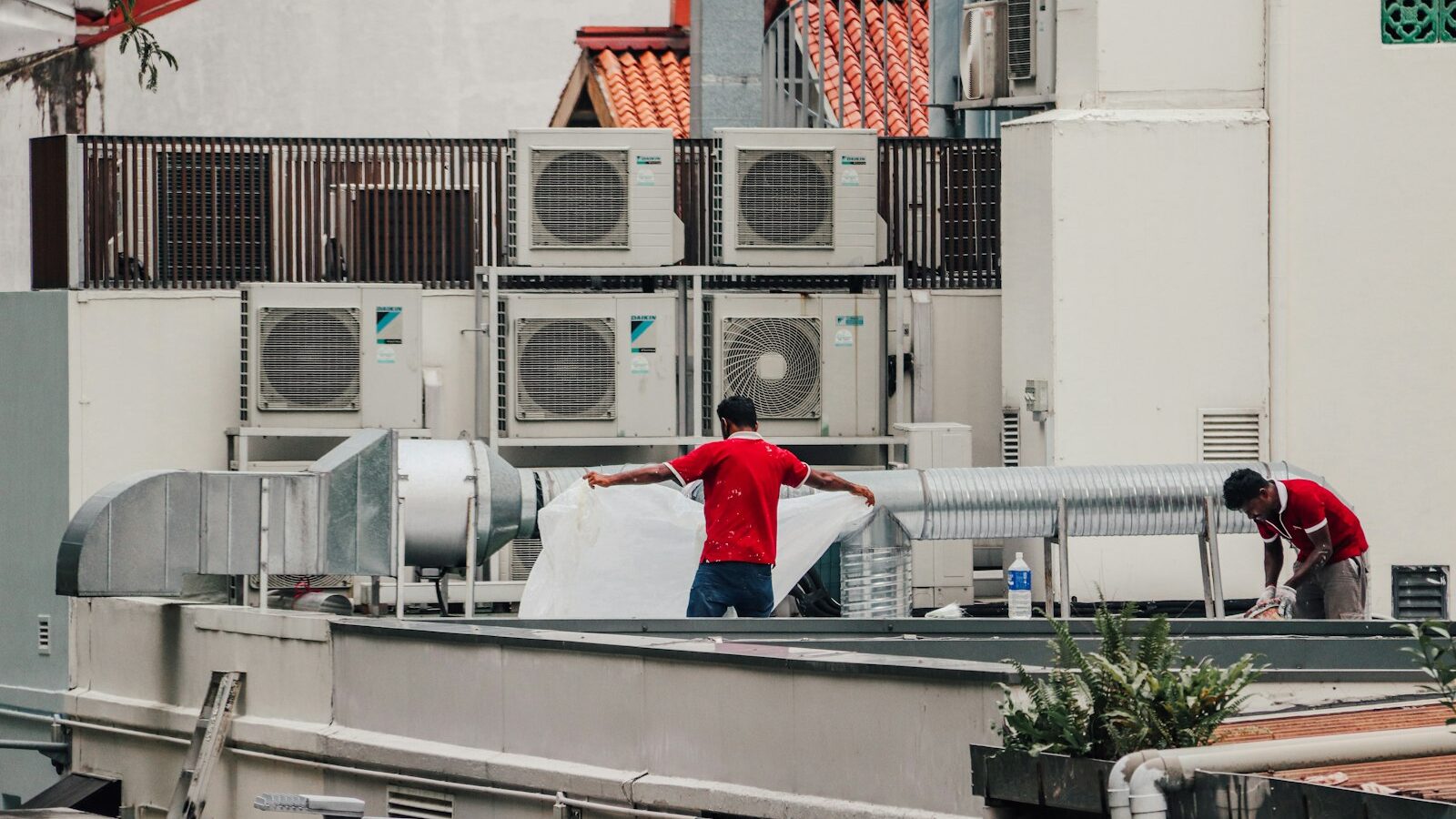
Air-conditioning is close to essential in Singapore, but the outdoor half of the system, the condenser unit, is the part that gets owners into trouble. Condensers are heavy, they sit on the outside of a high-rise block, and a badly fixed unit can fall, leak water onto neighbours or damage the building’s facade. That is why HDB sets out where condensers may go and how they must be installed. This guide explains the HDB aircon installation rules in plain terms, so you know what to ask your contractor before any drilling starts.
This is general information, not professional or legal advice. HDB’s requirements are updated from time to time, so always confirm the current rules on the HDB website or with your HDB Branch before you install, replace or relocate a condenser.
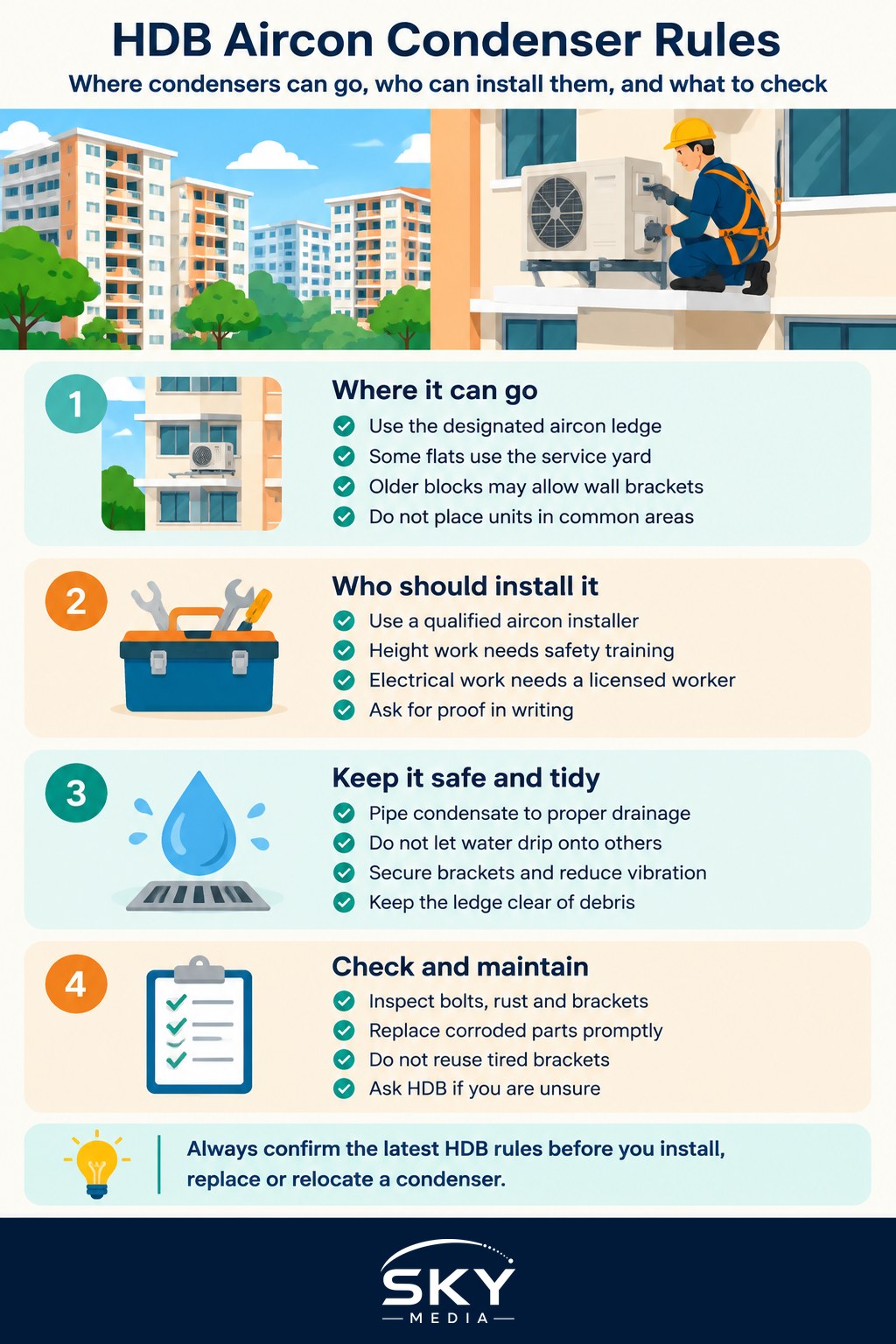
Why HDB Regulates Aircon Condensers
An aircon condenser can weigh several tens of kilograms and is mounted many floors above walkways and void decks. HDB’s concerns are mainly:
- Public safety. A condenser or bracket that fails can fall from height and cause serious injury or death. Items falling from high-rise flats are treated very seriously in Singapore.
- Structural integrity. Drilling into the wrong part of a wall, or overloading a ledge, can damage the structure or the waterproofing of the block.
- Neighbours and appearance. Dripping condensate water, noise and units fixed in random positions affect the people around you and the look of the estate.
The rules are therefore less about which brand you buy and more about where the unit sits and who installs it.
Where Condensers May Be Placed
Most HDB flats are designed with a specific place for condensers, and this is where HDB expects them to go.
- Aircon ledge. Many flats have a purpose-built reinforced concrete ledge, often outside a bedroom or the service yard, designed to carry condenser units. If your flat has one, this is normally where your condensers should be placed.
- Service yard or designated area. In some flat designs, condensers sit within the service yard or another designated area shown in the flat’s plans, rather than on an external ledge.
- Brackets on external walls. In older flats without a ledge, condensers may have been fixed on metal brackets mounted on the external wall. HDB sets requirements for these, and in many cases you will need to follow specific guidelines or obtain approval. Check with HDB whether bracket installation is allowed for your block and position.
What you generally should not do:
- Place condensers on the common corridor, on the roof, or in any common area of the block.
- Hang units on parapet walls, window frames or other positions not designed to take the load.
- Fix condensers in a way that blocks the escape route, refuse chute access or other residents’ windows.
If you are unsure where your flat’s designated position is, look at the floor plan from your purchase documents, or ask HDB. The position chosen by the developer is usually the one HDB has assessed for load and safety.
Ledge and Bracket Rules at a Glance
| Situation | What is generally expected | What to check with HDB or your contractor |
|---|---|---|
| Flat has a reinforced aircon ledge | Place condensers on the ledge; do not overload it | How many units and what total weight the ledge is meant to carry |
| No ledge, condensers on brackets | Brackets must meet HDB’s requirements and be securely fixed by a qualified installer | Whether brackets are permitted at your position and any approval needed |
| Replacing an old condenser | Remove rusted brackets and fittings; reinstall to current standards | Whether the old bracket position still meets current rules |
| Adding units during renovation | Stay within the designated area; follow renovation guidelines | Whether a renovation permit or notification is needed for related works |
Ledges need care as well. Debris, old pipes and rusting brackets left on a ledge can rot or fall, and standing water can breed mosquitoes. Keep the ledge clear, and if you need to access it for servicing, that work should be done by your installer with proper safety equipment, never by you leaning out of a window.
Installer Requirements: Who Can Do the Work
The person doing the installation matters as much as where the condenser goes.
- Use a qualified installer. HDB requires aircon condensers to be installed by qualified installers. For work involving external positions at height, installers are expected to have completed the relevant safety training under Building and Construction Authority (BCA) or industry schemes. Ask your contractor to confirm their installers’ qualifications in writing.
- Electrical work must be done properly. Any new electrical point or wiring for an aircon system must be carried out by a licensed electrical worker under the Energy Market Authority (EMA) licensing framework. Do not let an unlicensed handyman tap into your power supply.
- Working at height safety. Installers should use proper harnesses and anchorage when working on ledges or brackets. If they do not, that is a red flag.
- Renovation rules apply. If your aircon work is part of a wider renovation, the HDB renovation guidelines, including rules on hacking, drilling and permitted works hours, still apply. Our guide to HDB renovation rules and permits explains how the permit system works.
When comparing quotes, ask each contractor:
- Where will the condensers be placed, and does that follow HDB’s requirements for my flat?
- Will you use existing brackets, or supply and fix new ones? What material are they?
- Are your installers trained for work at height, and can you show proof?
- Is the electrical work done by a licensed electrical worker?
- What warranty do you give on the installation itself, separate from the manufacturer’s warranty on the unit?
A trustworthy contractor will answer these clearly. Be wary of very low quotes that skip new brackets or proper electrical work.
Condensate Water, Noise and Neighbours
Even a correctly placed condenser can cause disputes if the details are wrong.
- Drainage. Condensate water should be piped to a proper drainage point, not left to drip onto the ledge, the flat below or the corridor. Dripping water is one of the most common neighbour complaints.
- Noise and vibration. Rubber mounts and correct fixing reduce vibration. A rattling condenser is often a sign of loose brackets, which is also a safety issue.
- Hot air exhaust. Do not block the condenser with covers or clutter; it needs space to release heat and works less efficiently if boxed in.
If a neighbour’s condenser is leaking onto your unit or looks unsafe, speak to them politely first. If it is not resolved, your Town Council or HDB can advise on next steps.
Maintenance and Safety Checks Over Time
Condensers and brackets age in Singapore’s heat, rain and humidity. Build these habits into your routine servicing:
- Ask your servicing technician to check bracket condition, bolts and rust each time they service the system.
- Replace corroded brackets promptly rather than waiting for the unit to be changed.
- Clear the ledge of leaves, debris and old fittings.
- When replacing an old system, budget for new brackets and piping rather than reusing tired parts.
These rules sit alongside other HDB living rules. If you are also planning other works or changes, our overview of renovating your HDB flat with the right permits and contractors and our guide to CCTV and doorbell cameras outside HDB flats cover related areas where external fittings are regulated.
Getting your aircon condenser installation right the first time protects your family, your neighbours and the people walking below. Check HDB’s current requirements, hire qualified installers and keep the ledge and brackets in good shape, and your aircon should give years of trouble-free service.
Frequently Asked Questions
Who is liable if an aircon condenser or bracket falls and injures someone? The flat owner is generally the first party to answer, since the unit is on their property, and serious falls can lead to enforcement and legal action. A poor installer may also be responsible. Keep installation records and warranty documents, and speak to a lawyer if an incident happens.
Can a tenant install or change an aircon condenser in a rented HDB flat? Not without the owner’s consent, since the condenser and ledge are part of the flat. Tenants should ask the landlord, who is responsible for ensuring the work follows HDB’s requirements and uses qualified installers. Put any agreement about costs and removal in writing.
Can I relocate my condenser to a different spot outside the flat? Only if the new spot is a position HDB allows, such as the designated ledge or yard, and not on a parapet or common area. Check with HDB or your branch before moving anything, since the original position was assessed for load and safety.
Do the same rules apply to condominiums and private apartments? No, HDB rules apply to HDB flats. Condominiums have their own management, house rules and sometimes by-laws on where and how condensers go. Check with the management office, and ask your contractor about the building’s requirements before work.
Can I put a cover or cage over the condenser to hide or protect it? Avoid anything that boxes the unit in, because it needs open space to release heat and works less efficiently without it. Any addition also adds weight to the ledge. If you want a cover for appearance or protection, ask HDB and your installer first.
Official sources: HDB
Further reading: Spalling Concrete in HDB Flats: Causes, Repairs and Who Pays