
School open houses are a big part of choosing a primary school, secondary school, junior college, polytechnic or international school in Singapore. Parents and children walk across campuses, sit through briefings, queue at booths and climb stairs between blocks, often in the heat of the day. Picking a sensible school open house outfit in Singapore makes the visit easier, so you can focus on teachers, programmes and facilities rather than sore feet or a sweaty shirt.
There is no formal dress code for most open houses, and schools welcome families as they are. Still, a few practical choices help you stay comfortable and look neat in a setting that sits between casual and semi-formal. This guide covers what parents and children can wear, with tips for different types of schools.
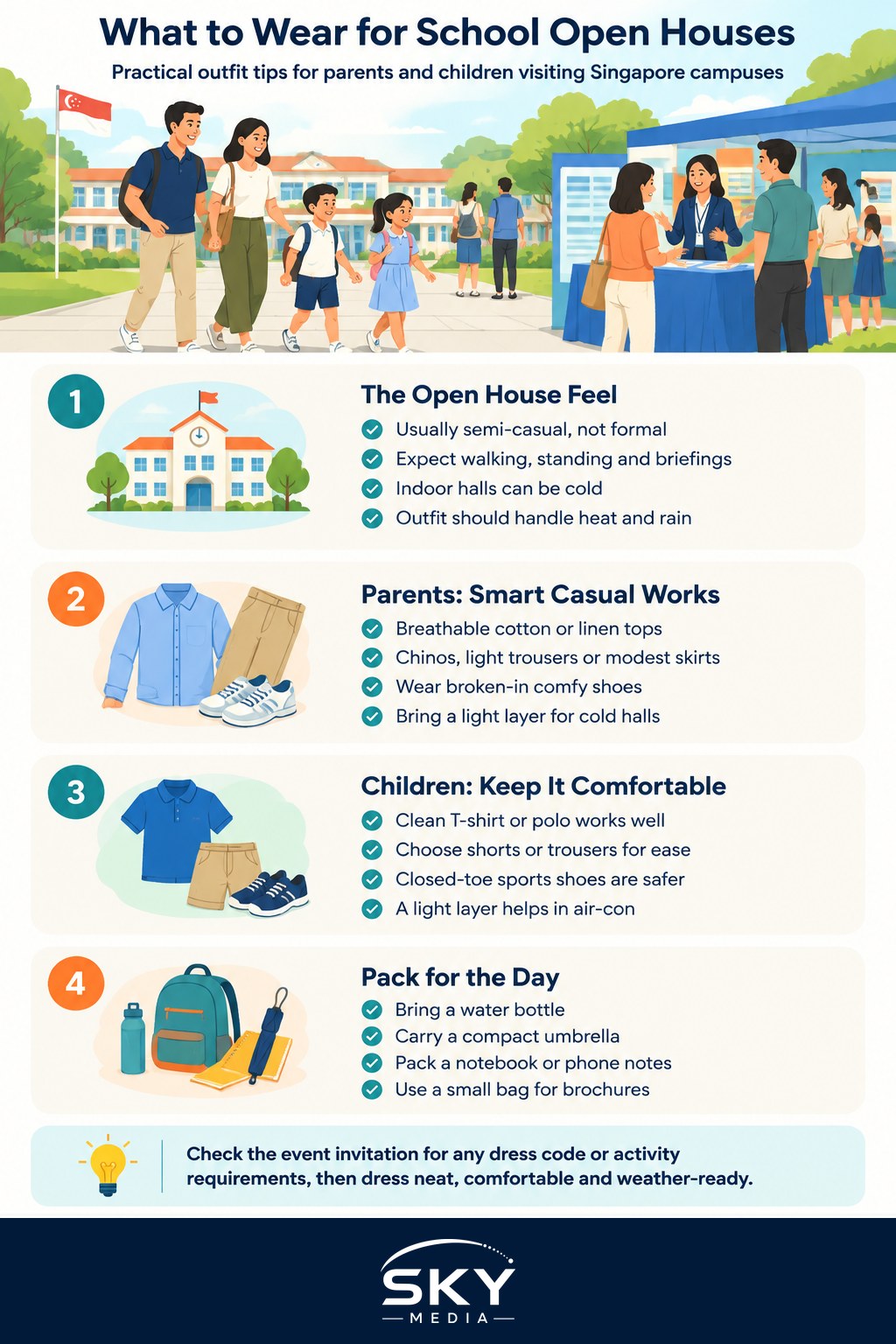
Understand the Setting: Semi-Casual and Mostly on Foot
Open houses usually mix several activities in one visit:
- Briefings in halls or auditoriums, where air-conditioning can be cold.
- Campus walks between classrooms, labs, sports facilities and covered walkways, sometimes outdoors.
- Booths and demonstrations run by students and teachers, where you stand and chat.
- Queues for talks, tours or registration desks.
This means the ideal outfit handles both outdoor heat and indoor chill, lets you walk and stand for long periods, and looks presentable enough for a conversation with a principal or teacher. Think of it as dressing for a relaxed day out in town with a little more polish, similar to what you might wear to a weekend brunch.
If you are visiting tertiary institutions, our guide on what to expect at a polytechnic open house explains how those events usually run, which helps you plan how much walking to expect.
Outfit Ideas for Parents
Smart casual is the safe middle ground. You do not need office wear, but very beachy outfits can feel out of place in a school hall.
| Item | Good choice | Better to avoid |
|---|---|---|
| Tops | Breathable cotton or linen shirts, polo tees, simple blouses | Thick fabrics, heavily printed or slogan tees |
| Bottoms | Chinos, light trousers, midi skirts, smart shorts of a modest length | Very short shorts, distressed or ripped jeans |
| Footwear | Cushioned sneakers, comfortable loafers, flat sandals with straps | New shoes, high heels, flimsy flip-flops |
| Layer | Light cardigan, overshirt or thin jacket for cold halls | Heavy jackets you will need to carry all day |
| Bag | Crossbody bag or small backpack | Large tote that tires your shoulder |
A few extra pointers for parents:
- Choose light colours and breathable fabrics. Cotton, linen and moisture-wicking blends help in Singapore’s humidity. Darker colours can show sweat less but absorb more heat, so pick what feels better for you.
- Wear shoes you have already broken in. You may walk several blocks and climb stairs. Comfort matters more than style here.
- Keep it modest and tidy. Schools are family settings with children around. Covering shoulders is not usually required, but a neat look feels appropriate.
- Dress for the weather forecast. Afternoon showers are common. A compact umbrella is more useful than a raincoat in a crowded hall.
If you are coming straight from work, office wear is perfectly fine. Simply swap formal shoes for something comfortable if you can, and keep a lighter layer handy.
What Children Should Wear
Children are often part of the visit, especially for primary and secondary school choices. They should be comfortable, but it also helps for them to feel ready to talk to teachers or try activities.
- Comfortable casual wear. A clean T-shirt or polo with shorts or trousers works for most ages.
- Sports shoes. Some open houses include trial activities, sports demonstrations or lab experiments. Closed-toe shoes are safer.
- Current school uniform, if appropriate. Some families choose to have older children wear their current school uniform, especially when visiting directly after school. This is a personal choice. Check whether the event asks visitors to come in a particular way, as most do not.
- A light layer. Children feel the cold in air-conditioned halls too.
Let older children choose their own outfit within these guidelines. Feeling comfortable and like themselves helps them engage with the school and form their own impressions, which is the real point of the visit.
Dressing for Different Types of Schools
Expectations vary a little depending on the school and the kind of event.
Primary and secondary schools. Usually relaxed. Smart casual for parents and casual wear for children is ideal. Expect classroom tours and stair climbing.
Junior colleges and polytechnics. Students often attend with friends rather than parents, and campuses can be large. Prioritise good walking shoes and a small backpack for brochures and a water bottle.
International and private schools. Some families dress slightly smarter for these visits, particularly for scheduled tours or admissions interviews. If a visit includes a one-on-one meeting, think of it as a light version of what to wear to a networking event: neat, simple and comfortable.
Specialised schools and programmes. Arts, sports or specialised schools may include trials, performances or demonstrations. Check the event details in case children need clothing they can move in.
If an event invitation mentions a dress code or activity requirements, follow it. Otherwise, the guidelines above work well.
What to Bring Along
Your outfit is only half of the plan. Pack a small bag with:
- A water bottle. Staying hydrated matters when walking around campuses in the heat.
- A compact umbrella for sun and rain.
- A small towel or handkerchief for wiping sweat.
- A notebook or phone notes to jot down questions and impressions.
- A foldable bag for brochures and handouts.
- Snacks for younger children, if food is allowed in the area you are in.
- A portable fan, if you feel the heat easily.
Arriving early gives you time to cool down before a briefing and avoids rushing between talks. If parking or public transport options are limited, check the school’s event page or announcements beforehand.
Small Details That Make the Day Easier
A few final habits help the visit go smoothly:
- Plan your route around the campus. Many schools share maps or schedules beforehand. Fewer back-and-forth trips mean less walking in the sun.
- Take breaks in shaded areas. Covered walkways and canteens are good spots to rest.
- Keep valuables secure. Crowded halls make it easy to misplace phones or wallets.
- Be ready to sit on the floor or in tight rows. Avoid outfits that are awkward to sit in, such as very short or tight skirts.
Open houses are about getting a feel for the school, its teachers and its students. A comfortable, neat and weather-ready outfit lets you and your child focus on what matters, asking the right questions and imagining yourselves as part of that community.
Further reading: How School Open Houses in Singapore Help You Choose