
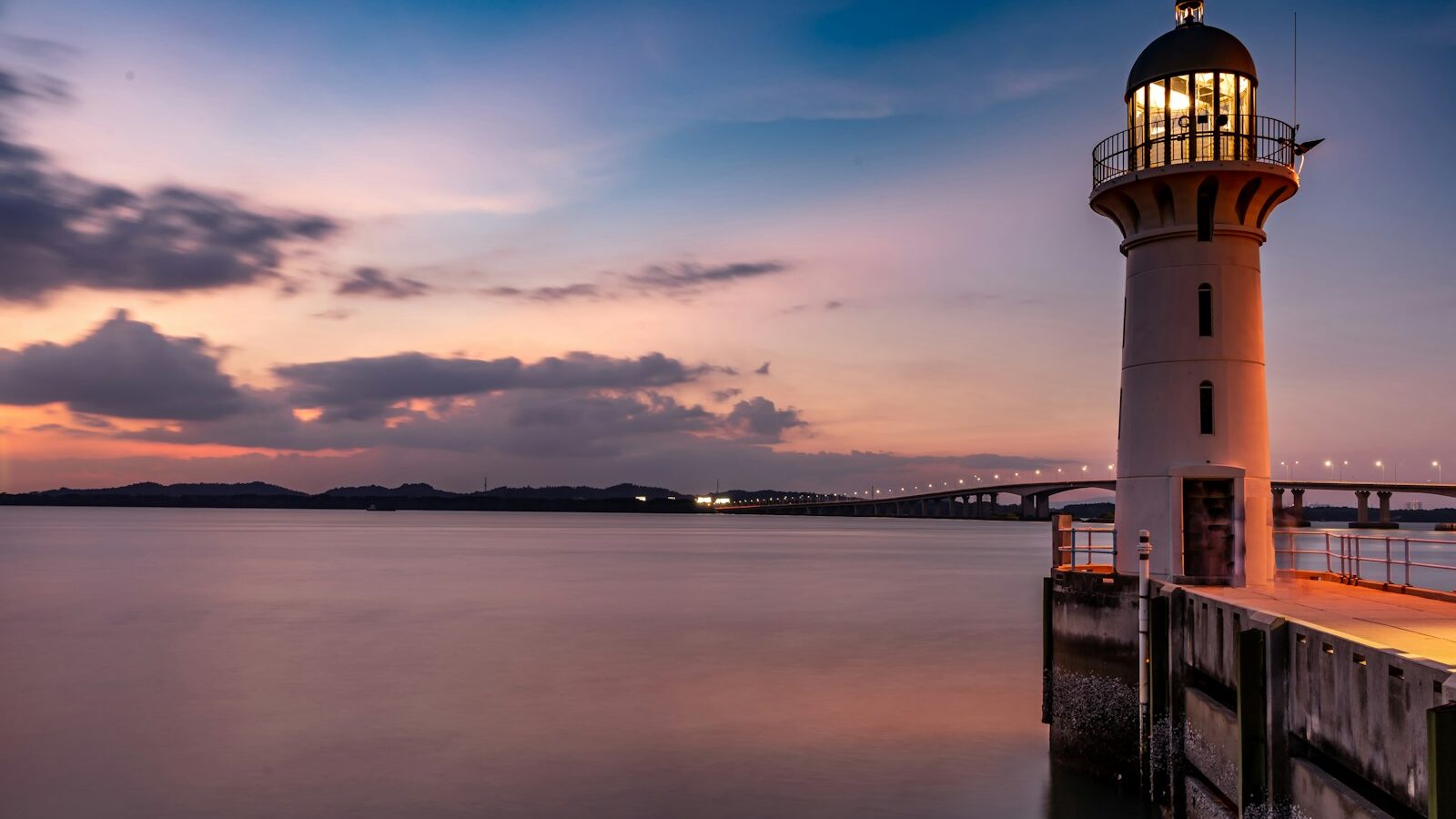
For a nation built on the sea, Singapore lighthouses are among the most evocative pieces of its heritage, lonely towers that have guided ships through some of the world’s busiest and most treacherous waters. Standing on rocky outcrops and offshore islets around the coast, they mark the reefs and channels of the Singapore Strait, a maritime crossroads where the trade of East and West has long passed. Most are far from public reach, which only adds to their romance, yet their history is central to understanding how Singapore became a great port.
This guide introduces the main lights, the reefs they guard, and the maritime landmarks that go with them, along with what a visitor can realistically see.
Why a port needs lighthouses
Singapore’s fortune has always rested on its position at the meeting of major sea routes, where the Strait of Malacca funnels shipping past the island. But those same waters are studded with reefs, shoals and rocky islets that could tear the hull from a ship in the dark. As trade grew through the nineteenth century, so did the need to light the dangers, and a chain of lighthouses was built on the most hazardous points to warn mariners and keep the sea lanes safe.
Each light marks a specific peril, and together they form a navigational network that has guided countless vessels safely to and from the harbour. Building and manning them was demanding work, often on isolated rocks battered by the sea, and the keepers who once tended them lived lives of solitude in service of every passing ship. For the exact dates, engineers and construction details of each tower, the maritime authority and heritage records are the sources to trust.
The major lighthouses of the straits
Several historic lighthouses ring Singapore’s waters, each with its own character and its own reef to guard.
Raffles Lighthouse stands on a small rocky island at the southern edge of Singapore’s waters, marking dangers near the approaches to the harbour from the south. Remote and wave-washed, it has long been one of the most important lights in local waters.
Horsburgh Lighthouse sits far to the east on a rocky outcrop at the entrance to the Singapore Strait, named after James Horsburgh, a noted hydrographer whose charts guided sailors through these seas. Its position marks the eastern gateway to the strait.
Sultan Shoal Lighthouse rises on a small islet to the west, distinctive for the buildings clustered around its tower, guarding the shoal that gives it its name in the western approaches.
Closer to the city, the Fullerton area once carried a harbour light. The Fullerton Building on the waterfront, now a conserved landmark, historically bore a lighthouse beacon that helped guide ships towards the mouth of the Singapore River, tying the maritime story directly to the heart of the old town.
Here is a simple overview of these landmarks and where they stand.
| Lighthouse | Rough location | Guards |
|---|---|---|
| Raffles Lighthouse | Rocky island to the south | Southern approaches to the harbour |
| Horsburgh Lighthouse | Outcrop to the far east | Eastern entrance to the strait |
| Sultan Shoal Lighthouse | Islet to the west | Western approaches and the shoal |
| Fullerton light | Waterfront by the river mouth | Historic entrance to the river |
Maritime heritage beyond the towers
Lighthouses are only part of Singapore’s maritime heritage. The waterfront itself tells the story, from the old harbour and godowns to the mouth of the Singapore River where lighters once ferried goods to shore. Landmarks such as the conserved Fullerton Building, the historic quays and the working port that still hums day and night all speak of a life shaped by trade and the sea.
The lighthouses connect this coastal heritage to the wider region, reminders that Singapore’s prosperity was never just about the land it stood on but about the ships it welcomed and the waters it kept safe. Even the coastal forts and batteries elsewhere on the island belong to the same story, guarding by gun what the lighthouses guided by light.
Seeing the lighthouses today
Most of Singapore’s lighthouses sit on restricted or hard-to-reach islands and are not generally open to casual visitors, so the honest advice is to admire them from afar and through their history. From time to time there have been organised trips or special arrangements to visit certain lights, but these are limited and subject to the maritime authority’s rules; check official channels for any current opportunities rather than assuming access.
For a taste of the maritime landscape without a boat, the southern coast and its offshore views offer glimpses of the shipping that fills these waters, while the conserved Fullerton Building on the waterfront can be seen up close in the city. Harbour-front vantage points, coastal parks and the southern islands that are open to the public all help bring the world of the lighthouses closer. Whenever you are near the sea here, remember that beyond the horizon these quiet towers are still doing the job they were built for.
Visiting the maritime landmarks
The most accessible landmark is the Fullerton area on the waterfront, close to the city centre and easily reached on the rail network, from which you can walk the old quays and take in the river mouth. Coastal parks along the south of the island give distant sea views towards the shipping lanes, and public ferries serve some of the southern islands, though not the working lighthouse rocks themselves.
Because access to the offshore lights depends entirely on the maritime authority and any organised programmes, always check official sources before planning anything on the water. Respect restricted zones, never attempt to land on lighthouse islands without permission, and enjoy this heritage in the spirit it deserves, as the guardians of a seafaring nation.
Explore more
Singapore’s maritime defences ran on gunpowder as well as light, so pair this with the coastal batteries of Labrador Park, which watched over the same sea approaches. For a harbour view that takes in the shipping lanes the lighthouses guard, ride up to Mount Faber, or cross to the old fortress island of Sentosa.