
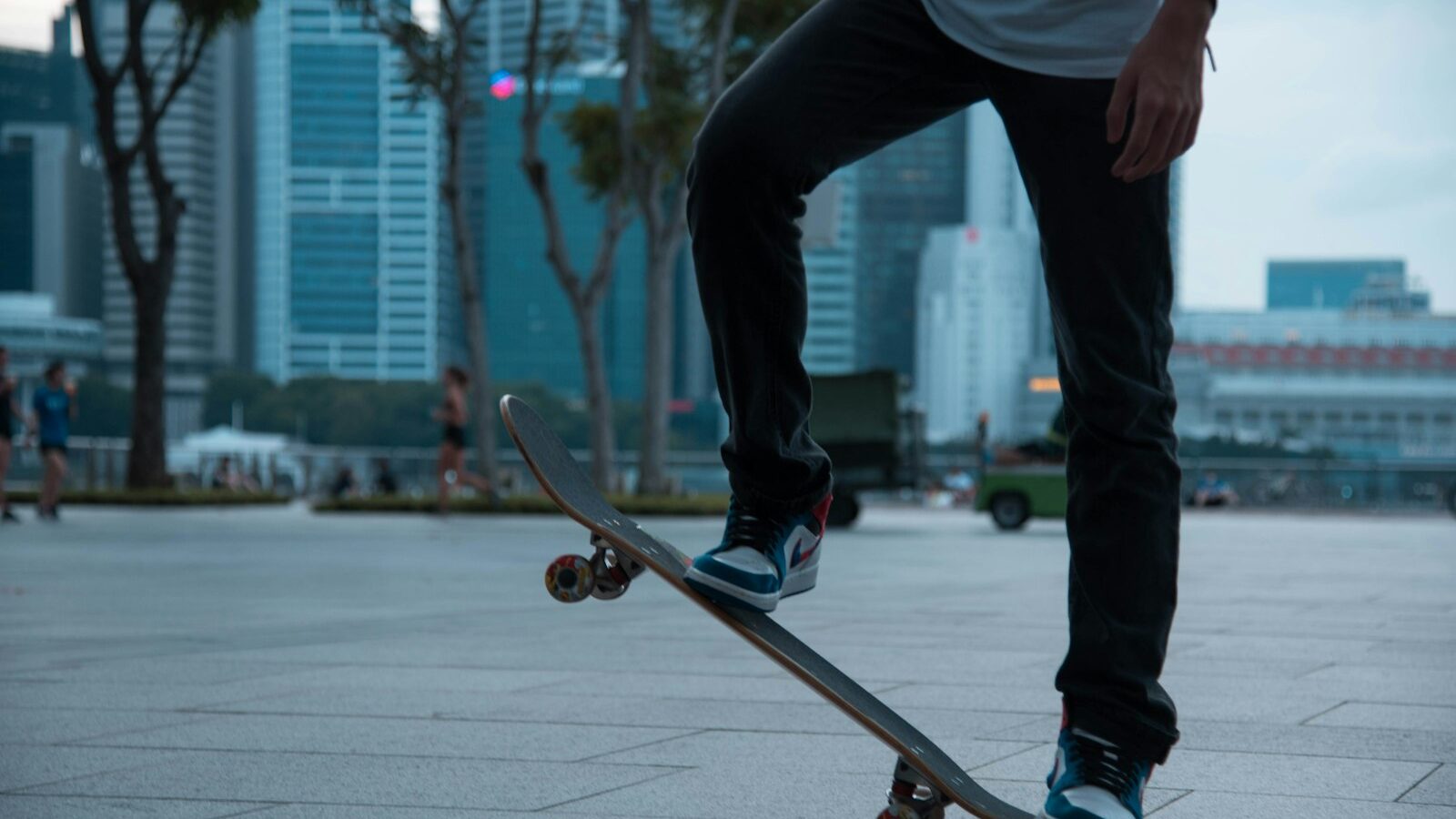
Few hobbies look as effortless and feel as hard-won as skateboarding. The moment you first roll along on a board, balance it and step off in one piece, something clicks. Taking up skateboarding as a hobby is a decision to embrace being a beginner in public, to collect a few harmless bruises, and to discover a genuinely creative, addictive way to move through the city. It is also more welcoming than its rebellious image suggests. Singapore has a warm, growing skate scene, smooth plazas and proper skate parks, and skaters who are usually happy to help a newcomer find their feet.
This guide covers what skateboarding really involves, how to choose your first board, the safety gear you must not skip, your first steps, and where to skate and find people around the island.
What Skateboarding Is Really About
At its simplest, a skateboard is a wooden deck on four wheels that you propel by pushing with one foot. But skateboarding is less a single activity than a family of styles. Street skating uses the urban landscape of ledges, stairs and rails. Park skating happens in purpose-built parks with ramps and bowls. Cruising is simply rolling around for transport and pleasure, with no tricks required. Many beginners assume they must learn to jump and flip the board straight away, but plenty of skaters happily cruise for years and never do a single kickflip.
The appeal runs deep. Skateboarding builds remarkable balance, coordination and lower-body strength. It rewards patience, because progress is measured in tiny victories earned through repetition. It is portable and relatively cheap. And it has a strong culture around it, from the fashion to the videos to the friendships formed at the local park. Crucially, it is a hobby with no scoreboard. You compete only against yesterday’s version of yourself, which makes it strangely calming despite the scraped knees.
Be realistic, though. The learning curve is steeper than roller skating, falls are part of the deal, and you will feel clumsy for a while. That is normal, and protective gear plus a sensible, gradual approach keeps the bumps minor.
Choosing Your First Board
The board you want depends on what you want to do. A common beginner mistake is buying a cheap toy-shop board with poor components that make everything harder, or buying a technical street setup before you can even roll. Here is a simple guide to the main options.
| Board type | Feels like | Best for | Beginner friendliness |
|---|---|---|---|
| Standard popsicle skateboard | Classic trick deck | Learning tricks, park and street | Good all-rounder |
| Cruiser board | Small, nimble, softer wheels | Short rides, smooth cruising | Very approachable |
| Longboard | Long, stable, fast | Distance, commuting, downhill | Easy to balance, harder to store |
| Old-school shaped deck | Wider, retro | Bowls, casual pushing | Comfortable and stable |
If your dream is ollies and rails, start on a standard complete skateboard. If you mainly want to cruise park connectors and get around, a cruiser or longboard is more forgiving and more fun sooner. Buy a “complete” (a board assembled and ready to ride) from a proper skate shop rather than piecing parts together as a beginner, and ask the staff to help you match the setup to your shoe size and goals.
Safety Gear You Should Not Skip
Skateboarding carries a real risk of falls, and the ground does not care how cool you look. Sensible protection is what keeps this hobby fun instead of frightening.
- A helmet. Essential, every session, no exceptions. Head injuries are the ones you cannot shake off.
- Wrist guards. Beginners fall onto their hands constantly, and wrists are a very common injury.
- Knee and elbow pads. They let you fall forward onto your pads and slide instead of scrape.
- Flat, grippy shoes. Proper skate shoes or any flat-soled trainers. Never skate in slippers or sandals.
Learn to fall well early on. Practise crouching low and rolling out of a fall rather than stiffening up and slapping the ground. Skate on dry surfaces only, because wet ground after rain is treacherous and can send both you and the board flying. And pick low-traffic spots away from roads, pedestrians and cyclists while you find your balance.
Your First Sessions on the Board
Break the intimidating whole into small, achievable skills, and progress comes surprisingly fast.
- Find your stance. Stand on the board on grass or carpet to feel which foot naturally goes forward. Front-left is “regular”, front-right is “goofy”. Neither is better.
- Get comfortable standing and balancing. On a soft surface that stops the wheels, practise stepping on, crouching and shifting your weight.
- Push and glide on flat ground. Push gently with your back foot, then rest it on the board and roll. This basic push is the foundation of everything.
- Learn to turn. Lean your weight into your heels or toes to steer. Loosening or tightening the trucks (the metal axles) changes how sharply the board turns.
- Practise stopping and stepping off. Learn to slow with a foot drag and to hop off cleanly before you go anywhere fast.
Keep early sessions short and frequent. Fifteen or twenty minutes of focused practice, a few times a week, beats one long, frustrating session. Film yourself occasionally, since seeing your posture helps more than you would expect.
Cost, Space and Skating in Singapore
Skateboarding is refreshingly affordable. A decent beginner complete plus a full set of pads is a one-off cost, and after that you are only replacing worn parts like wheels and grip tape now and then. That makes it one of the better value movement hobbies.
Space and noise are the real considerations in an HDB context. You cannot practise inside the flat, and skating in corridors or void decks can disturb neighbours and may be against the rules, so be considerate and check what is allowed. The good news is that Singapore has dedicated skate parks and plenty of smooth plazas, and the island’s flat, paved geography suits cruising well. Early mornings and cooler evenings are best for beating both the heat and the crowds. As always, hydrate often, rest in the shade, and never skate on wet ground.
For storage, keep your board somewhere dry and ventilated, because our humidity can rust bearings and hardware over time. A quick wipe-down after sessions keeps everything rolling smoothly.
Getting Better and Finding Community
Once you can push, glide and turn with confidence, the next goals usually include riding ramps, learning to drop in at a park, and eventually the tic-tac and the ollie. Free online tutorials cover every trick imaginable, and breaking each one into steps keeps frustration at bay. Above all, be patient and kind to yourself, because every skater you admire spent months falling first.
The community is one of skateboarding’s greatest gifts. Singapore’s skate parks are social hubs where beginners are far more welcome than the intimidating image suggests. Turn up, watch, ask questions, and you will usually find someone happy to share tips. Look for local skate groups on social media, keep an eye out for beginner sessions and community events, and consider going with a friend so you can cheer each other on.
If you love the balance and flow, you may also enjoy the wheeled cousin in this batch, roller skating and rollerblading, or the rhythm and movement of social and ballroom dancing.
The hardest part of skateboarding is simply stepping onto the board the first time. Gear up, find a quiet patch of smooth ground, and give yourself permission to wobble. That first clean roll is waiting, and it feels every bit as good as it looks.