

If your circle of close friends feels smaller than it once did, you are far from alone. The so-called friendship recession in Singapore describes something many adults quietly feel: friendships that were effortless in school or university slowly thinning out under the weight of work, family, and busy adult life. Feeling lonely even while surrounded by people is more common than most of us admit, and noticing it is not a weakness. It is a sign you value real connection.
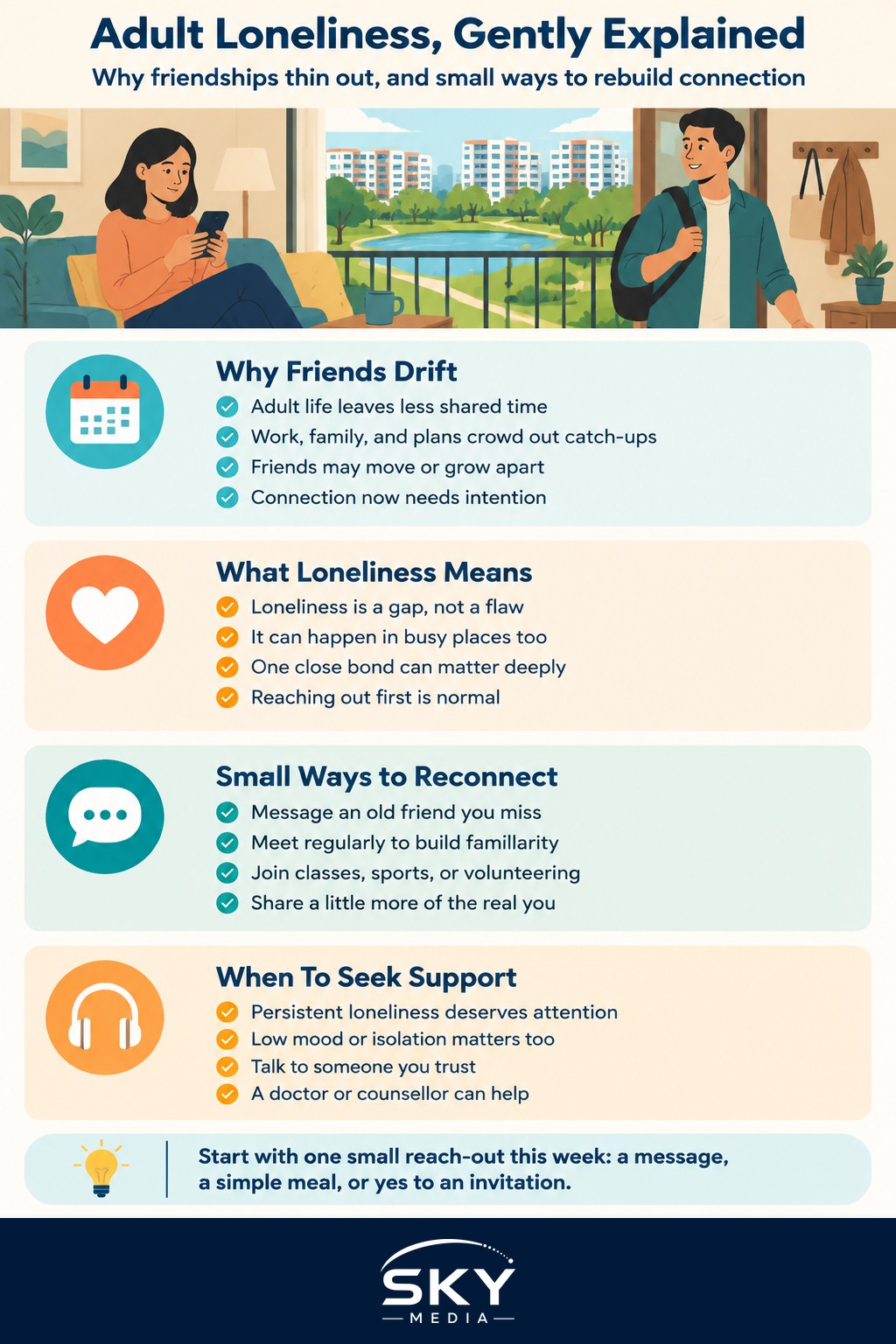
Why Adult Friendships Fade
In school and national service, friendship was almost automatic. You shared time, space, and routines, so closeness grew without much effort. Adult life removes that scaffolding. Long working hours, commutes, shift work, and the pull of BTO planning, marriage, caregiving, or raising children all compete for the same limited hours. Friends move to different estates or overseas, life stages diverge, and catching up starts to need calendars and planning.
None of this means anyone stopped caring. It means friendship now asks for something it once gave freely: intention. Understanding this can lift a lot of guilt. If you and an old friend have drifted, it is usually life, not a failing on either side. And if making new friends feels harder than it used to, that is a widely shared experience, not a personal flaw.
It also helps to notice how modern life can quietly deepen the gap. Scrolling through everyone else’s highlights can make your own quieter evenings feel lonelier than they are, and it is easy to mistake being contactable for being connected. Real closeness usually needs presence, not just presence online.
Understanding Loneliness Without Shame
Loneliness is not about how many people you know. It is the gap between the connection you have and the connection you want. You can feel it in a full HDB flat, a busy office, or a lively group chat. Treating loneliness as information rather than a verdict makes it easier to respond to kindly.
A few gentle truths can help:
- Loneliness is a signal, like hunger or tiredness. It is telling you a need is unmet, not that something is wrong with you.
- Quality matters more than quantity. One or two people who truly know you can ease loneliness more than a wide but shallow network.
- Everyone’s need for connection is different. There is no correct number of friends.
- Reaching out first is not desperate. Most people are quietly hoping someone else will make the move.
If loneliness has been weighing on you, you are not failing at adulthood. You are noticing a very human need, and that awareness is the first step toward meeting it. Our piece on coping with loneliness offers more comfort and perspective if you would like it.
Rebuilding Connection, One Small Step at a Time
The good news is that friendship is a skill you can practise at any age. It rarely comes from one grand effort and more often from small, repeated ones. Start where there is already a little warmth. Message an old friend you miss, suggest a simple meal, or say yes to an invitation you might normally decline when tired.
Some approaches that help:
- Turn loose acquaintances into friends by seeing them regularly. Familiarity grows closeness.
- Follow your interests. Classes, sports, volunteering, and interest groups put you near people who share your world.
- Be the initiator sometimes. A short, warm “thinking of you, let us catch up” goes a long way.
- Deepen slowly by being a little open. Sharing something real invites others to do the same.
If your friendships have quietly gone quiet, how to make friends as an adult and reconnecting with old friends are full of doable ideas. Even one small step this week can start to shift things.
When to Reach Out for More Support
Some loneliness eases as you rebuild connection. But if low mood, isolation, or a heavy, persistent loneliness lingers and starts affecting your sleep, appetite, or daily life, please treat that as worth attention. Talking to a trusted person, a doctor, or a counsellor can help, and support is a sign of self-care, not failure. If you ever feel overwhelmed or in crisis, reach out to a mental-health helpline such as the Samaritans of Singapore, who are there to listen.
The friendship recession is real, but so is your ability to build a warm, connected life on your own terms. Go gently, start small, and trust that meaningful connection is always within reach.
Frequently Asked Questions
Why is it so hard to make new friends after thirty? Adult life has fewer built-in chances to meet people, and time and energy are limited by work and family. Friendship needs repeated contact, which is hard to schedule. Joining a regular class, team or volunteer group gives you that repeat exposure.
How can I make friends in Singapore if I am new here? Join regular activities that match your interests, such as sports groups, classes, volunteering or community events, since repeated meetings help friendships form. Say yes to invitations and follow up with one person. Expect it to take a few months.
Can remote work make loneliness worse? It can, since you lose the casual daily contact that office life gives. Schedule regular coffee or lunch with colleagues or friends, and use a co-working space or a class if that suits you. Small routines of contact help.
How is feeling lonely different from being alone? Being alone is simply a physical state, and many people enjoy it. Loneliness is the distress of wanting more connection than you have, which can happen even in a crowd. You can be alone without being lonely.
Is it normal to have only one or two close friends? Yes, the number varies a lot, and a couple of close, trusting friends can be enough. Quality matters more than a big circle. If you feel satisfied with those relationships, there is no need to compare yourself with others.
Further reading: Keeping Friendships After Marriage and Kids · How to Keep in Touch With People Using a Simple Personal CRM