

Every so often a phrase enters common use that carries a whole chapter of national history within it. The merdeka generation singapore honours is one such phrase, referring to a cohort of Singaporeans, broadly those born in the 1950s, who came of age around the time the country moved towards independence. Merdeka is the Malay word for independence or freedom, and the name is a fitting tribute to a group whose formative years coincided with the birth of the young nation. This article explains who they are, why they hold a special place in the national story, and how they are recognised today.
Who the Merdeka Generation Are
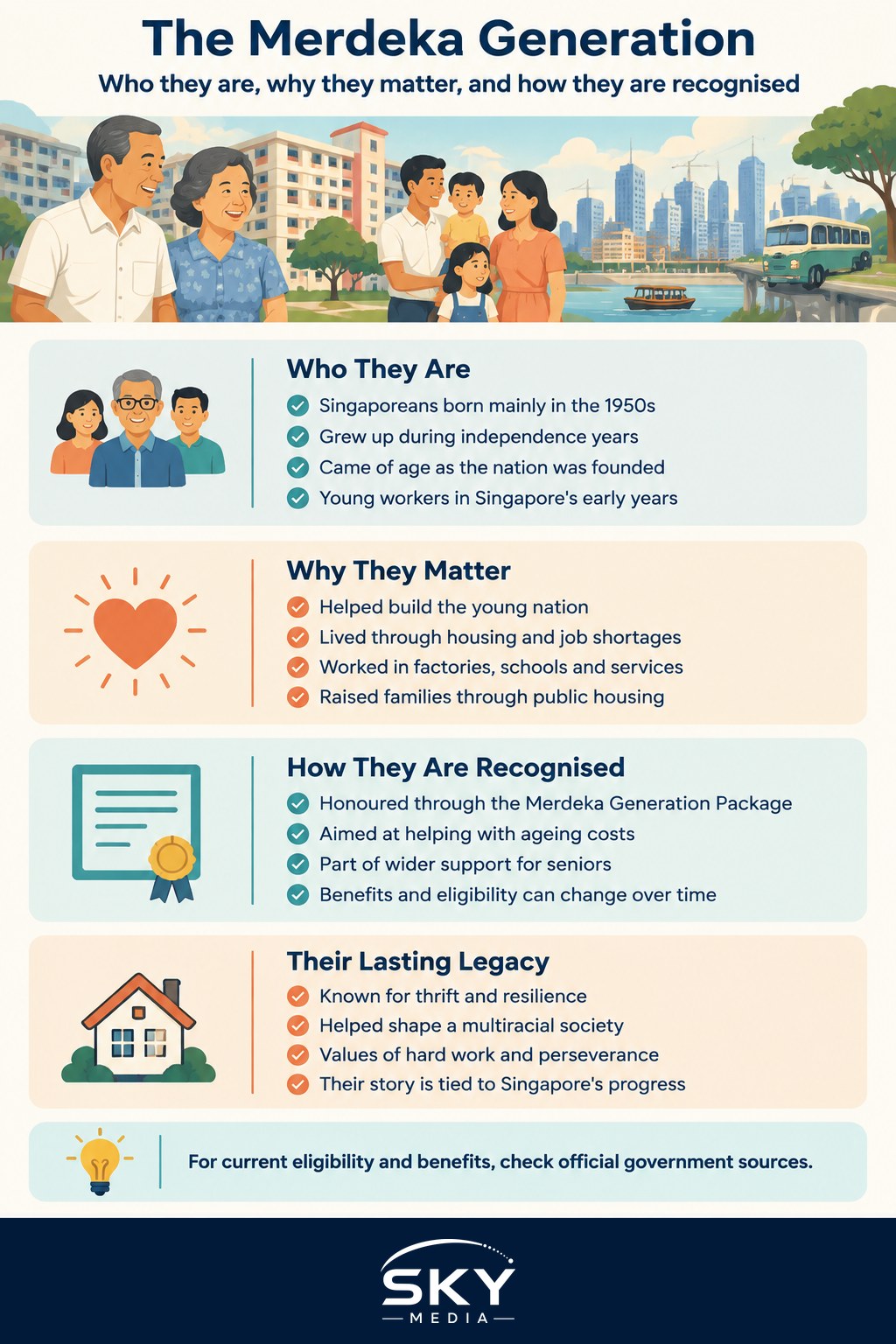
The Merdeka Generation are, in the main, Singaporeans born during the 1950s, the children who grew up as the island shifted from colonial rule through self-government and towards full independence. They were schoolchildren, teenagers and young adults during the momentous years surrounding the country’s founding as a sovereign state, and they entered the workforce as the nation set about the enormous task of building itself from scratch.
Their significance lies in timing and contribution. This was a generation that experienced the uncertainty of the early years, the housing shortages, the search for jobs, the effort to knit together people of different races and backgrounds into a single society. Many took up work in the new factories, offices, schools and services that a developing economy required. They raised families in the first generations of public housing, sent their children through an expanding education system, and helped lay the social and economic foundations that later prosperity was built upon.
They are closely connected to, but distinct from, the older Pioneer Generation, who were generally born earlier and were already adults during the founding years. Where the Pioneers are often credited with the earliest nation-building, the Merdeka Generation followed close behind, carrying that work forward through the demanding decades of development. Together the two cohorts represent the older Singaporeans whose labour and sacrifice shaped the country, and both lived through the difficult wartime and post-war years that also produced the memory of Singapore in the Second World War.
Recognition and the Merdeka Generation Package
To honour this cohort, the government introduced a dedicated scheme commonly known as the Merdeka Generation Package. Announced as a way of thanking these Singaporeans for their contributions and of helping them with the costs of growing older, particularly healthcare, it forms part of a broader approach to supporting seniors that also includes provisions for the Pioneer Generation.
Because the specific benefits, eligibility criteria and amounts associated with such packages can be updated over time, it is best to treat the details generally here and to consult official government sources for the current position. Broadly speaking, schemes of this kind have tended to focus on helping with medical and healthcare expenses, offering support that eases the financial side of ageing for those in the qualifying age band. Anyone seeking to know whether they or a family member qualify, and what exactly is provided, should refer to the official information published by the relevant authorities, which is kept up to date and authoritative.
Beyond the practical support, the Package carries a symbolic weight. By naming and recognising the Merdeka Generation, the country makes a public statement that the sacrifices of ordinary people, the long hours, the frugal living, the raising of families in modest circumstances, are remembered and valued. It is a form of collective gratitude, an acknowledgement that the comforts of the present rest on the efforts of those who went before.
Understanding the Merdeka Generation also helps make sense of the wider society they helped create. The habits of thrift, resilience and quiet perseverance often associated with this cohort shaped much of the national character, and their experience of building unity among diverse communities is part of the story of a multiracial society that continues today. Many of the everyday values around family, hard work and getting along with neighbours can be traced to the world these Singaporeans grew up in.
The Merdeka Generation, then, are more than a policy label. They are the men and women who were young when the nation was young, who grew up alongside it and gave their working lives to its progress. Remembering them, and supporting them in their later years, is a way of keeping faith with a founding generation whose story is inseparable from the country’s own.
Frequently Asked Questions
How is the Merdeka Generation different from the Pioneer Generation? The Pioneer Generation were generally born earlier and were already adults during the founding years, while the Merdeka Generation, born mainly in the 1950s, grew up as the island moved towards independence. The Merdeka cohort carried nation-building forward through the demanding decades of development.
How can I check if I qualify for the Merdeka Generation Package? Benefits, eligibility criteria and amounts can be updated over time, so check the official information published by the relevant government authorities rather than relying on older articles. A family member can do this on your behalf if you prefer.
What does the word Merdeka actually mean? Merdeka is the Malay word for independence or freedom. The name fits a group whose formative years coincided with the birth of the young nation, as the island shifted from colonial rule through self-government towards full independence.
What was life like for people who grew up in the 1950s? It meant uncertainty, housing shortages and a search for jobs, alongside the effort to knit people of different races into one society. Many worked in new factories, offices and schools, raised families in the first public housing and sent children through an expanding education system.
What does the Package mean beyond the money? It carries symbolic weight, as a public statement that ordinary people’s sacrifices, such as long hours, frugal living and raising families in modest circumstances, are remembered and valued. Practical help has tended to focus on easing healthcare costs for those in the qualifying age band.