

Every two years, the skies over eastern Singapore fill with the roar of jet engines and the twist of aerobatic displays. The singapore airshow is Asia’s largest aerospace and defence exhibition, a biennial event where aircraft makers, airlines, militaries and suppliers gather to do business, show off their latest machines, and put on a spectacle. For most residents and visitors, though, the airshow means one thing: the chance to watch fighter jets and display teams perform overhead, and to get close to aircraft on the ground. This guide explains what the event is, how the trade days differ from the public days, what to expect from the aerial displays, and how to plan a visit with the family.
What the Singapore Airshow Is
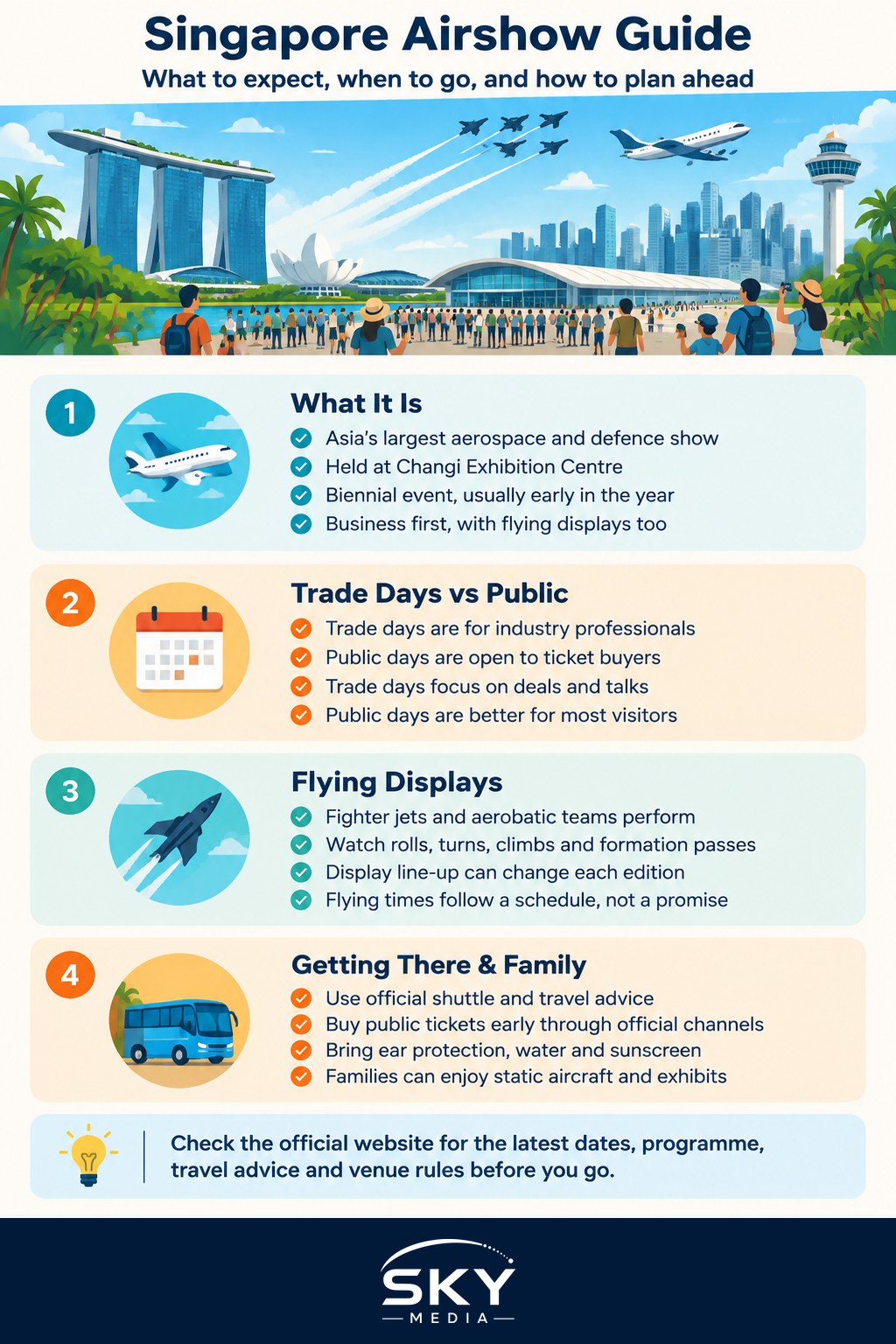
The Singapore Airshow is a major international aerospace and defence exhibition held at the Changi Exhibition Centre, near Changi Airport on the eastern tip of the island. It is regarded as the largest event of its kind in Asia and one of the most significant in the world, ranking alongside the big European shows.
Its core purpose is business. Over the event, manufacturers of commercial aircraft, defence firms, airlines, airport operators, technology companies and government delegations meet to sign deals, announce orders, launch products and hold talks. Static displays line the grounds with real aircraft, from airliners and business jets to military planes and helicopters, while indoor halls host exhibitor booths and conferences. Alongside all of this runs the part the public loves most: flying displays in the skies above the venue.
The airshow is biennial, meaning it takes place once every two years, and it has traditionally been held early in the year, in February, in even-numbered years. Because it is not annual, it helps to plan ahead. Confirm the exact dates and details for the coming edition on the official Singapore Airshow website, as they are set fresh each cycle.
Trade Days vs Public Days
The event splits into two very different kinds of days, and knowing the difference matters when you plan. The trade days come first and are for the industry: exhibitors, buyers, delegations, media and invited professionals attend to do business, and these days are not open to general ticket-buying members of the public. The public days, usually over a weekend at the end of the run, are when everyone else can buy tickets and come to watch.
The table below compares the two.
| Feature | Trade days | Public days |
|---|---|---|
| Who attends | Industry professionals, buyers, delegations, media | General public, families, aviation fans |
| When | Weekdays at the start of the event | Weekend at the end of the event |
| Main focus | Deals, launches, conferences, business meetings | Aerial displays, static aircraft, exhibits |
| Access | By registration or invitation only | Public tickets, sold ahead of time |
| Atmosphere | Corporate and professional | Festive and family-friendly |
For the average person, the public days are the ones to target. If you work in aviation, defence or a related field, the trade days offer networking and conference access, but they require professional registration rather than a general ticket.
The Aerial Displays
The flying displays are the highlight for most spectators. During the show, fighter jets, aerobatic teams and other aircraft take to the sky above the exhibition centre to perform manoeuvres: tight turns, rolls, climbs and formation passes that show what the machines and their pilots can do. The Republic of Singapore Air Force typically features, and visiting display teams and aircraft from other countries often join the programme, so the line-up changes from edition to edition.
A few practical notes help you enjoy the displays:
- Timing. Flying displays run to a schedule, usually with sessions across the day. Check the programme so you are in position before the aircraft take off.
- Sound. Jet displays are loud. Bring ear protection for young children and anyone sensitive to noise.
- Sun and heat. Much of the viewing is outdoors with limited shade. Sunscreen, a hat, water and light clothing make a big difference in the tropical weather.
- Cameras and binoculars. They are worth bringing for the flying and the static aircraft, though the action can be enjoyed with the naked eye too.
Because weather and operational factors can affect flying, the displayed schedule is a guide rather than a guarantee, and the official channels will have the latest programme on the day.
Getting There, Tickets and What to Bring
The venue sits at the far eastern end of the island, away from the main train network, so transport needs a little thought. For public days, organisers typically arrange shuttle services from designated points, and public transport connections feed those shuttles, so review the official travel advice before you set off. Driving and parking may be limited and subject to arrangements set for the event, and ride-hailing to and from the venue can be busy at peak times, so allow extra time both ways.
Tickets for the public days are sold ahead of the event through official channels, and they can sell out, so buying early is wise. Prices, ticket categories and any special packages are set each edition, so confirm the current details on the official site and avoid unofficial resellers. Do check the venue’s rules on what you can bring in, as large bags and certain items are often restricted at an event of this scale.
What Families Can Expect
The public days are built to be family-friendly, and they are a genuine treat for anyone curious about planes. Beyond the flying, the ground programme usually includes static aircraft you can see up close, interactive and educational exhibits, activities aimed at children, and displays from the air force and industry partners that explain how aviation and aerospace work. For many families, wandering among real jets and helicopters is as memorable as the displays overhead.
To make the day smooth with children, arrive early to beat queues and secure a good viewing spot, pack water, snacks, sunscreen and ear protection, agree on a meeting point in case anyone gets separated in the crowds, and plan the trip home around the post-show rush. With a little preparation, the airshow offers a rare chance to bring the world of flight down to eye level.
Why the Airshow Matters
Beyond the spectacle, the Singapore Airshow underlines the country’s role as an aviation and aerospace hub. The deals and partnerships struck during the trade days support jobs and investment in the sector, and the event puts Singapore at the centre of the regional and global aerospace conversation every two years. For residents and visitors, the public days turn all of that into something you can see and hear for yourself: a weekend when the eastern skies belong to the aircraft, and anyone with a ticket can look up and watch.
Explore more
To fit the airshow into the rest of your year, see our calendar of major events in Singapore. And for help planning your journey to the venue and back, read our guide to public transport fares and policy in Singapore.
Frequently Asked Questions
Is the Singapore Airshow suitable for toddlers and babies? It can be, with preparation, but it is a tiring day for very young children. Jet displays are loud, so ear protection matters, and there is little shade in the heat. Bring water, a hat and a plan for rest breaks, and consider whether a shorter visit suits your family better.
How long should I plan to spend at the airshow on a public day? Plan for at least half a day, and a full day if you want to see the displays and the static aircraft. Flying shows run in sessions across the day, so check the programme and build your visit around the ones you care about. Allow extra time for the trip home.
What happens to the flying displays if the weather turns bad? Displays may be changed or shortened when weather or operations require it, since the published schedule is a guide rather than a guarantee. Check the official channels on the day for updates. Ticket terms differ by edition, so read the organiser’s policy before you buy.
Can I bring a drone, large bag or food into the airshow? Check the venue rules before you go, because restrictions are common at large events beside an airport. Large bags and certain items are often limited, and drones are generally not welcome near flying displays. Water and small snacks are usually the safest things to carry.
Is the airshow worth visiting if I am not an aviation fan? Yes, many visitors enjoy it without any aviation knowledge. The flying displays are exciting to watch, and standing beside real jets and helicopters is a novelty in itself. It works well as a family day out, though be ready for noise, crowds and outdoor heat.
Further reading: How to Photograph Planes and Planespotting