
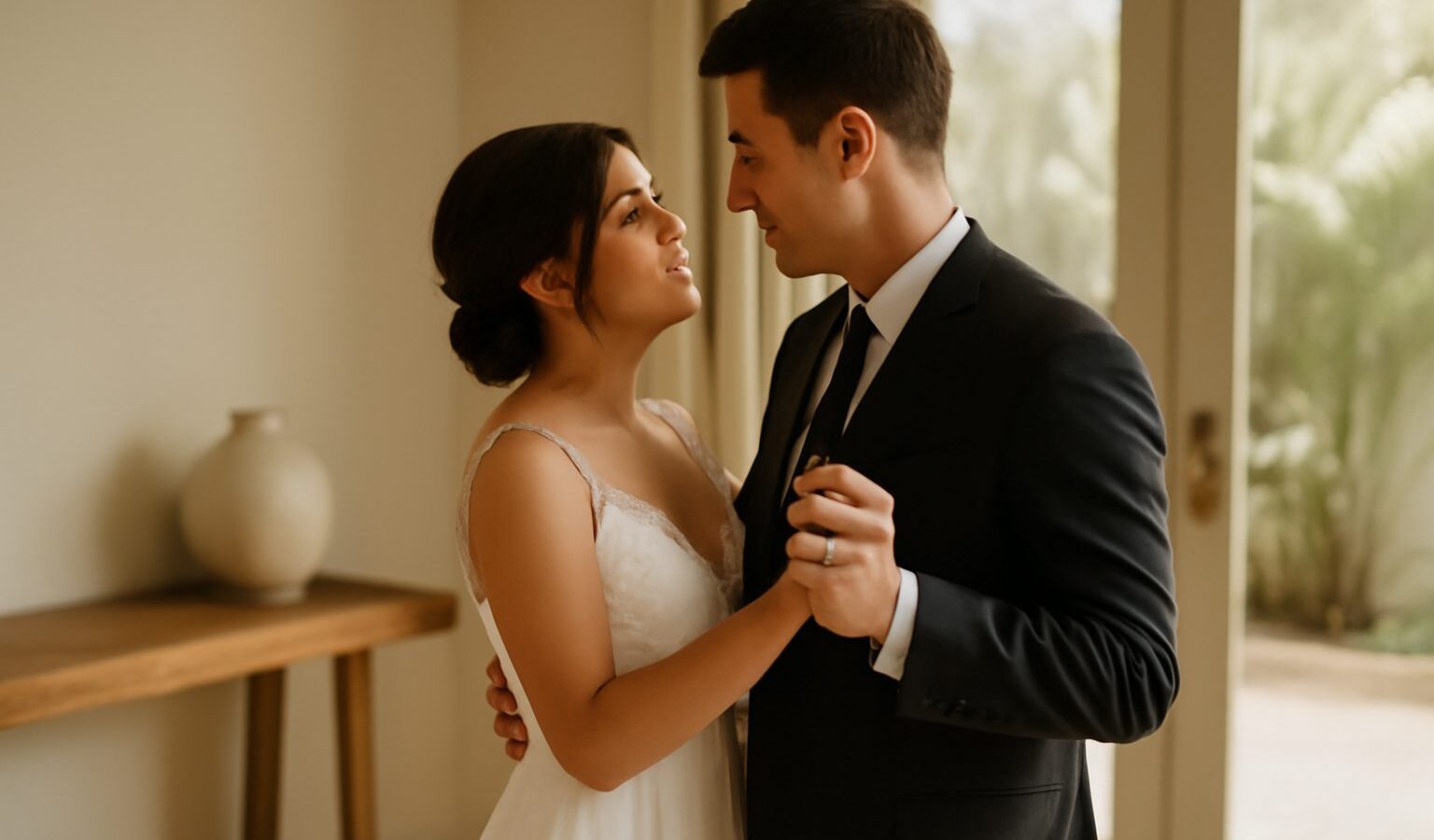
The wedding first dance is one of those traditions that sounds romantic in theory and terrifying in practice, especially if neither of you has danced since a school social. The good news is that a first dance does not have to be a polished performance. It can be a slow sway, a gentle turn or two, and a quiet moment where the room falls away and it is just the two of you. In Singapore banquets, where the evening is often packed with march-ins, speeches and course after course, the first dance is a rare pause. This guide helps you make it feel like you, not like an exam.
Deciding Whether to Have One at All
Start with the most important question: do you actually want a first dance? It is a lovely tradition, but it is not compulsory, and plenty of local weddings skip it entirely or replace it with something that suits the couple better. Some couples prefer a montage, a group toast or simply more time to visit tables.
If dancing in front of a crowd fills you with dread, that feeling is worth listening to. You could do a very short dance, invite family and friends to join partway through so you are not alone on the floor, or hold a private dance during the getting-ready hours with only your photographer present. There is no single correct way to do this, so choose the version that makes you smile rather than the one you think you are supposed to want.
Whatever you decide, fold it into your wedding day run of show so the timing is clear and your emcee can set it up smoothly rather than springing it on you.
Choosing a Song That Fits
The song is the heart of the whole thing, and the best choice is almost always one that already means something to you. The track from your first trip together, the tune that was playing when you got engaged, the artist you both quietly love: sentiment beats fashion every time.
A few practical pointers help the choice work on the floor:
- Mind the length. Anything past three and a half to four minutes can feel long when you are the only ones dancing, so a gentle trim or an early fade is fine.
- Watch the tempo. Very fast songs are hard to move to gracefully; a mid or slow tempo is far more forgiving.
- Check the lyrics. Make sure the words actually suit a wedding rather than only sounding pretty.
- Consider your families. If elders are present, a song everyone can enjoy warms the room.
If you cannot agree, pick two shortlists, one each, and look for the overlap. The song you both light up at is the right one.
Freestyle or Choreographed
The next fork in the road is how much you want to plan. Some couples want a rehearsed routine; others want to keep it natural. Neither is better, they simply suit different people.
| Approach | Best for | What it asks of you |
|---|---|---|
| Simple sway | Nervous or busy couples | Minimal practice, maximum ease |
| A few learned steps | Couples wanting structure without pressure | A handful of rehearsals |
| Full choreography | Confident couples who enjoy performing | Regular practice over weeks |
| Surprise routine | Couples who love a reveal | The most practice and coordination |
For most couples, the middle ground wins: learn a couple of simple moves, a turn, a dip if you are feeling brave, and let the rest be a relaxed sway. That gives you enough structure to feel secure without the pressure of remembering a full routine under the lights.
Practising Without the Stress
If you do want to rehearse, keep it light and start earlier than you think. A little practice spread over a few weeks beats a panicked cram the night before. Put the song on at home, in the living room of your flat, and simply move to it until it feels familiar. Muscle memory is your friend on the night.
A simple approach:
- Learn to find the beat and start together on a clear cue.
- Settle into a basic side to side sway you can do without thinking.
- Add one or two accents, a slow turn or a gentle dip, only if they feel comfortable.
- Practise in the shoes and, if you can, the sort of outfit you will actually wear.
- Agree a clean ending, a hug or a kiss, so you both know when it is over.
That last point saves a lot of awkwardness. Knowing how the dance ends means you never have to wonder whether to keep going when the music fades.
Calming the Nerves on the Night
Even confident couples get butterflies when the spotlight lands and the room goes quiet. That is completely normal. A few things genuinely help.
- Look at each other, not at the crowd. Holding your partner’s gaze steadies both of you and makes the moment intimate rather than exposed.
- Breathe and slow down. Nerves make people rush, so consciously ease your pace.
- Keep it short. A trimmed song means the dance is over before nerves take hold.
- Let your wedding party set the tone. Warm faces near the floor are reassuring, and your bridesmaids and groomsmen can help ease you into the moment or join in if you invite them.
- Accept imperfection. A stumble that ends in a laugh is often the most memorable, human part of the night.
Remember that your guests are on your side. Nobody is there to critique your footwork; they are there to feel happy for you.
Making the Moment Yours
The most touching first dances are rarely the most technically impressive ones. They are the ones that feel true to the couple: the pair who giggle their way through, the couple who invite their parents to join for the final chorus, the two who simply hold each other and sway while the room glows around them.
So do not measure your first dance against a video you saw online. Measure it against the simple question of whether it feels like you. Pick a song you love, learn just enough to feel safe, look into each other’s eyes, and let the wedding first dance be what it is meant to be: a small, warm island of stillness in the middle of a very big day.
Explore more: your wedding day run of show and bridesmaids and groomsmen duties.