

Buying a new launch condo in Singapore means learning a short alphabet soup of milestones, and two of the most important are TOP and CSC. If you want TOP and CSC explained in plain language, the short version is this: TOP is when you can legally move in, and CSC is when the building is formally, fully signed off. They happen at different points, they trigger different things, and they matter for when you collect keys, when the last of your payments fall due, and how long you have to report defects.
This article is general information for buyers and owners, not legal or financial advice. Every project has its own timeline and paperwork, so always confirm the specifics with your developer, your conveyancing lawyer, and the Building and Construction Authority (BCA), which oversees these approvals.
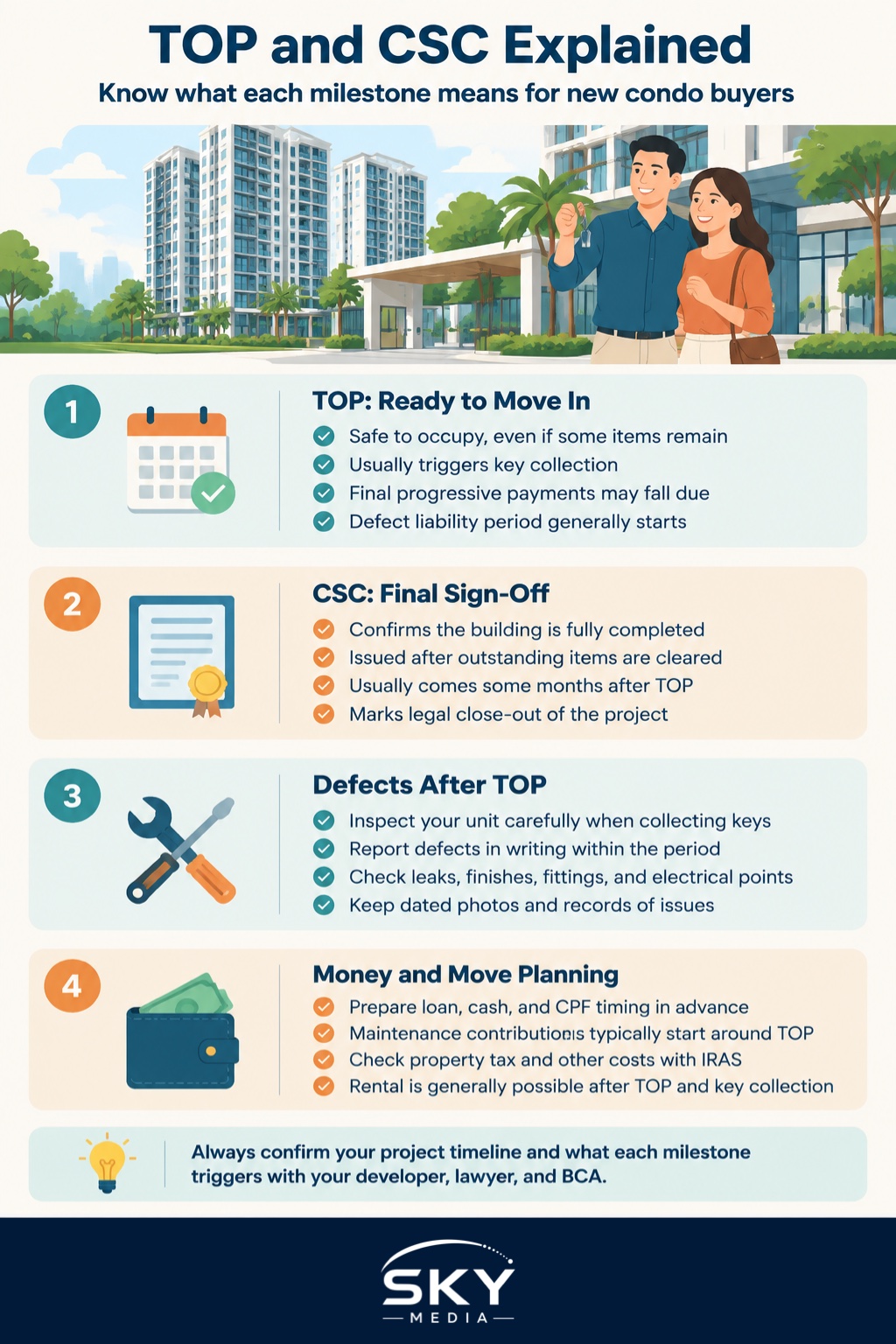
What the Temporary Occupation Permit (TOP) Means
The Temporary Occupation Permit is the approval that says a building is safe to be occupied, even though a few final formalities may still be outstanding. When a project reaches TOP, the essential services and safety requirements have been assessed and the authorities allow people to move in.
For a buyer, TOP is a big moment because it usually triggers the notice to collect your keys and to take possession of your unit. It is also the point at which the final progress payments under a typical progressive payment scheme fall due, so your loan disbursement and your cash portion need to be ready. Practically, TOP means:
- You can arrange key collection and start renovation or move in.
- The maintenance fund and managing agent arrangements begin, so monthly maintenance contributions typically start.
- The defect liability period generally begins, giving you a window to report and have defects rectified.
TOP is described as “temporary” for a reason. The developer still has to complete outstanding items and obtain the final certificate. Your lawyer and the developer will tell you exactly what TOP triggers in your Sale and Purchase Agreement, because the contract, not a general article, governs your obligations and deadlines.
What the Certificate of Statutory Completion (CSC) Means
The Certificate of Statutory Completion is the final sign-off. It confirms that the building has been completed in accordance with the approved plans and that all statutory requirements have been met. Where TOP says “safe to occupy now”, CSC says “fully and formally complete”.
CSC is usually issued some months after TOP, once the developer has cleared any outstanding conditions and the relevant authorities are satisfied. For most owners, day-to-day life does not change at CSC because you are already living in or renting out the unit. What CSC often marks is the release of the final retention sum or the last contractual milestone, and it is the point at which the project is considered legally closed out. Your legal completion and title arrangements are tied to these milestones, so your conveyancing lawyer will track them on your behalf.
TOP vs CSC at a Glance
The two milestones are easy to confuse because both sound like “the building is done”. This table sets out the practical differences. Treat it as a general guide and confirm the details for your specific project with the developer and BCA.
| Aspect | TOP (Temporary Occupation Permit) | CSC (Certificate of Statutory Completion) |
|---|---|---|
| What it confirms | Building is safe to occupy | Building is fully and formally completed |
| Typical timing | Earlier milestone | Later, after outstanding items are cleared |
| Can you move in? | Yes, key collection usually begins | Already occupied by this stage |
| Payments affected | Final progressive payments typically due | Final retention or last milestone released |
| Defects window | Defect liability period generally starts | Project formally closed out |
The Defect Liability Period and What to Check
Once you collect keys around TOP, you usually enter a defect liability period, a set window during which the developer is responsible for fixing defects in your unit at no cost to you. The exact length and process are stated in your Sale and Purchase Agreement, so read that clause carefully or ask your lawyer to explain it.
Use the window well. A careful handover inspection protects you, because reporting issues in writing within the period is what preserves your right to have them rectified. Common things to check include:
- Water leaks, staining, and signs of damp on ceilings, walls, and around windows.
- Flooring, tiling, and skirting for cracks, hollow tiles, and uneven surfaces.
- Doors, windows, locks, and hinges for smooth operation and proper sealing.
- Electrical points, lighting, and the distribution board for correct function.
- Plumbing, drainage, and sanitary fittings for leaks and water flow.
- Paintwork, finishes, and provided fittings against what the specifications promised.
Report defects to the developer in the manner set out in your contract, keep dated records and photographs, and follow up on rectification. If you disagree with the developer over defects or workmanship, seek advice from a conveyancing lawyer on your options rather than acting on assumptions.
What TOP and CSC Mean for Your Move and Money
Because TOP is usually when your final payments and your key collection line up, plan your financing so the money is ready when the notice arrives. If you are taking a home loan, coordinate the final disbursement with your mortgage banker, and if any part is paid in cash or CPF, arrange that in advance. Never invent a schedule from memory; the actual amounts and dates come from your progressive payment schedule and your bank.
A few practical points for owners around these milestones:
- Maintenance contributions to the management typically begin around TOP, so budget for them.
- Property tax and other ownership costs may apply once you take possession; confirm your position with IRAS.
- If you plan to rent out the unit, you can generally do so after TOP and key collection, but check any restrictions in your contract and follow the correct tenancy and registration steps.
The safest approach is to treat TOP and CSC as legal and financial checkpoints rather than mere formalities. Read your Sale and Purchase Agreement, keep in touch with the developer on the expected dates, and lean on your conveyancing lawyer and mortgage banker to confirm what each milestone triggers for you. Rules and processes can change, so the developer and BCA remain the authoritative sources for your project.
Explore More
If you are buying a resale or completing a purchase, our guide to In-Principle Approval (IPA) for a Home Loan helps you line up financing before you commit. Owners in a strata development should also read Strata Title and Share Value Explained to understand maintenance contributions and voting. Selling one home to buy another around handover? See Bridging Loans for Property Buyers Explained.
Frequently Asked Questions
Can I rent out my new condo straight after TOP? Generally yes, once you have collected the keys, since TOP means the building is safe to occupy. Check your contract for any restrictions and follow the proper tenancy steps. Property tax and rental income obligations should be confirmed with IRAS.
How long does it take to get CSC after TOP? CSC usually comes some months after TOP, once the developer has cleared outstanding conditions and the authorities are satisfied. There is no fixed date that fits every project, so ask your developer for the expected timeline and let your lawyer track it.
What should I bring to the handover inspection of my new unit? Bring the floor plan, the schedule of finishes from your agreement, a torch, a phone for dated photos, and a notebook. Test taps, switches, doors and windows, then list every defect in writing to the developer. A trusted inspector or your own checklist can help.
Do I pay maintenance fees while waiting for CSC? Maintenance contributions typically start around TOP, when the managing arrangements begin, not at CSC. The exact start date and amount depend on your project and agreement, so confirm them with the developer or managing agent and budget early.
What if I find defects after the defect liability period ends? Once the period ends, the developer’s obligation to fix qualifying defects at no cost may no longer apply, which is why reporting issues in writing within the window matters. For serious problems, speak to a conveyancing lawyer about what options remain.
Further reading: Sub-Sale Condos Explained: Buying or Selling Before TOP