
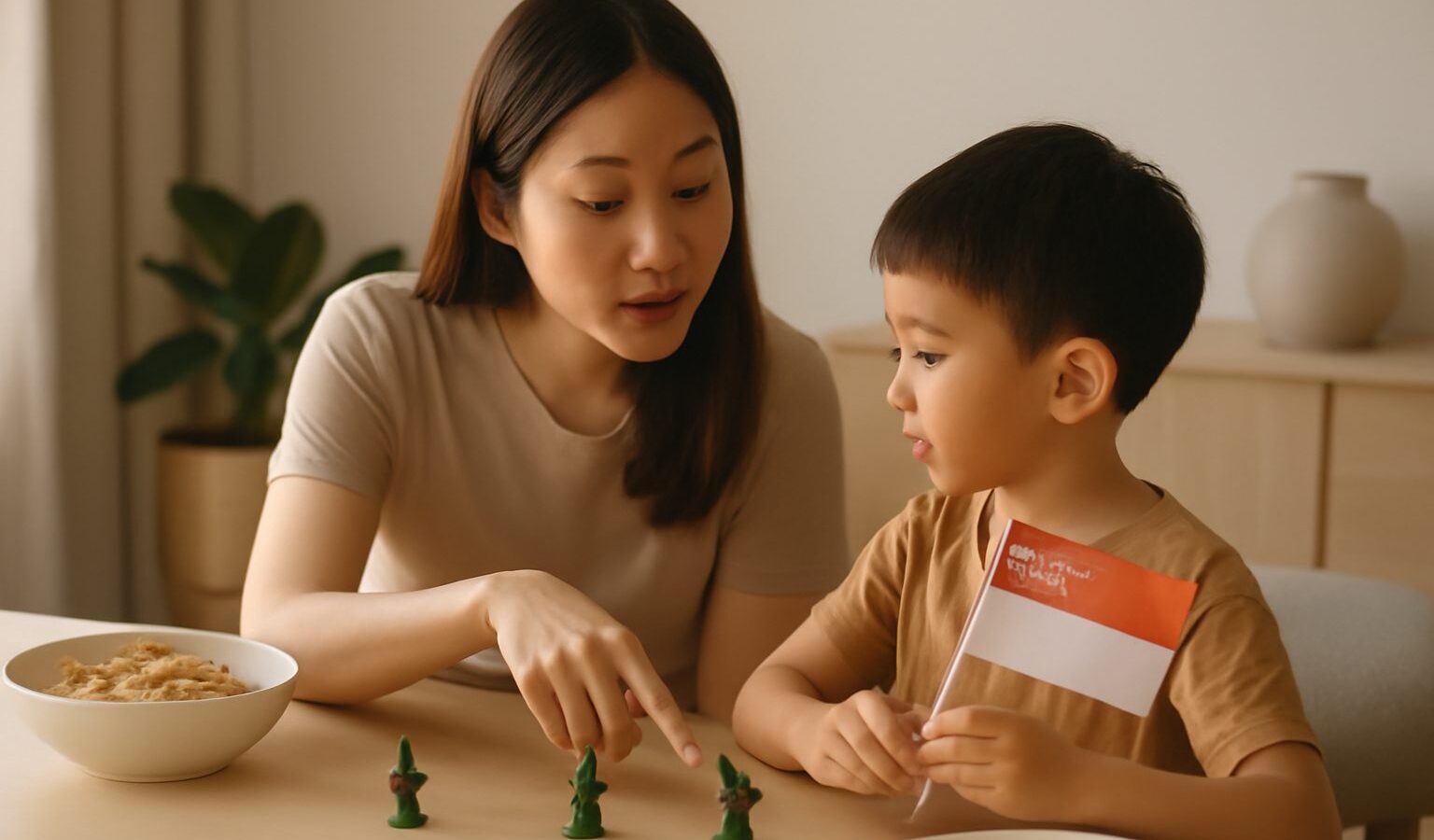
Every year on 15 February, Singapore marks Total Defence Day. Children often come home from school having heard about it, sometimes with questions about war, sirens or why they had to eat a simple lunch that day. Other times they hear the public warning siren and wonder what it means.
Talking about Total Defence Day for kids does not need to be heavy. At its heart, it is about looking after each other, being prepared and doing your part. This guide helps parents explain it in age-appropriate ways and turn it into everyday habits, without causing worry.

What Total Defence Day Marks, in Plain Words
Total Defence Day is held on 15 February because that is the date in 1942 when the British surrendered Singapore to the Japanese forces during the Second World War. The occupation that followed was a very hard time for people living here.
The lesson Singapore drew from that history is that defending a country is not only the job of soldiers. Everyone, including families, workers, students and children, plays a part in keeping the country safe, strong and united. That idea is called Total Defence.
Singapore describes Total Defence through six pillars: Military, Civil, Economic, Social, Psychological and Digital. For a deeper look at each one, see our explainer on Total Defence and its pillars.
Matching the Conversation to Your Child’s Age
How much you share depends on your child’s age and temperament. A rough guide:
| Age group | What to focus on | Example of what you might say |
|---|---|---|
| Preschool (about 3 to 6) | Helping, sharing and staying calm | “Total Defence Day is about everyone helping each other so we all stay safe.” |
| Lower primary (about 7 to 9) | The six pillars as everyday actions | “Being kind to classmates is Social Defence. Keeping your passwords secret is Digital Defence.” |
| Upper primary (about 10 to 12) | Simple history and why it still matters | “In 1942 Singapore fell during a war. We remember it so we stay united and prepared.” |
| Teens | Bigger questions about duty, resilience and misinformation | “What would you do if you saw a fake news message going around your class chat?” |
Follow your child’s lead. If they ask a question, answer it simply and honestly. You do not need to cover everything at once.
The Six Pillars as Everyday Habits
Children understand ideas best through actions they can take. Here is how you might explain each pillar:
- Military Defence. “Our soldiers, including national servicemen, train to protect Singapore. When older family members serve NS, they are part of this.”
- Civil Defence. “This is about knowing what to do in an emergency, like a fire. We know where the exits are and how to call for help.”
- Economic Defence. “When adults work hard and businesses keep running even in tough times, the country stays strong. You help by not wasting food, water or electricity.”
- Social Defence. “Singapore has people of many races and religions. Being kind and respectful to everyone keeps us united.”
- Psychological Defence. “This is about believing in ourselves and our country, and not giving up when things are hard.”
- Digital Defence. “We protect ourselves online by keeping passwords private, not clicking strange links, and checking if something is true before sharing it.”
The last pillar is especially relevant for children with tablets or phones. Sit with younger children when they go online, and talk openly about anything confusing or upsetting they see.
Explaining the Siren Calmly
Each year on Total Defence Day, the Singapore Civil Defence Force (SCDF) sounds the “Important Message” signal through the Public Warning System, the network of sirens around the island. It is a public reminder and a test of the system, not a real emergency.
If your child hears it, you could say:
- “That siren is a practice. It reminds everyone to be prepared.”
- “If there was ever a real emergency, adults would tell us what to do, and we would follow instructions calmly.”
You can also use the moment to show your child how to check for official information. SCDF and the official SGSecure resources explain what the different signals mean, and the details are worth reading together with older children. Check the SCDF website for the current timing and arrangements each year, as these can change.
Activities to Do Together in February
A few simple, calm activities help make the ideas stick:
- Make a family emergency plan. Agree on where to meet if you are separated, and make sure your child knows a parent’s phone number by heart, if they are old enough.
- Pack a simple ready bag. Include a torch, water, a basic first aid kit and copies of important contacts. Let children decorate the bag label.
- Try a “simple meal” day. Some schools mark the day with a modest lunch to reflect on wartime hardship. You can do the same at home and talk about not wasting food.
- Visit a heritage site or museum. Several sites in Singapore tell the story of the Second World War. Check opening details and age suitability beforehand, as some exhibits may be intense for younger children.
- Talk to grandparents. If older relatives are willing, ask them to share family stories about hard times and how people helped each other.
- Do a kindness challenge. For one week, each family member does one helpful act a day for someone else, a classmate, a neighbour, a cleaner or a hawker uncle or auntie.
Keeping It Reassuring, Not Scary
Some children, particularly sensitive ones, may feel anxious when they hear about wars or emergencies. A few principles help:
- Stay calm yourself. Children read your tone more than your words.
- Emphasise safety and adults in charge. Remind them that many people work every day to keep Singapore safe.
- Avoid graphic details. Younger children do not need specifics about violence or suffering.
- Focus on what they can do. Feeling useful reduces worry. Being kind, listening to instructions and staying calm are real contributions.
- Watch for lingering fears. If your child seems worried for days, has trouble sleeping or keeps returning to frightening thoughts, speak to their teacher or school counsellor, or seek help from a professional.
Building Resilience Beyond One Day
Total Defence Day is a useful annual prompt, but the values behind it apply all year. Resilience grows when children practise solving problems, bouncing back from setbacks and caring for others. Our guide to building a growth mindset in your child offers practical ideas that fit naturally with Psychological Defence.
Each February, you can revisit the conversation and add a little more depth as your child grows. Ask what they learned in school, refresh your family emergency plan and pick one new habit for the year ahead. Over time, Total Defence stops being an abstract term and becomes something your child understands from daily life: we look after ourselves, we look after each other, and we stay ready together.
For a broader overview of the national concept and how it developed, read our guide to Total Defence explained.
Official sources: MINDEF / NS Portal