
Singapore is a small island with an unusually good public transport network, and the right apps turn “how do I get there” into a solved problem. Whether you are catching a bus, tapping into the MRT, calling a ride at midnight, or hunting for a carpark, the best transport apps singapore residents use will save you time, money, and the small daily stress of not knowing when the next bus arrives. This guide walks through the main categories, what each is good for, and how the picture differs for tourists and long-term residents.
Journey Planning and Bus Arrival Apps
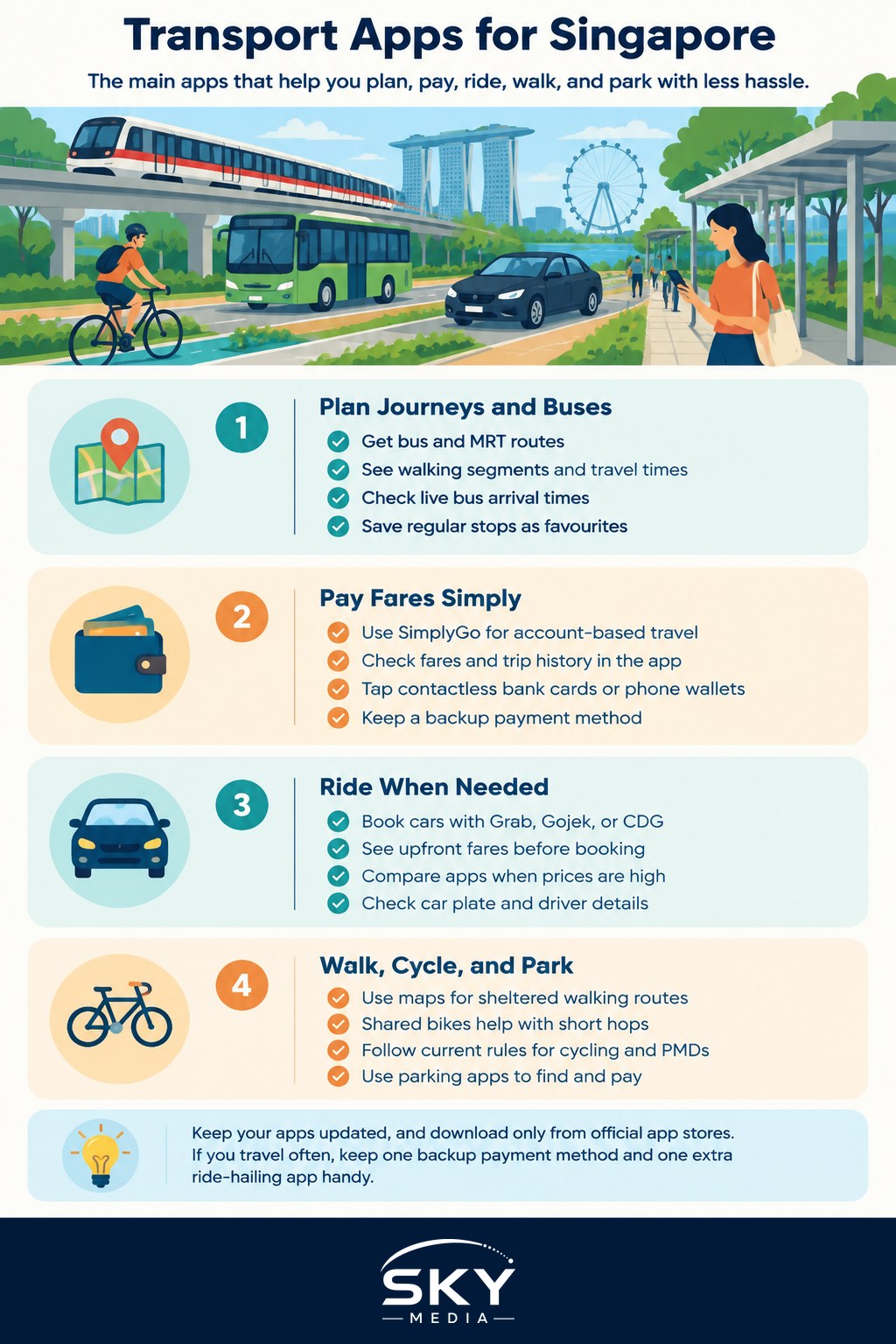
The foundation of getting around is knowing when and how to go. Journey planning apps let you enter a destination and get combined bus and MRT routes, walking segments, and rough travel times, which is invaluable when you are working out whether to transfer or just walk the last stretch. General mapping apps do this well, and there are transit-focused apps that specialise in Singapore’s network.
Bus arrival apps are the everyday hero. Instead of guessing, you see how many minutes until the next bus at your stop, often with a rough indication of how full it is. That single feature changes behaviour, letting you finish your coffee, take a slower walk, or decide the wait is long enough to justify a different route. Look for apps that pull live arrival data and let you save your regular stops as favourites, so your morning check is one tap.
SimplyGo, EZ-Link, and Fare Payment
Paying for public transport has moved firmly onto cards and phones. The SimplyGo app lets you manage account-based travel, check fares and trip history, and top up, and many riders now simply tap a contactless bank card or a phone wallet at the gantry without a separate transit card at all. Traditional stored-value cards remain part of the picture, and EZ-Link continues to serve people who prefer a dedicated card, including a version managed through its own app.
A few things worth knowing:
- Contactless bank cards and phone wallets can often be tapped directly, which is the simplest option for short visits.
- App-based accounts let you see fares and history rather than staring at a card balance.
- Keep one backup method, since a flat phone battery at a gantry is a bad time to discover you have no card.
Choose based on how you travel: residents often settle on one tap-and-go habit, while visitors may prefer whatever needs the least setup.
Ride-Hailing, Taxis, and Private Hire
When public transport does not fit, ride-hailing fills the gap. The main apps in Singapore let you book a car, see an upfront fare, and pay cashlessly, and the big names most people cycle between are Grab, Gojek, and the ComfortDelGro (CDG) app for taxis. Fares move with demand, so the same trip can cost noticeably more in a downpour or at peak hours.
Practical habits help you get a fair deal and stay safe:
- Compare a couple of apps when fares look high, since pricing differs by moment and provider.
- Check the car plate and driver details before getting in.
- Prefer in-app cashless payment, which keeps a record of the trip.
- Share your trip status with someone if you are travelling late.
For most residents, keeping two ride-hailing apps installed is enough to dodge surge pricing on one by switching to the other.
Cycling, PMDs, Shared Bikes, Walking, and Parking
Not every trip needs a vehicle. Shared bicycle apps let you unlock a bike for short first-and-last-mile hops, which pairs neatly with the MRT. If you cycle or use a personal mobility device, follow current rules on where these are allowed, since regulations are strict and change over time; ride on the correct paths and check the latest guidance before you head out.
For walking, general maps apps handle sheltered routes, park connectors, and the maze of linked malls surprisingly well, and they are your friend in the midday heat when a covered walkway beats an exposed one. Drivers, meanwhile, lean on parking apps to find carparks, check availability, and pay for parking digitally rather than fumbling with paper coupons.
| Transport app type | Best for | Good to know |
|---|---|---|
| Journey planner and bus arrival | Buses and MRT, live wait times | Save favourite stops for one-tap checks |
| SimplyGo / EZ-Link and wallets | Paying fares tap-and-go | Keep one backup payment method |
| Ride-hailing (Grab, Gojek, CDG) | Door-to-door and late nights | Fares surge in rain and peak hours |
| Shared bikes and cycling | First and last mile | Follow current path and PMD rules |
| Maps for walking | Sheltered routes and malls | Great for avoiding the heat |
| Parking apps | Finding and paying for carparks | Check availability before driving off |
Apps for Tourists Versus Residents
The right toolkit depends on how long you are staying. Tourists benefit from the lowest-setup options: a good maps app for planning, a contactless card or phone wallet for tapping onto buses and trains, and one ride-hailing app for the occasional door-to-door trip. That trio covers almost every visitor’s needs without accounts to manage.
Residents build a slightly deeper stack. A bus arrival app for the daily commute, an account-based travel setup through SimplyGo or a preferred card, two ride-hailing apps to compare fares, and perhaps a parking or cycling app depending on lifestyle. Over time you will naturally prune this down to the few apps you actually open, which is the sign of a well-chosen set. Whatever your mix, keep apps updated, be cautious about unofficial versions, and only download from official app stores. If you are still assembling your phone, our roundup of essential apps for Singapore is a good companion.
Explore more
For the wider set of tools that make daily life here smoother, see our guide to essential apps for Singapore, which covers the government, payment, and lifestyle apps that pair naturally with getting around. Between a solid transport toolkit and those everyday essentials, moving through Singapore becomes one of the easiest parts of your day.
Frequently Asked Questions
What should I do if I leave something behind on a bus or train? Report it as soon as possible to the transport operator, giving the route, time and a description of the item. Contact details are usually on the operator’s website or app. Check your journey history for the bus service number, which makes it easier to trace.
Can tourists use their foreign bank cards on Singapore buses and trains? In many cases, yes, if the card supports contactless payments and is accepted by the system. Check with your card issuer about foreign transaction fees. Tourists may also prefer a dedicated tourist pass or stored-value card, so look at the current options for your length of stay.
How do I find out about MRT disruptions before I leave home? Check the operator’s app or social media for service alerts, and use a transport app that shows live disruptions. Many apps push notifications for lines you use regularly. If a disruption affects you, look for the free bridging bus information that operators usually announce.
Are there transport apps that show wheelchair-friendly or step-free routes? Some journey planners and official transport resources let you filter for accessible routes, and operators list accessible features at stations and bus stops. Features vary between apps, so check which ones provide this. Calling ahead or checking the operator’s website helps for unfamiliar journeys.
Will transport apps still work if my mobile data runs out? Some basic features may, but live bus arrivals and routes need an internet connection. Download offline maps beforehand if you expect poor coverage, and save your usual routes. Public Wi-Fi in stations, malls and libraries can also bridge the gap.