
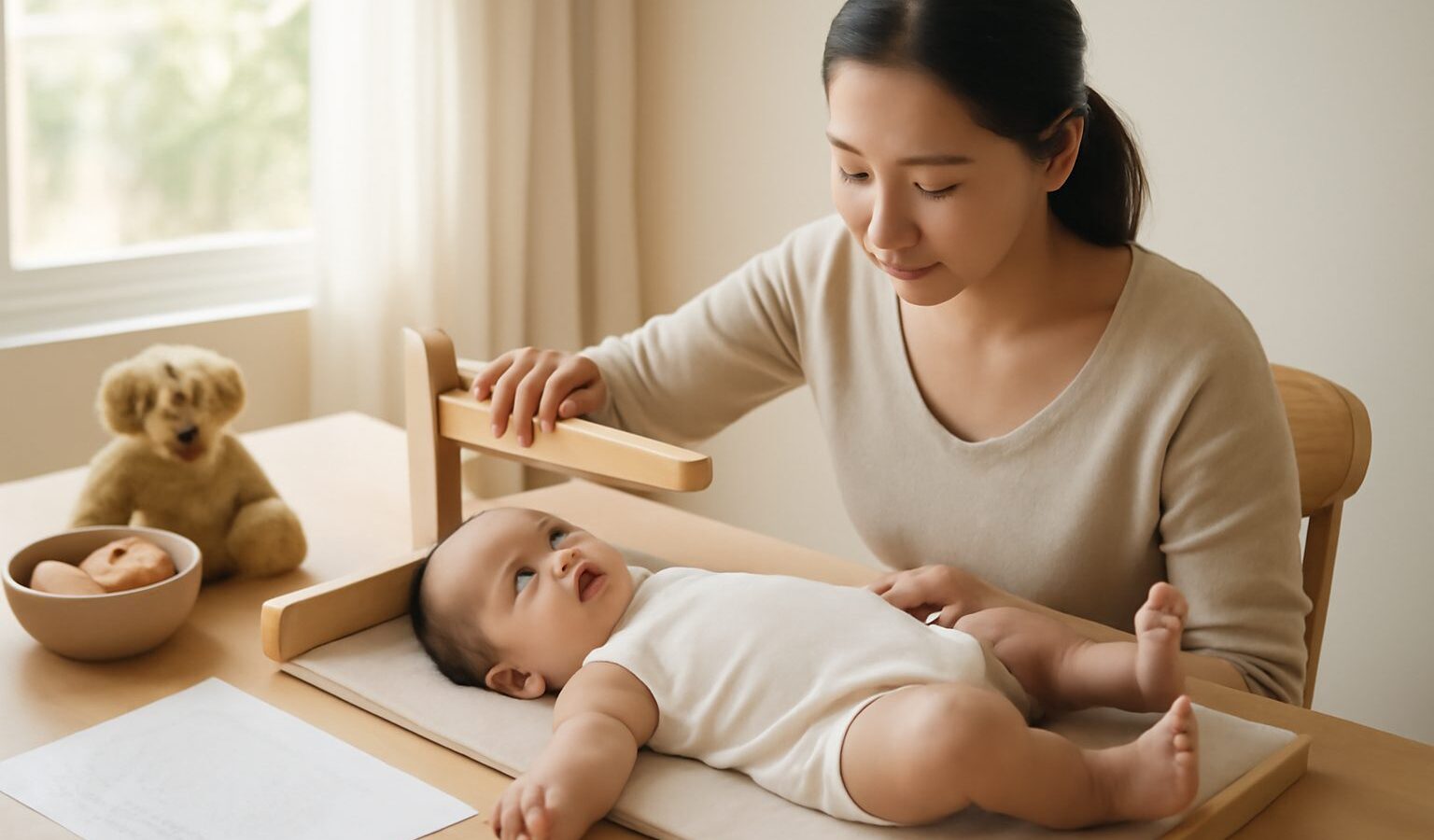
If you have ever left a routine check up puzzling over a line on a chart and a number followed by a percentile, you are not alone. Growth charts are one of the most common sources of quiet worry for new parents. Is my baby too small? Too big? Growing fast enough? This article explains, in plain and reassuring terms, how baby growth charts singapore parents see at check ups actually work, and what the numbers really tell you. It is general information rather than medical advice, so your paediatrician remains the best person to interpret your own baby’s growth.
Growth charts are simply a tool. They plot your baby’s weight, length or height, and head circumference against typical measurements for babies of the same age and sex. During routine visits, a healthcare professional measures your baby and marks these on the chart over time. The aim is not to hit a magic number, but to see a healthy pattern of growth.
What Percentiles Actually Mean
A percentile compares your baby to a large group of babies. If your baby is on the 50th percentile for weight, it means that out of 100 babies, around 50 would weigh less and 50 would weigh more. A baby on the 25th percentile is smaller than average, and one on the 75th is larger than average. Here is the part that surprises many parents: there is no single best percentile. A baby on the 10th percentile can be just as healthy as one on the 90th. Babies, like adults, come in different shapes and sizes.
What matters most is not the exact number on any one day, but the overall trend over time. Healthcare professionals look at whether your baby is following a fairly steady curve. A baby who has consistently tracked along the 20th percentile and continues to do so is usually growing beautifully. It is a big change in the pattern, such as a sudden drop across several percentile lines, that tends to prompt a closer look.
It is also worth knowing that growth is not perfectly smooth. Babies can have growth spurts and quieter spells. Weight in particular can wobble a little, especially around illness, teething, or changes in feeding. One slightly lower reading is rarely a cause for panic. This is why a single measurement means far less than a series of measurements plotted over weeks and months.
Using Growth Charts Without the Worry
Try to see the growth chart as a reassuring map rather than a report card. It exists to help spot the small number of babies who might need extra support, not to rank your parenting. Comparing your baby to a friend’s baby, or to a sibling, often causes needless anxiety, because each child has their own natural build and pace.
There are a few practical things you can do. Keep your baby’s health booklet and appointment records in one place so the trend is easy to follow. Attend routine check ups, since regular, consistent measurements taken with the same approach are far more meaningful than occasional ones. Feed your baby responsively, watching their hunger and tired cues rather than fixating on numbers. And remember that growth is only one part of the picture. Alertness, feeding well, wet and dirty nappies, and reaching baby development and milestones all tell you your baby is thriving.
There are moments when you should speak to a doctor or paediatrician. Reach out if your baby is not gaining weight or is losing weight, if their growth pattern changes sharply, if they are feeding poorly, seem unusually sleepy or unwell, or if you simply feel something is not right. Poor weight gain in particular is always worth discussing. Our guide to choosing a paediatrician in Singapore can help you find a doctor you trust to talk these things through, and our overview of common baby illnesses and when to worry may help you decide when to seek advice.
Above all, try not to let a line on a chart overshadow the joy of watching your baby grow. The numbers are useful, but they are only a small part of the wonderful, individual little person in front of you. Trust the trend, trust your instincts, and lean on your healthcare team whenever you need reassurance.