
Somewhere in the middle or later part of pregnancy, many mums-to-be feel their bump go tight and firm, then soften again a short while later. If this has happened to you and left you wondering whether labour is starting, take a deep breath. These practice contractions are very common, and understanding Braxton Hicks in Singapore can save you a lot of worry in the weeks before your baby arrives. This article is general information and not medical advice, so please always follow the guidance of your own obstetrician, gynaecologist, doctor or midwife.
What Braxton Hicks Contractions Feel Like
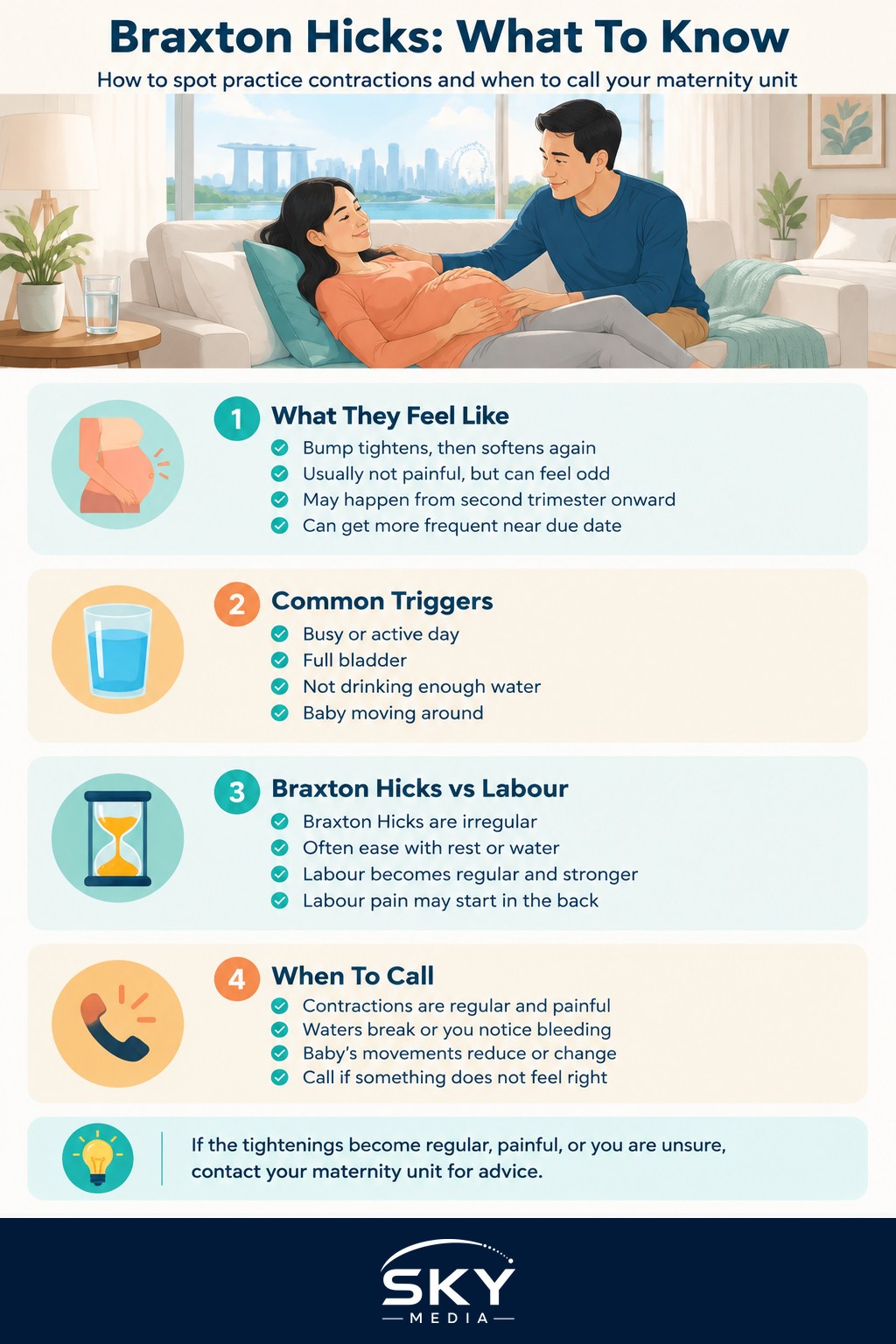
Braxton Hicks contractions are sometimes called practice contractions or false labour. They are your uterus gently tightening and relaxing, almost as if it is rehearsing for the real thing. Many women first notice them from the second trimester onwards, and they often become more frequent as the due date gets closer.
Most women describe Braxton Hicks as a tightening or hardening across the bump that comes and goes. They are usually not painful, though they can feel uncomfortable or strange. A few things tend to bring them on, including a busy or active day, a full bladder, dehydration, or even your baby moving around. In Singapore’s warm and humid weather, not drinking enough water is a common trigger, so these tightenings can be your body’s gentle reminder to slow down and rehydrate.
The key feature of Braxton Hicks is that they are irregular and do not settle into a steady pattern. They might come a few times in an hour and then stop for the rest of the day. They usually ease off if you change what you are doing, for example by resting if you were active, moving around if you were sitting still, or drinking a glass of water and emptying your bladder. If the tightenings fade away when you do these things, they are most likely practice contractions rather than true labour.
Telling False Labour From the Real Thing
The question almost every expectant mum asks is how to tell Braxton Hicks apart from real labour. While only your care team can confirm what is happening, there are some general differences that many find helpful to keep in mind.
Real labour contractions tend to become regular and to follow a pattern that keeps going. Over time they usually get longer, stronger and closer together, rather than fading away. They often do not stop when you rest, drink water or move around, unlike Braxton Hicks, which typically ease with a change of activity. Real contractions are also commonly felt as a pain that may start in the back and wrap around to the front, and they build in intensity as labour progresses.
There are other signs that labour may be starting, such as your waters breaking, a show of mucus that may be tinged with pink, or a low, period-like ache that keeps coming. Our companion guide on recognising the signs of labour walks through these in more detail so you feel prepared.
A simple thing you can do is to time the tightenings. Note when each one starts and how long it lasts. If they stay short, irregular and far apart, and settle when you rest or hydrate, they are probably Braxton Hicks. If they become regular, closer together and stronger, it is time to be in touch with your maternity unit. Please never take any medicine to stop or start contractions on your own. Timing and next steps are always for your doctor or midwife to advise.
When to Call Your Maternity Unit
It is completely normal to feel unsure, and no good maternity team will mind you checking. As a general guide, contact your hospital or maternity unit if your contractions become regular and painful, if your waters break, if you notice any bleeding, if your baby’s movements reduce or change, or if you simply feel that something is not right. When in doubt, call. It is always better to be reassured than to wait at home worrying.
Most maternity hospitals in Singapore have a delivery suite or labour ward number you can ring at any hour, and your antenatal team will usually give you clear instructions on when to come in. Keep those contact details somewhere easy to find, and remember to check the latest official information from your own hospital, as arrangements can change.
Learning about your body’s signals ahead of time is one of the most reassuring things you can do. Many parents also find that antenatal classes in Singapore explain practice contractions and early labour clearly, and it can help to read our wider trimester by trimester pregnancy guide so you know what to expect as your due date approaches. With a little knowledge and a calm plan, those tightening sensations become far less frightening and simply part of your body getting ready to meet your baby.
Frequently Asked Questions
How can I time my contractions properly? Note when each tightening starts and how long it lasts, and watch whether the gaps between them change. If they stay short, irregular and far apart, they are probably Braxton Hicks. If they become regular, stronger and closer together, contact your maternity unit.
Can dehydration really cause Braxton Hicks contractions? Yes, not drinking enough water is a common trigger, especially in warm, humid weather. Other triggers include a busy day, a full bladder or your baby moving. A glass of water and a rest often settle them.
Should I take medicine to stop contractions at home? No. Never take any medicine to stop or start contractions on your own. Timing and next steps are for your doctor or midwife to advise, so call your maternity unit if you are worried.
What signs besides contractions suggest labour is starting? Your waters breaking, a show of mucus that may be tinged with pink, or a low, period-like ache that keeps coming can all signal labour. Contact your hospital or maternity unit if you notice any of these.
Is it silly to call the maternity unit if I am unsure? Not at all, and no good maternity team will mind. Call if contractions become regular and painful, your waters break, you notice bleeding or your baby’s movements reduce. When in doubt, call.