
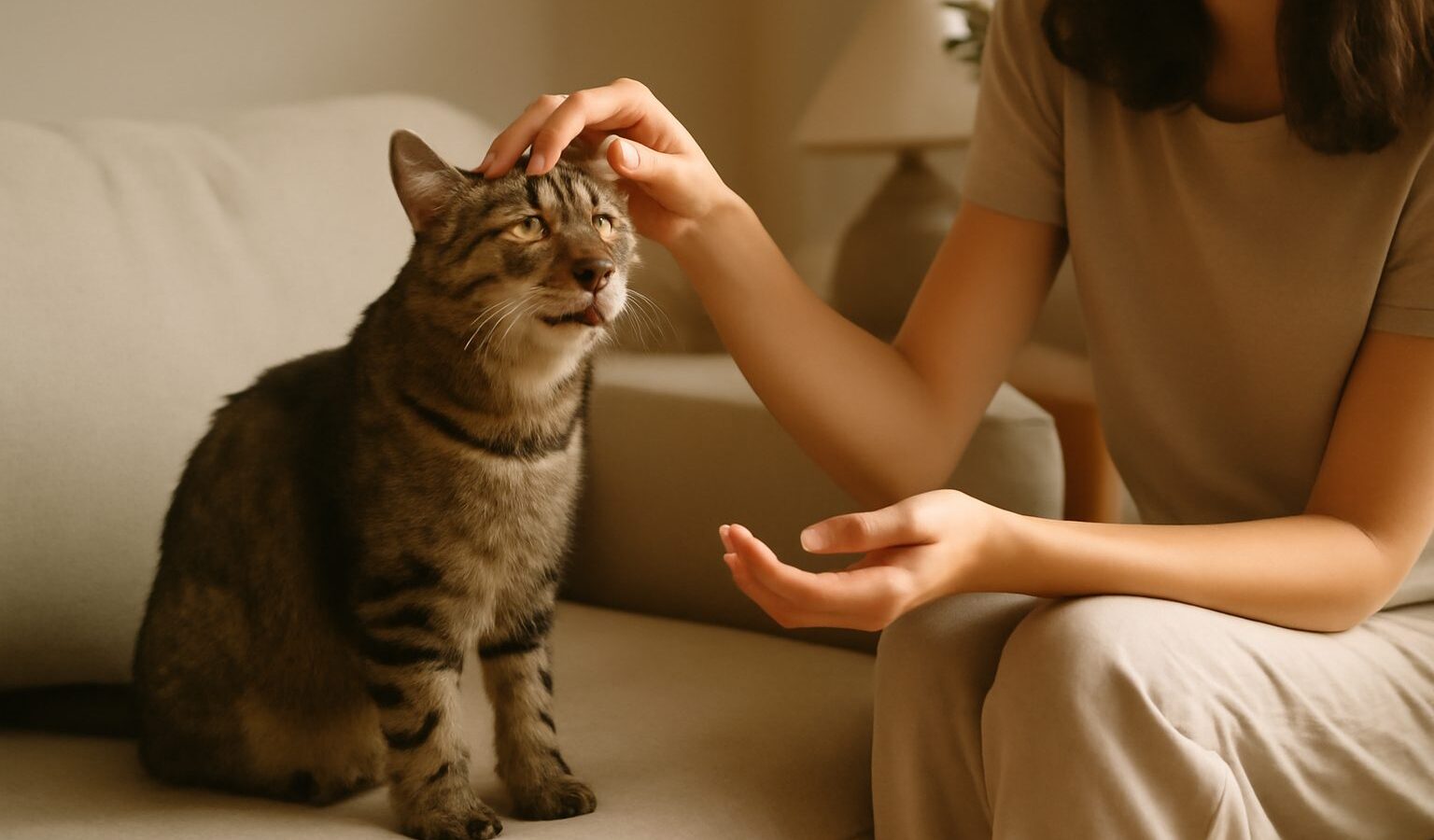
If you share an HDB flat with a cat, you already have a running conversation going, whether you realise it or not. Learning cat sounds meaning helps you answer that conversation properly, so you can tell a friendly greeting from a genuine cry for help. Cats are surprisingly expressive once you know what to listen for, and most of the noises they make are aimed squarely at you. This guide is general information and not veterinary advice; if a sound points to pain or illness, please see a licensed vet.
Why Cats Talk to Us at All
Adult cats rarely meow at each other. Meowing is largely a language cats developed for humans, refined over thousands of years of living alongside us. Your cat has learned that certain sounds get certain results, whether that is breakfast, a door opened, or a cuddle. In effect, each cat builds a small private vocabulary with its own household, which is why you often understand your cat far better than a visitor does.
To read your cat accurately, listen to the sound and watch the body at the same time. Ears, tail, whiskers, posture and eyes all add meaning. A chirpy sound with an upright tail and relaxed ears is a happy hello. The same pitch paired with a crouched body and flattened ears means something very different. Context matters too, since the same meow can mean feed me at 6am and let me out of this carrier at the vet.
What Purring Really Means
Purring is the sound owners love most, and it usually signals a content, relaxed cat enjoying your company, a warm spot or a good meal. Kittens purr while nursing, and adults often purr when being stroked or settling on a favourite lap. For most cats in most moments, a purr is simple happiness.
There is a lesser-known side, though. Cats also purr to soothe themselves when stressed, unwell or in pain, a bit like a person humming to stay calm. A cat may purr at the vet, during illness, or even near the end of life. So while a purr from a bright, playful, eating-normally cat is a lovely sign, a purr from a cat that is hiding, off its food or breathing oddly is not a green light to relax. Read the purr together with the whole picture, and when the picture looks off, treat it as a reason to check in with your vet.
Meows, Chirps, Trills and Yowls Decoded
Beyond the purr, cats have a rich range of sounds, and each tends to carry a broad meaning. Use the table below as a starting guide, remembering that your own cat’s accent may vary.
| Sound | What it often means |
|---|---|
| Short, high meow | A greeting or a cheerful hello |
| Repeated or drawn-out meow | A request: food, attention or an open door |
| Chirp or trill | Friendly excitement, often a come here or follow me |
| Loud yowl or howl | Distress, mating urge, disorientation or a demand |
| Hiss, growl or spit | Fear, warning or pain; give space at once |
A few sounds deserve extra note. Chirps and trills are warm, social noises, frequently used by mother cats to call kittens and by friendly cats to greet their people. Chattering, that fast teeth-clicking your cat makes at a gecko or bird outside the window, reflects excitement and hunting instinct, and is quite normal. A hiss or growl, by contrast, is a clear boundary. Never punish it; instead, respect the warning, remove whatever is upsetting the cat, and give it room to calm down.
When Excessive Meowing Warrants a Vet Check
Most chatter is harmless, but a sudden or marked change in how much your cat vocalises is worth paying attention to. Cats often cannot show pain in obvious ways, so an unusual increase in meowing or yowling can be one of the few clues that something is wrong. You know your cat’s normal baseline better than anyone, so trust it when things shift.
Book a check-up with a licensed vet, rather than trying to diagnose the cause yourself, if you notice:
- A clear rise in meowing or night-time yowling that is out of character.
- Vocalising alongside hiding, hunched posture or a drop in appetite.
- Crying near the litter tray, straining, or trouble passing urine, which can be an emergency, especially in male cats.
- Louder or more confused night calling in an older cat, which can accompany conditions such as an overactive thyroid, high blood pressure or age-related decline.
- Any yowling paired with vomiting, laboured breathing or obvious pain.
Straining to urinate in particular should be treated as urgent; if your cat cannot pass urine, go to an emergency vet without delay. For anything sudden, severe or simply not right, an emergency or 24-hour clinic is the safe choice. Do not give human medicines or guess at doses, as that is a decision for your vet alone.
Not every noisy cat is ill, of course. An unsterilised cat may yowl loudly when in season, which is one more good reason to sterilise. Boredom, hunger, loneliness and attention-seeking are common non-medical causes too. Still, ruling out a health problem first, before assuming it is just behaviour, is always the responsible order to do things in.
Helping a Vocal Cat in a Small Flat
Once a vet has ruled out illness, you can gently shape a demanding voice, which matters when neighbours share a wall. The trick is to meet genuine needs while not rewarding pure nagging. Some practical steps:
- Keep feeding, play and sleep on a predictable daily routine.
- Offer enrichment such as puzzle feeders, window perches and short daily play sessions to burn energy and ease boredom.
- Avoid feeding the cat the instant it meows, or you teach it that noise brings food; wait for a calm pause first.
- Give plenty of quiet, positive attention at times you choose, so your cat feels secure.
- Provide safe vertical space and hiding spots, which many cats find calming in a busy home.
Above all, listen. Your cat is telling you something with every purr, chirp and meow, and the better you understand cat sounds meaning, the stronger and more trusting your bond becomes. When the sounds change in a way that worries you, let your vet help you read them, and you will keep your companion both understood and well.