
If you have ever stared at a half-empty fridge wondering what to cook, an AI chatbot can feel like a helpful kitchen buddy. Using AI for cooking singapore home cooks is genuinely handy for ideas, swaps, and quick meal plans, but it works best when you treat it as a starting point rather than a trusted chef. AI can suggest a recipe in seconds, yet it does not taste your food, know your allergies, or understand what is safe. This guide shows you how to get real value from it while keeping your kitchen sensible and safe.
What AI is actually good at in the kitchen
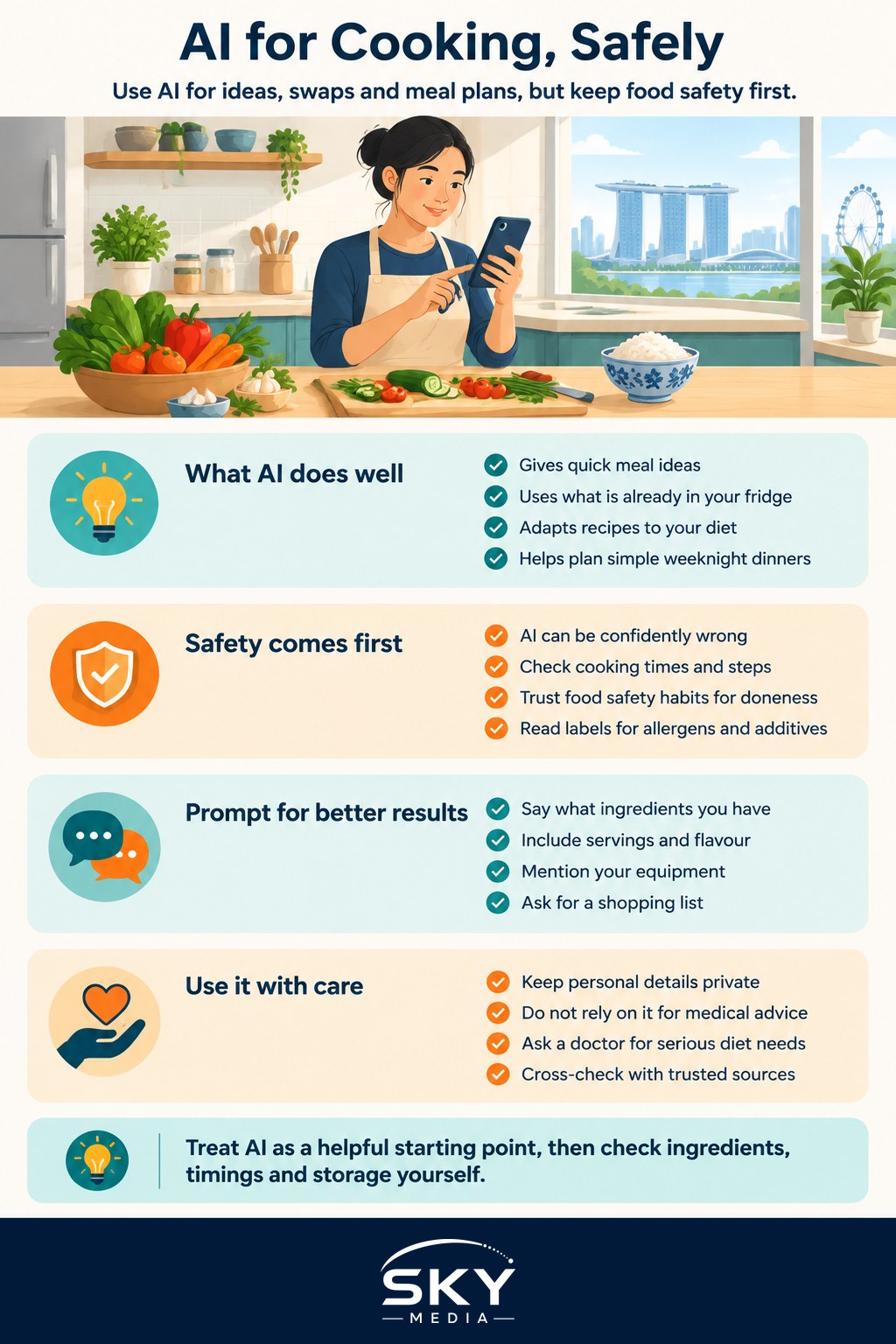
AI tools are strongest when you need ideas fast. Tell a chatbot what you have on hand, say chicken thighs, some bok choy, and leftover rice, and it will happily propose a stir-fry, a soup, or a rice bowl. This is useful on busy weeknights when the hard part is simply deciding.
It is also good at adapting. You can ask it to make a dish vegetarian, to cut the sugar, to scale a recipe from four servings to two, or to swap an ingredient you cannot find at the wet market or supermarket. If you follow a halal diet, are avoiding pork, or want lower-sodium meals for an older parent, you can say so and the AI will adjust its suggestions.
Other handy uses include:
- Turning a rough idea into a shopping list you can bring to NTUC or the wet market.
- Suggesting what to do with an odd leftover so less food goes to waste.
- Explaining a cooking term or technique, like what it means to blanch or to temper eggs.
- Planning a rough week of dinners around a budget or a theme.
Because these are creative, low-stakes tasks, a slightly imperfect answer is fine. If a suggested flavour pairing sounds odd, you simply skip it. That is very different from following exact instructions blindly.
Food safety and allergies come first
Here is the part you must not skip. AI can be confidently wrong. It sometimes invents details, gets quantities off, or suggests cooking times that are not safe. It does not know that someone at your table is allergic to peanuts or shellfish unless you tell it, and even then you should never rely on it alone to keep them safe.
Always sanity-check a generated recipe before you cook it. Ask yourself whether the steps actually make sense, whether the cooking time looks right for the cut of meat or type of seafood, and whether anything seems missing. Chicken, pork, eggs, and seafood in particular need proper cooking, so lean on trusted food safety habits rather than an AI’s word for doneness. When in doubt, cross-check with a reputable cookbook or a well-reviewed recipe site.
For allergies and dietary needs, double-check every ingredient yourself. Read the actual packaging, because sauces, stocks, and pre-made pastes often hide allergens or ingredients you are trying to avoid. If a mistake could seriously harm someone, the AI’s convenience is not worth the risk. Treat it as a brainstorming helper, and let your own care and a reliable source do the final check.
In Singapore’s hot and humid climate, food spoils quickly, so also be sensible about storage and reheating. An AI might not remind you to refrigerate promptly or to reheat leftovers thoroughly, so make those habits your own.
Getting better results from your prompts
The clearer your request, the more useful the answer. Instead of “give me a recipe”, try “a simple 30-minute dinner for two using chicken, spinach, and garlic, not too spicy, with a shopping list”. Mention your equipment too, since an air fryer, a rice cooker, or a single hob changes what is practical.
If you cook regularly, you might explore saving preferences so the tool remembers your dietary needs. Our guide on using custom instructions and memory in AI chatbots explains how that works. And because AI can slip up, it is worth understanding why, which our piece on AI hallucinations and fact-checking covers in plain terms.
You can also treat cooking as one small part of a wider toolkit. If you are still finding your feet with these tools, everyday AI tools guide is a friendly place to start, and prompt writing basics for AI tools will help you ask better questions across the board.
Privacy and a sensible mindset
There is little sensitive about asking for a laksa variation, so cooking is a low-risk way to get comfortable with AI. Still, avoid feeding in personal details you would not want stored, and remember that these tools are not medical advisers. If someone has a serious health condition that affects their diet, speak to a doctor or a dietitian rather than relying on a chatbot.
The practical wrap-up
Think of AI as an enthusiastic sous-chef with a big memory and no taste buds. It is brilliant for ideas, swaps, and planning, and it can genuinely make weeknight cooking less stressful. Just keep the final judgement in your own hands. Verify anything important, read your ingredient labels for allergies, sanity-check the recipe before you cook, and respect food safety in our warm climate. Do that, and AI becomes a fun, low-pressure helper that gets more meals onto your table with less fuss.