

Wooden stalls glowing under fairy lights, mulled wine steaming in the cold, and old town squares filled with carols: European Christmas markets are on many Singaporeans’ bucket lists. They are also one of the easier winter trips to plan well, because the markets cluster in a compact region with excellent trains. The tricky parts are timing, since many markets close before Christmas Day, and budgeting for a peak season trip in cold weather.
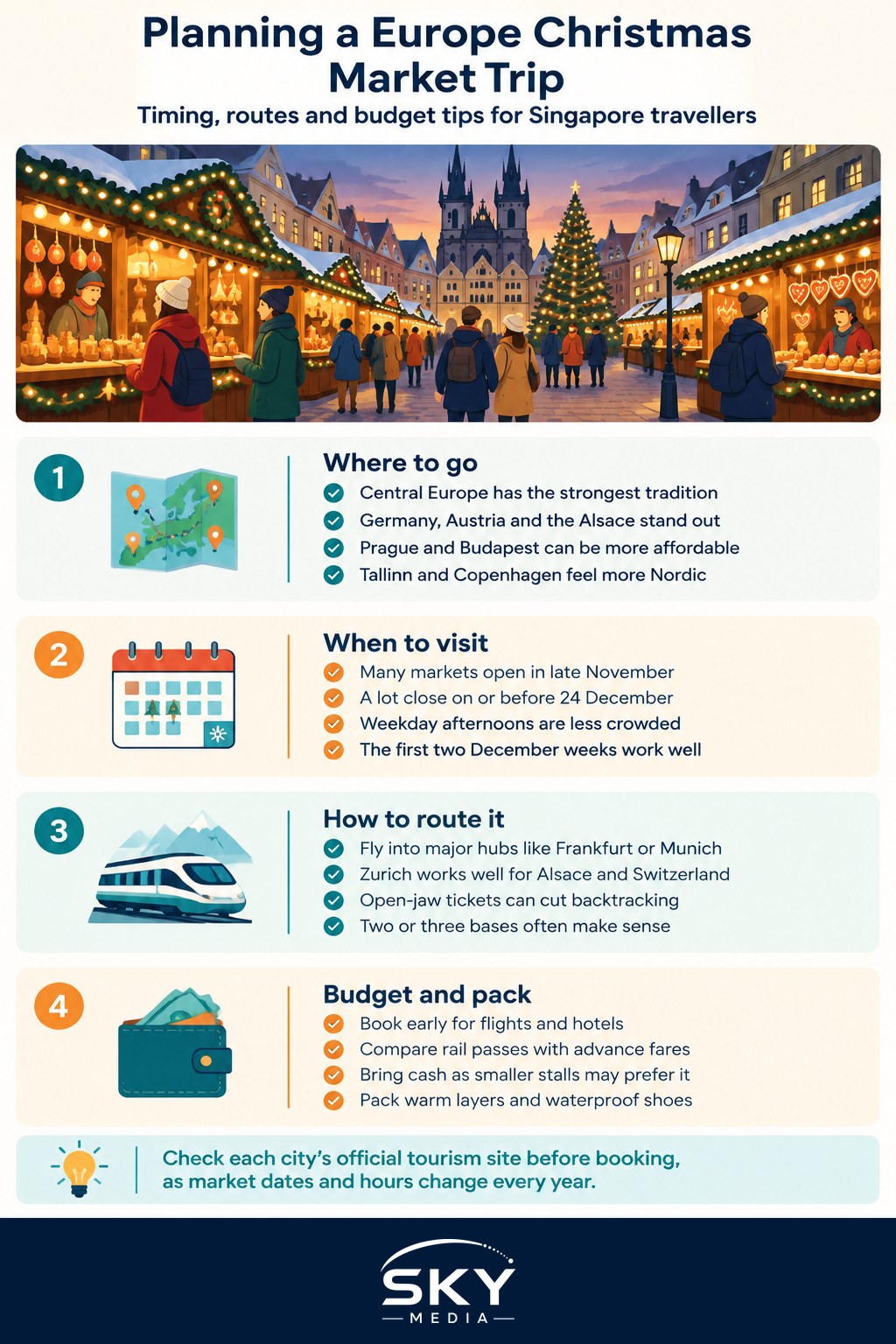
This guide covers how to choose markets, when to go, how to route a trip from Singapore and how to keep costs under control. Market dates and opening hours are set by each city and change every year, so always confirm them on the city’s official tourism website before booking.
Which European Christmas Markets to Consider
The strongest Christmas market tradition sits in Central Europe, especially Germany, Austria, the Alsace region of France, Switzerland and the Czech Republic. A few well-known options, grouped by style:
- Classic German markets. Nuremberg, Dresden and Cologne are among the most famous, each with a long history and several markets spread across the city. Smaller towns along Germany’s Romantic Road and in Bavaria offer a quieter, more storybook feel.
- Alsace, France. Strasbourg calls itself the capital of Christmas, and nearby Colmar is known for its half-timbered houses lit up for the season. Both are easy to combine with southwest Germany or Switzerland.
- Vienna and Salzburg, Austria. Vienna has multiple markets in front of palaces and squares, and Salzburg pairs markets with Advent concerts.
- Prague and Budapest. Both have atmospheric old town markets and are often more affordable than Western Europe.
- Northern and Baltic options. Tallinn and Copenhagen offer a different, more Nordic take, with shorter daylight hours to plan around.
If you prefer a smaller local taste first, our guide to Christmas markets in Singapore covers what is on at home, and Christmas in Singapore: things to do helps if you are only away for part of the season.
Best Dates to Go
Most European Christmas markets open in late November, around the start of Advent, and run through December. The key details to know:
- Many close on or before 24 December. In Germany especially, a number of traditional markets end a day or two before Christmas Eve. If you fly out after Singapore’s school term ends and arrive on 23 December, you may miss them.
- Some stay open into the New Year. Certain markets in Vienna, Prague and Budapest, and winter markets in some other cities, continue past Christmas. Check each one individually.
- Christmas Day and Boxing Day are quiet. Shops, museums and some transport run reduced services, so plan restful or scenic days.
- Weekdays beat weekends. Weekend evenings at big markets get very crowded. Go on weekday afternoons for space and better photos at dusk.
For many Singapore families, the sweet spot is the first two weeks of December, which overlaps with the school holidays and catches nearly every market while it is open.
Routing a Trip From Singapore
Changi has nonstop flights to several major European hubs, including Frankfurt, Munich, Zurich, Paris, Amsterdam and London, with others varying by season and airline. Routes and schedules change, so check current options when you search.
Some practical routing patterns:
- Fly into Munich or Frankfurt, loop by train. From either city, you can reach Nuremberg, the Romantic Road towns, Strasbourg, Salzburg and beyond by rail in a few hours.
- Fly into Zurich for Alsace and Switzerland. Basel, Strasbourg and Colmar are within easy reach, and the Swiss rail network is very reliable.
- Open-jaw tickets. Flying into one city and home from another (for example, into Frankfurt and out of Vienna or Prague) saves backtracking. Price these against simple returns.
- Pick two or three bases. Rather than changing hotels nightly, stay in a few well-connected cities and day-trip to smaller markets.
On paperwork, Singapore passport holders can currently visit the Schengen Area visa-free for short stays, but the EU has been introducing new entry systems, including the Entry/Exit System and the ETIAS travel authorisation. Check the official EU and embassy websites for what applies on your travel dates. Mainland Chinese and other passport holders living in Singapore typically need a Schengen visa and should apply early, since appointment slots fill up before the holidays.
| Route style | Example | Good for | Trade-off |
|---|---|---|---|
| Germany loop | Munich, Nuremberg, Romantic Road, back to Munich | First-timers, classic markets | Return to the same airport adds rail time |
| Alsace and Switzerland | Zurich, Basel, Colmar, Strasbourg | Scenery and charming towns | Switzerland is generally pricier |
| Central Europe open-jaw | Vienna, Bratislava, Budapest or Prague | Value, grand capitals | Open-jaw fares can cost more |
| Rhine cities | Frankfurt, Cologne, Düsseldorf | Big city markets, short hops | Busy weekends, more crowds |
Budgeting for a Winter Market Trip
December is peak season in market cities, and costs reflect that. Prices change every year, so build your budget from live searches rather than past figures. Areas to plan for:
- Flights. Fares around school holidays rise quickly. Booking several months ahead and staying flexible by a few days usually helps.
- Accommodation. Hotels near famous markets book out early, especially on weekends. Staying one train stop away can be cheaper and quieter.
- Rail travel. Many European rail operators sell cheaper advance fares on popular routes; regional passes can also make sense for a lot of short hops. Compare both for your route.
- Market spending. Food and drinks at stalls add up. Many markets serve hot drinks in a souvenir mug with a deposit, which you get back if you return the mug or keep as a keepsake.
- Winter gear. If you do not own warm clothes, factor in thermals, a proper jacket, gloves and waterproof shoes. Buying at the destination can be cheaper than in Singapore.
- Travel insurance. Make sure it covers winter weather disruptions and medical care abroad.
Paying by card is widely accepted at larger stalls, but smaller vendors may prefer cash, so carry some euros or the local currency in Czechia, Hungary or Switzerland.
Practical Tips for Enjoying the Markets
- Go at dusk. Lights come on early in winter, often by late afternoon, which gives you atmosphere without staying out late in the cold.
- Eat like a local. Try sausages, roasted chestnuts, potato pancakes, gingerbread and regional sweets. If you miss the flavours after you return, our guide to Russian and Eastern European food in Singapore points to similar dishes at home.
- Watch your belongings. Crowded markets attract pickpockets. Use a zipped bag worn in front.
- Dress in layers. You will move between freezing squares and heated cafes and shops.
- Leave space in your luggage. Handmade ornaments, candles and wooden toys are the classic souvenirs, and many are fragile.
With a realistic date plan, two or three well-chosen bases and a winter-proof budget, a European Christmas market trip from Singapore can be one of the most memorable year-end holidays you take.
Frequently Asked Questions
How many days do you need for a Christmas market trip? A trip of about a week to ten days lets you see two or three bases without rushing, once the long flight is allowed for. A shorter trip suits a single country or region. Pick fewer cities and spend more time at each.
Do European Christmas markets charge an entry fee? Most markets are open-air and free to walk through, with you paying for food, drinks and gifts. A few special events or venues may have tickets, so check the official city tourism website. Some stalls take deposits on mugs, which you get back when you return them.
Is it easy to find halal, vegetarian or alcohol-free food at the markets? Vegetarian options and alcohol-free hot drinks are usually easy to find, such as roasted chestnuts, pastries and non-alcoholic punch. Halal food is harder, so research restaurants in advance and ask stalls about ingredients. Check labels carefully if you avoid pork or alcohol.
Are Christmas markets suitable for toddlers or elderly parents? They can be, with planning. Go on weekday afternoons to avoid crowds, bring warm layers and plan rest stops in heated cafes. Cobblestones and crowds make strollers and walkers tricky, so check accessibility and keep daily walking modest.
How do Singapore Christmas markets compare with those in Europe? European markets are rooted in winter traditions, with cold weather, old town squares and long-running local crafts and foods. Singapore’s are usually shorter, air-conditioned or tropical in feel and more varied in theme. A local market is a good preview, but the atmosphere is quite different.
Further reading: Bruges and Brussels From Singapore