
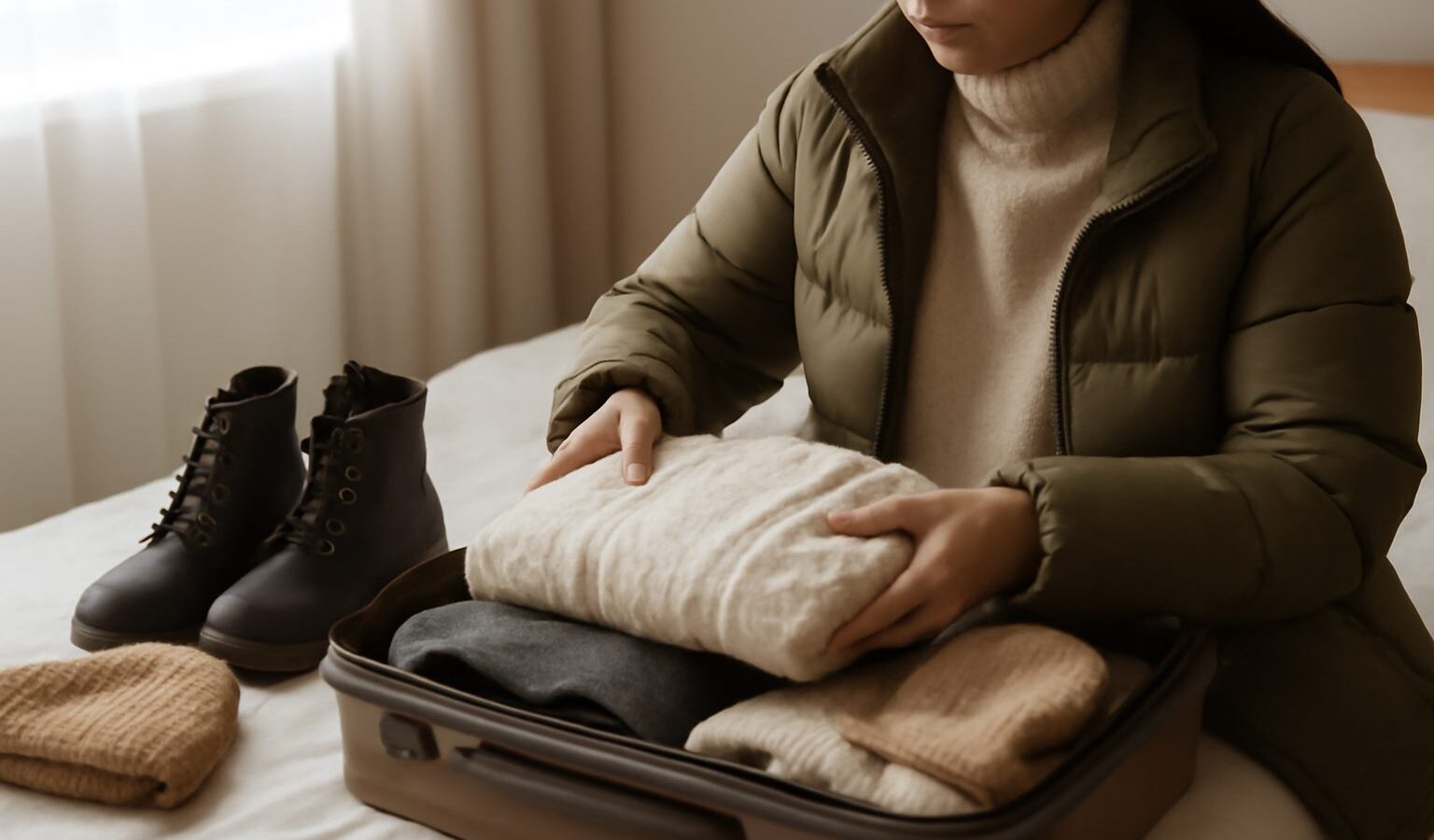
If you grew up in the tropics, knowing what to wear in cold countries can feel like a mystery, because you rarely need more than a light jacket at home. The secret is not one thick coat but layering: a base layer to manage sweat, a mid layer to trap warmth and an outer layer to block wind and rain. Master those three, and you can stay comfortable anywhere from a crisp autumn city to deep winter.
Why Singaporeans Get Cold Weather Dressing Wrong
Most first time mistakes come from thinking warmth equals one big coat. In reality, air trapped between layers is what keeps you warm, and being able to add or remove layers is what keeps you comfortable as you move between a heated train, a cold street and a warm restaurant.
Two common errors to avoid:
- Wearing cotton against the skin. Cotton soaks up sweat and holds it, leaving you cold and clammy after any walking. This is the single most common tropical traveller mistake.
- Overdressing for indoors. Shops, trains and hotels overseas are often heavily heated. If you cannot peel layers off, you overheat and sweat, then freeze when you step outside.
The Three Layer System
Think of your clothing as a system with three jobs. Once you understand each job, you can dress for almost any temperature by adjusting what goes where.
| Layer | Job | Good choices | Avoid |
|---|---|---|---|
| Base layer | Move sweat off skin | Merino wool or synthetic thermals | Cotton singlets and tees |
| Mid layer | Trap body heat | Fleece, wool jumper, light down | Thin fashion knits alone |
| Outer layer | Block wind and rain | Windproof, water resistant shell or padded coat | Loose, unlined jackets |
Base layer
This sits against your skin, top and bottom. Its job is to pull sweat away so you stay dry. Thermal tops and leggings in merino wool or a synthetic blend are worth the investment. For milder cold, one thin base layer is enough. For deep winter or long outdoor days, a slightly thicker one makes a big difference.
Mid layer
This traps the warmth your body makes. A fleece, a wool jumper or a light down or padded gilet all work. The advantage of a mid layer is flexibility: you keep it on outdoors and take it off in a warm cafe. In very cold places, you can even wear two thinner mid layers instead of one bulky one.
Outer layer
This shields you from wind, rain and snow, which strip heat away fast. A windproof and water resistant shell handles wet, blustery cities. A padded or down coat adds insulation for genuinely freezing conditions. Look for a hood, a collar that zips up high and cuffs that seal out draughts.
Do Not Forget the Extremes
You lose a surprising amount of heat from your head, hands and feet, and cold there ruins an otherwise well dressed day.
- Head and ears: A beanie that covers the ears. Much of your comfort outdoors depends on this small item.
- Neck: A scarf or a neck warmer closes the gap at your collar where wind sneaks in.
- Hands: Gloves, ideally touchscreen friendly so you can still use your phone and camera.
- Feet: Wool blend socks and closed, insulated shoes or boots with a grippy sole. For snow or slush, water resistant boots keep your feet dry, which matters more than any coat.
Match Your Layers to the Temperature
You do not need the same kit for a cool 15 degrees Celsius as for a snowy sub zero trip. Scale up or down.
- Cool, around 10 to 15 degrees Celsius: A light base or a normal top, one mid layer and a light jacket. A scarf for mornings.
- Cold, around 0 to 10 degrees Celsius: A thermal base, a fleece or jumper mid layer, and a proper coat. Add a beanie and gloves.
- Freezing, below 0 degrees Celsius: A good thermal base top and bottom, a warm mid layer, an insulated coat, plus beanie, scarf, gloves and insulated boots. Thermal leggings under trousers make a huge difference.
If your trip spans several climates, pack for the coldest stop and simply wear fewer layers on the milder days.
Packing Smart Without Overpacking
Cold weather clothing is bulky, so a little strategy saves your luggage.
- Wear the bulkiest items on the plane, such as your coat and boots, to save case space.
- Choose layers that mix and match in a tight colour palette, so a few pieces make many outfits. Base and mid layers can be re worn several times.
- Roll, do not fold, thermals and knits to save room, and use the coat to cushion fragile items.
- Pack one spare pair of wool socks and one spare base layer, in case you get caught in rain or snow.
- Bring a foldable tote or day bag to carry layers you shed once you step into a warm building.
A Simple Starter Kit
If you are building a cold weather wardrobe from scratch, prioritise in this order:
- A quality thermal base layer, top and bottom.
- One warm, packable mid layer.
- A weatherproof outer coat suited to your destination.
- Beanie, scarf and gloves.
- Warm socks and closed, insulated footwear.
Buy the base layers and outerwear well before you fly, since these are hardest to find quickly in Singapore and easiest to get wrong.
Enjoy the Cold Instead of Enduring It
The magic of layering is control. When you walk out into a frosty morning, you are sealed in. When you duck into a warm museum, you peel a layer off and stay comfortable. That flexibility is what separates a miserable, shivering trip from a lovely one. Learn the three layer system, protect your head, hands and feet, pack with intent, and a cold country stops being intimidating and starts being an adventure.
Explore more: Airport and travel outfits · Lightweight layering in the tropics · Building a capsule wardrobe in Singapore