

Few conversations in a relationship feel as tender or as high-stakes as this one. When one partner wants kids in Singapore and the other does not, it can bring up fear, grief, love, and a quiet dread of what the answer might mean. If you are here, you are already doing something brave, which is facing the question honestly instead of hoping it will quietly go away. Please know there is no villain in this story. Wanting children and not wanting them are both completely valid ways to build a good life.
This is a topic that deserves gentleness above all. There is a lot of unspoken pressure in our society around family, timelines, and what a couple is supposed to want. This guide is not here to push you towards either answer. It is here to help you talk about it openly, respect each other’s truth, and find your way with as much care as possible.
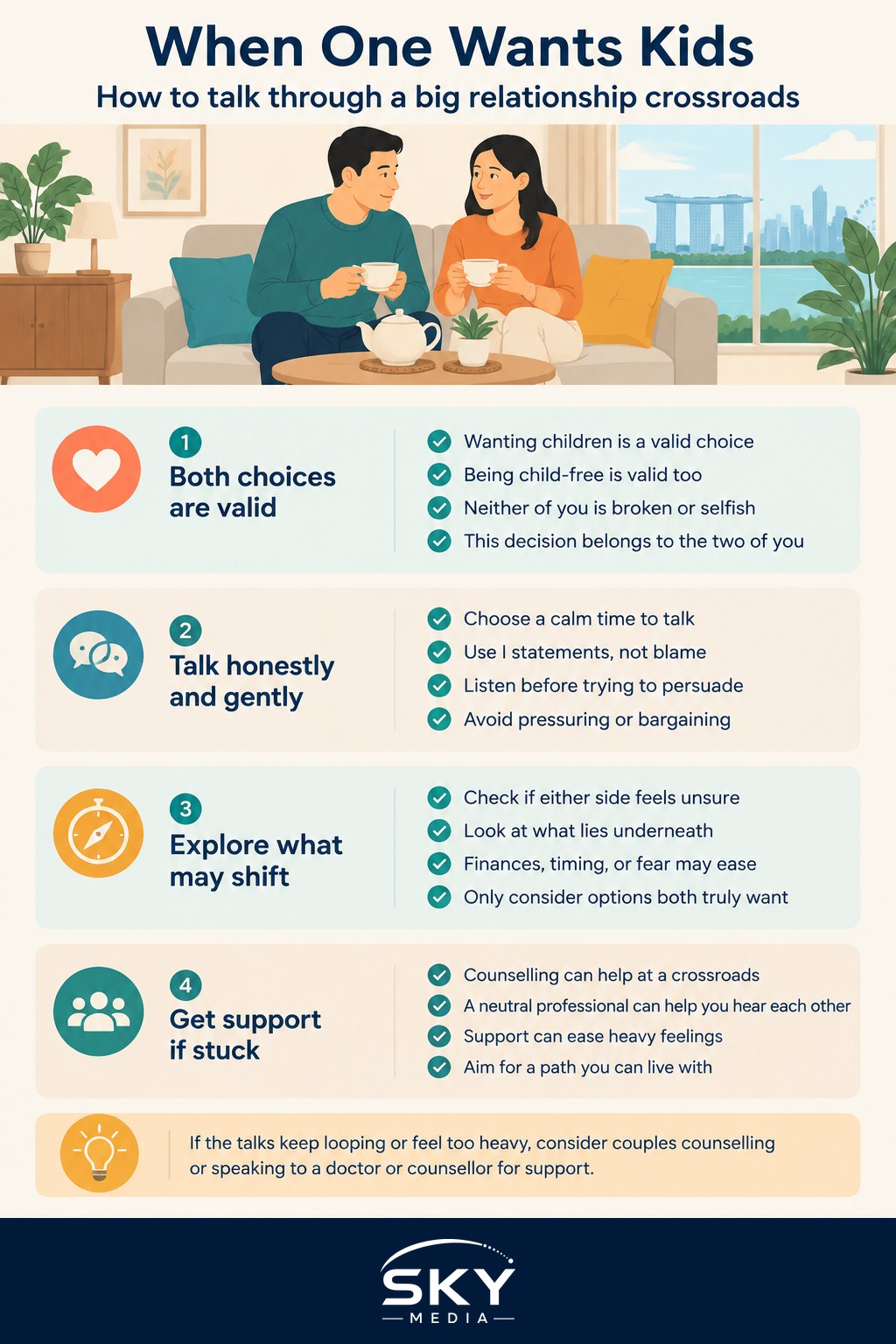
Both Choices Are Valid
Before anything else, let go of the idea that one of you is right and the other is broken. A deep desire to raise children and a settled preference to remain child-free are both legitimate, thoughtful ways to live. Neither makes someone selfish, immature, cold, or incomplete.
People arrive at their positions for real reasons. Someone may long for the meaning and connection of parenthood. Someone else may feel just as strongly that a full, loving life does not include raising children, whether because of their health, their sense of purpose, their finances, or simply knowing themselves. In Singapore, where questions about babies can come thick and fast from relatives at reunion dinners, it is worth remembering that this decision belongs to the two of you, not to anyone else’s expectations.
Approach the difference as two honourable positions meeting, not a problem where one person must be talked out of who they are. If it helps to know you are not alone, our piece on being child-free by choice explains that perspective with care, while much of the wider conversation about family life speaks to the longing to become a parent.
Talk Honestly, Without Pressure
The most important thing you can do is have real, unhurried conversations, and to keep having them. Pick a calm moment, not the middle of an argument, and share what you feel and why. Speak from your own heart using “I” rather than accusing the other of ruining the future.
Aim to understand before you try to persuade. Ask your partner what parenthood, or a life without it, means to them, and listen without rushing to fix or convince. Sometimes people discover more nuance than they expected, such as fears that could ease with support, or a firmness that clarifies the real situation. Either way, honesty serves you both far better than a hopeful silence.
Please avoid two common traps. The first is pressuring or bargaining, treating the other person as a stance to be worn down. The second is quietly agreeing to something you do not truly want in order to keep the peace, hoping you will change later. Both tend to breed deep hurt. If these talks keep turning into painful spirals, our guide on having difficult conversations with your partner can help you slow things down and stay kind.
Explore Whether There Is Room To Move
Sometimes the gap is smaller than it first appears, and sometimes it is not. Both outcomes are okay, and the point of exploring is clarity, not conversion.
Gently look at a few honest questions together:
- Is either position uncertain, or does it feel settled at the core? A “not sure yet” is very different from a “definitely not”.
- What is underneath the feeling? A hesitation rooted in finances, timing, or fear may soften with time and support, whereas a fundamental sense of self usually will not, and should be respected.
- Are there paths you have not discussed? Some couples explore options they had not considered, though only if both people genuinely feel drawn to them and never as a way to pressure a reluctant partner.
Throughout, keep protecting the person you love, even in disagreement. The way you treat each other during this conversation matters as much as where it lands.
When You Feel Stuck
If you keep arriving at the same painful place, that is not a sign you have failed. It is a sign this is genuinely hard, and that you may need help holding it. Couples counselling exists for exactly this kind of crossroads. A neutral, trained professional can help you both feel heard, separate real needs from fears, and reach a decision you can live with, whether that is a shared path or a compassionate parting.
The heaviness of this can also weigh on your wellbeing. If you feel persistently low, anxious, or alone with it, please lean on people you trust, and consider speaking to a doctor or a counsellor. There is no shame in getting support for your own heart while you work through something this big. Our guide on when to consider couples counselling can help you decide when to reach out together.
Holding Each Other With Grace
There is no version of this that is easy, but there are versions that are honest and kind. Some couples find they can build a shared answer they are both at peace with. Others discover, with great tenderness, that their deepest hopes point in different directions, and that loving each other well means letting each other pursue the life they truly need. Both of those can be acts of love.
Whatever unfolds for you, try to be gentle with yourselves and with each other. You are not fighting because you love each other too little. You are struggling because you love each other and because this matters. Take your time, tell the truth softly, and get support when you need it. You deserve a future you can embrace with your whole heart, and so does your partner.
Frequently Asked Questions
Can a relationship work if one wants kids and the other is certain they don’t? It is very hard, because there is no true middle ground on having a child. Some couples find their positions were less fixed than they thought, but a settled no should be respected. Honest talks, and counselling if needed, help you decide with clarity.
How should we handle relatives asking when we’ll have kids? Agree on a short, polite answer together so you present a united front. You owe no one an explanation, and a smiling change of subject is fine. This decision belongs to the two of you.
Is it wrong to hope my partner will change their mind? Hoping is human, but building your future on it can cause hurt. If your partner has made clear where they stand, believe them. Quietly waiting or agreeing against your own wishes tends to breed resentment later.
How do I know if my “not sure” is really a no? Ask what is underneath it. Doubt about money, timing or fear may soften with support and time, whereas a deep sense of self usually does not. Writing down your feelings or speaking to a counsellor can help you see which it is.
Who can I talk to if this is weighing on me? Start with trusted friends, then consider a couples counsellor or your own counsellor or doctor. A neutral professional helps you both feel heard and separate fears from real needs. There is no shame in getting support.