
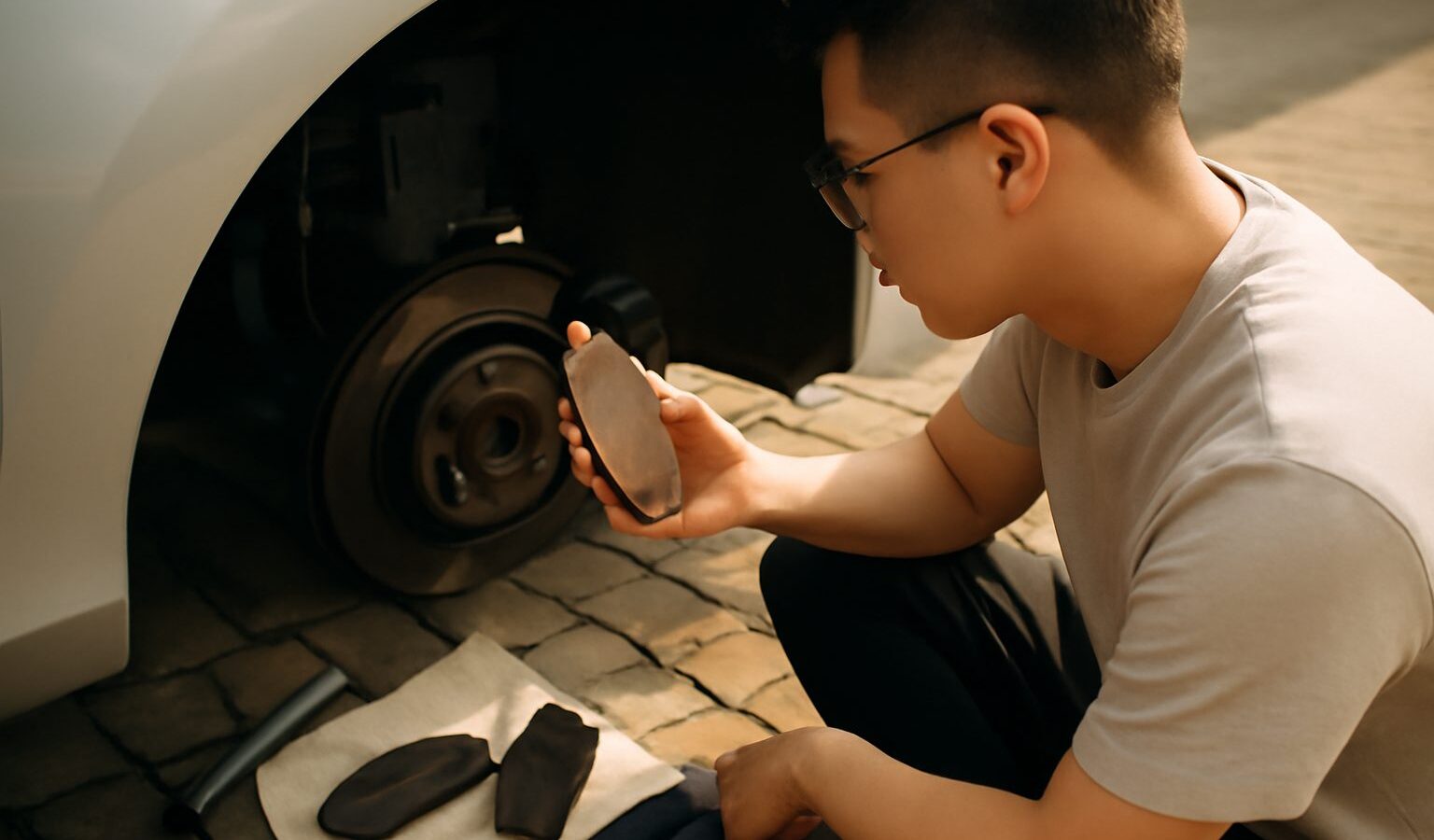
Your brakes are the single most important safety system in your car, and the brake pads do the hard work every time you slow down. They are wear parts, designed to be used up gradually and swapped out before they run thin. Knowing when to replace brake pads is not a nicety, it is basic road safety. Worn pads lengthen your stopping distance exactly when you need it most, such as a sudden stop on a wet expressway during a monsoon downpour. This guide explains how pads wear, the signs to watch for, and why this is a job for a qualified workshop rather than a weekend DIY attempt.
Brake pads are safety-critical. The information here helps you spot trouble early, but any inspection or replacement must be carried out by a professional mechanic, and a worn set should never be left to worsen.
How Your Brake Pads Wear Down
Each time you press the brake pedal, the pads clamp against a spinning metal disc, and the resulting friction slows the car and turns motion into heat. That friction slowly grinds away the pad material, so every brake application uses up a tiny amount of pad. This is completely normal and by design.
How quickly they wear depends heavily on how and where you drive. Singapore’s stop-start traffic is hard on brakes. Crawling along the PIE in a jam, braking for the endless red lights on an arterial road, and creeping through a multi-storey HDB carpark all add up to far more brake use than a steady highway cruise. Hilly routes, a heavy right foot, and carrying heavy loads all speed up wear too. Because of this, pad life varies widely from car to car, and mileage alone is a poor guide. Regular inspection matters more than any fixed number.
Signs Your Brake Pads Need Replacing
Your car gives several warnings as pads approach the end of their life. Learn to notice them:
- A high-pitched squeal when braking. Many pads have a small metal wear indicator that deliberately squeals against the disc when the material gets thin. It is designed to be annoying so you act on it.
- A grinding or metallic scraping sound. This is more serious. It often means the pad material is gone and metal is now grinding on metal, which damages the disc and raises the repair cost sharply.
- A longer stopping distance or soft pedal. If the car takes noticeably more road to stop, or the pedal feels different, have the brakes checked without delay.
- Vibration or pulsing through the pedal. This can point to warped discs or uneven pad wear.
- A brake warning light on the dashboard. Some cars monitor pad wear electronically. If you are unsure what a symbol means, see our guide to understanding dashboard warning lights.
- Visibly thin pads. Through the wheel spokes you can sometimes see the pad pressed against the disc. If it looks wafer thin, it is time.
The table below sums up the common symptoms and what each usually points to. It is a guide for spotting trouble, not a replacement for a professional inspection.
| Warning sign | What it usually means | What to do |
|---|---|---|
| High-pitched squeal when braking | Wear indicator is contacting the disc; pads are getting low | Book a brake inspection soon |
| Grinding or scraping metal sound | Pad material is likely gone; metal on metal | Stop driving hard and get to a workshop now |
| Longer stopping distance | Reduced braking performance | Have brakes checked without delay |
| Pulsing or vibrating pedal | Possible warped disc or uneven wear | Get the discs and pads assessed |
| Brake warning light lit | Electronic wear sensor or fluid alert | Do not ignore it; see a workshop |
Why You Should Not Delay
It is tempting to stretch a set of pads a few more weeks, but brakes are the wrong place to gamble. As pads thin out, they cannot dissipate heat as well, which raises the risk of brake fade, the loss of braking power when the brakes get too hot, for example on a long descent or during repeated hard stops. Fade means the pedal feels fine but the car simply does not slow as it should.
Delay is also a false economy. Once the pad wears through completely, the metal backing plate grinds into the brake disc and scores it. What might have been a straightforward pad change becomes a pad and disc replacement, costing considerably more. Worse, worn brakes lengthen your stopping distance at the exact moment you can least afford it, whether that is a child darting out near a school or a sudden queue forming on a rain-slicked expressway. In heavy monsoon rain, when grip is already reduced, healthy brakes are not optional.
Getting Them Inspected and Replaced
Brake work is safety-critical and involves the correct pad specification, proper fitting, and sometimes bleeding the brake fluid. It is not a suitable job for a beginner in an HDB carpark. Take the car to a qualified or LTA-authorised workshop and let a trained mechanic handle it. Here is what a sensible approach looks like:
- Book an inspection when you notice any warning sign. A workshop can measure the remaining pad thickness precisely.
- Ask them to check both axles. Front and rear pads wear at different rates, and the fronts usually go first.
- Have the discs assessed at the same time. If the discs are scored or too thin, they may need machining or replacing alongside the pads.
- Use pads suited to your car. A good workshop fits pads matched to your vehicle rather than the cheapest available.
- Test gently after the job. New pads may need a short bedding-in period, so brake smoothly for the first drive.
A routine check of the brakes during your regular servicing is the easiest way to stay ahead of wear, so you replace pads on your terms rather than in an emergency.
Habits That Extend Brake Pad Life
You cannot avoid wear, but calmer driving makes a real difference, especially in our stop-start conditions:
- Anticipate and coast. Ease off the accelerator early and let the car slow naturally before braking, rather than racing to each red light and stamping the pedal.
- Leave a safe gap. More space ahead means gentler, less frequent braking and gives you room in the wet.
- Lighten the load. Clearing unnecessary weight from the boot reduces the work your brakes do.
- Do not ride the brakes downhill. In a multi-storey carpark ramp, brake in short, firm presses instead of resting your foot on the pedal.
Brake pads are a normal, planned expense, and staying alert to how they feel and sound is part of responsible driving. When in doubt, get them looked at. This article is general information only, so leave any brake inspection or replacement to a professional workshop, and never let worn pads slide.