

Discovering that your child has told a lie can feel unsettling, even a little hurtful. It is easy to worry about what it means for their character or your relationship. Yet child lying Singapore parents worry over is, as everywhere, a normal part of growing up rather than a sign that something has gone wrong. Understanding why children bend the truth at different ages, and responding with calm rather than anger, is the surest way to nurture honesty over time. This is a warm, general parenting guide, not professional or clinical advice.
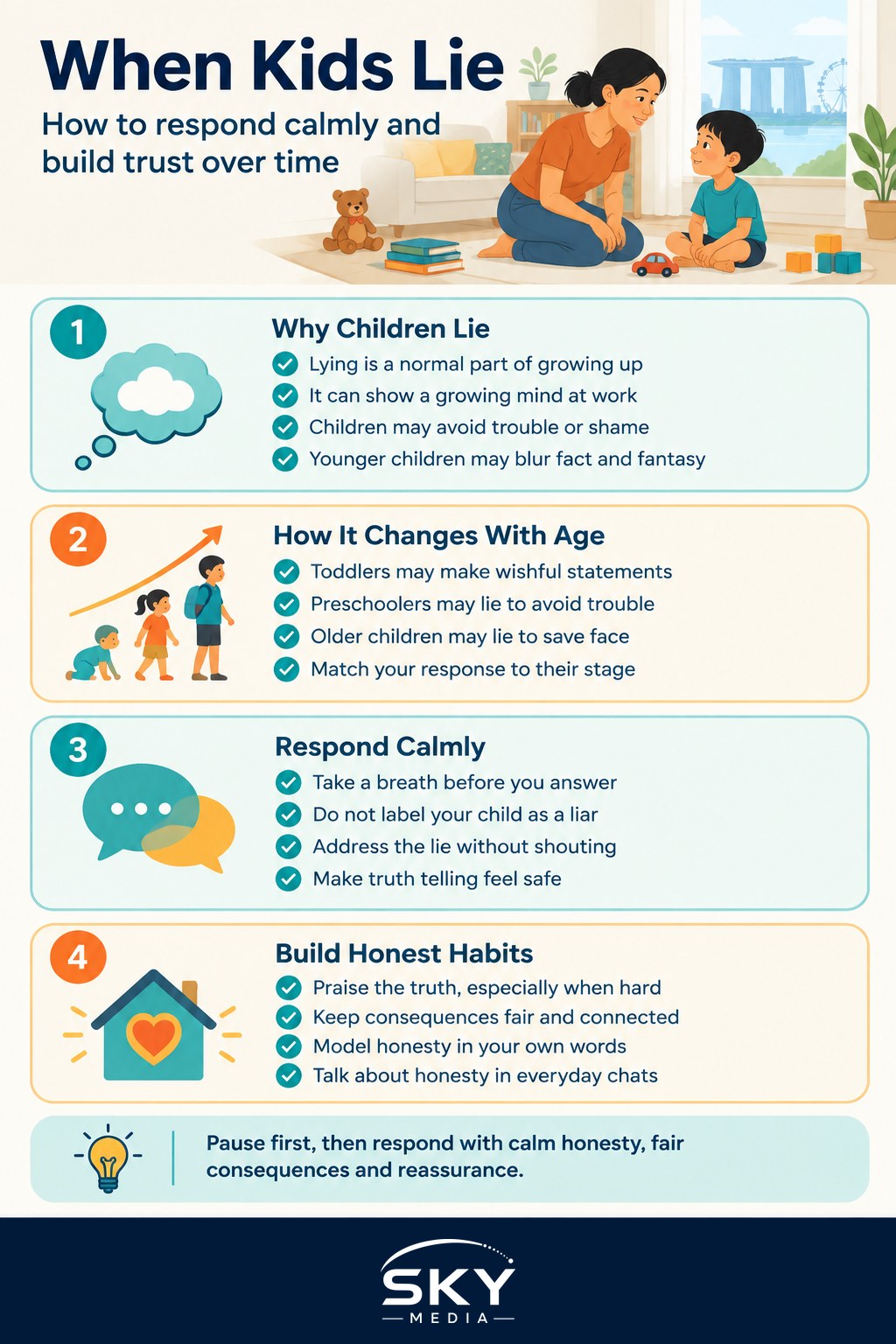
Why Children Lie
Lying is actually a developmental milestone. To tell a lie, a child must understand that other people have their own thoughts and that those thoughts can be shaped. This takes real cognitive skill. So while a lie can feel like a betrayal, it often reflects a growing mind at work rather than a moral failing.
Children lie for many reasons, and most are very human. They may want to avoid getting into trouble, to escape a task, to gain something they want, or to please you with an answer they think you would like. Sometimes they lie to protect themselves from disappointment or shame. Younger children may not even be lying in the adult sense at all, as the line between imagination and reality is still blurry for them. Seeing the reason behind the lie helps you respond to the need underneath it.
How Lying Changes With Age
The meaning of a lie shifts as children grow, and matching your response to their stage makes it far more effective and fair.
| Age stage | What lying often looks like | A helpful response |
|---|---|---|
| Toddlers | Wishful or fantasy statements, no real intent to deceive | Gently connect them back to reality, stay light |
| Preschoolers | Simple lies to avoid trouble or get a treat | Stay calm, explain honesty simply, avoid harsh punishment |
| Early primary | More deliberate lies, testing what works | Focus on why honesty matters, offer safe ways to tell the truth |
| Older children | Lies to protect privacy, avoid pressure or save face | Keep communication open, address the underlying worry |
Knowing that an occasional lie is developmentally normal can ease your worry. What matters most is the pattern over time and the trust you build, not a single fib.
Respond Calmly, Not Harshly
When you catch your child in a lie, your first reaction sets the tone. Reacting with anger, shouting or heavy punishment often teaches children to lie more carefully next time rather than to tell the truth. If a child fears a big blow up, honesty starts to feel dangerous. The calmer you stay, the safer it feels for them to be truthful.
Take a breath before you respond. Address the lie without labelling your child. Saying “That does not sound like what happened, let us talk about it” is far kinder and more effective than “You are a liar.” The first opens a door, the second closes it and wounds their sense of self. You can be clear that the lie was not okay while still showing that you love and believe in your child.
Try to focus more on the truth telling than on the mistake being hidden. Children are much more likely to be honest when they trust that coming clean will be met with understanding rather than a harsh reaction.
Encourage Honesty at Home
Building a home where honesty feels safe does more than any single conversation. A few gentle habits make a real difference over time.
- Praise the truth, especially when it is hard. When your child owns up, thank them for their honesty before you deal with the issue itself. This makes truth telling worthwhile.
- Avoid setting traps. If you already know what happened, resist asking “Did you do this?” in a way that invites a lie. Instead, address it directly and calmly.
- Keep consequences fair and connected. A calm, reasonable consequence for the original behaviour teaches responsibility, while going easier because they told the truth rewards honesty.
- Model honesty yourself. Children notice the small untruths adults tell. When they see you being truthful, even when it is awkward, they learn that honesty is simply how your family works.
- Tell stories about honesty. Everyday chats and simple stories about telling the truth help younger children understand the idea without a lecture.
When Lying Is About Something Bigger
Occasional lies are normal, but frequent or elaborate lying can sometimes signal that a child is struggling with something underneath. A child under heavy academic pressure may lie about grades or homework to avoid disappointment. A child feeling anxious, left out or overwhelmed may lie to cope. In these cases, the lie is a symptom, and meeting the underlying worry with warmth helps far more than focusing on the lie alone.
Notice the context. Has something changed at home or school? Is your child under a lot of stress? Do they seem worried about living up to expectations? Gentle, curious questions and plenty of reassurance often uncover what is really going on. Let your child know that they can come to you with hard truths and that your love does not depend on them being perfect.
If lying becomes persistent, causes real problems, or is paired with other worrying changes in mood or behaviour, it is wise to seek guidance. A teacher, school counsellor or a suitable professional can help you understand what your child needs. Reaching out is a caring step, not an admission of failure.
Keeping Trust at the Centre
The long term goal is not a child who never tells a single fib, which is an unrealistic standard for anyone. The goal is a strong, trusting relationship in which your child feels safe to be honest, even about difficult things. Every time you respond to a lie with calm, curiosity and warmth, you strengthen that trust. Over the years, that steady foundation does far more to encourage honesty than any strict rule or harsh punishment ever could. Be patient with your child, and with yourself, as you build it together.
Explore more
- Positive Parenting and Discipline
- Gentle Parenting Explained
- Setting Boundaries and Routines for Kids
- Teaching Kids to Calm Down and Self-Soothe
Frequently Asked Questions
Should I punish my child for lying or just talk about it? A calm talk usually works better than heavy punishment, though a fair consequence for the original misbehaviour still has a place. Harsh reactions tend to teach children to hide things more carefully. Keep the consequence linked to what actually happened, and stay warm while you do it.
Is it normal for a four-year-old to make up stories and tall tales? Yes, very. At that age imagination and reality overlap, so a tall tale is often play rather than a deliberate lie. Gently describe what really happened, join in the fun where it is harmless, and save serious talks about honesty for when they are older.
How do I get my child to admit a mistake without lying? Make owning up feel safe. Skip the trap questions when you already know the answer, state what you saw, and ask how they plan to fix it. Thanking them for telling the truth, even late, makes the next confession easier.
Why does my child lie about homework and grades? Usually it is fear of disappointing you or of getting into trouble, not a wish to deceive. Pressure and worry push children to hide results. Asking what is making school feel stressful, and reassuring them of your support, often does more than scolding.
When should I worry about my child’s lying and ask a counsellor for help? Consider outside help if the lying is constant, elaborate, harming relationships or comes with changes in mood or behaviour. A teacher or school counsellor is a sensible first contact, and they can point you to a suitable professional if needed.
Further reading: When Your Child Starts Swearing: How to Respond Calmly · What to Do When Your Child Steals