

A stone flicked up by a lorry on the expressway, a sharp tap, and suddenly there is a small star on your windscreen. It is one of the most common bits of car damage in Singapore, and the decision you make in the next few days matters. This guide to windscreen crack repair in Singapore explains when a chip can be fixed, when the glass has to be replaced, and how windscreen cover in your motor insurance usually works, including the question every driver asks: will it affect my No Claim Discount?
This is general information, not insurance or legal advice. Your own policy wording and your insurer have the final say.
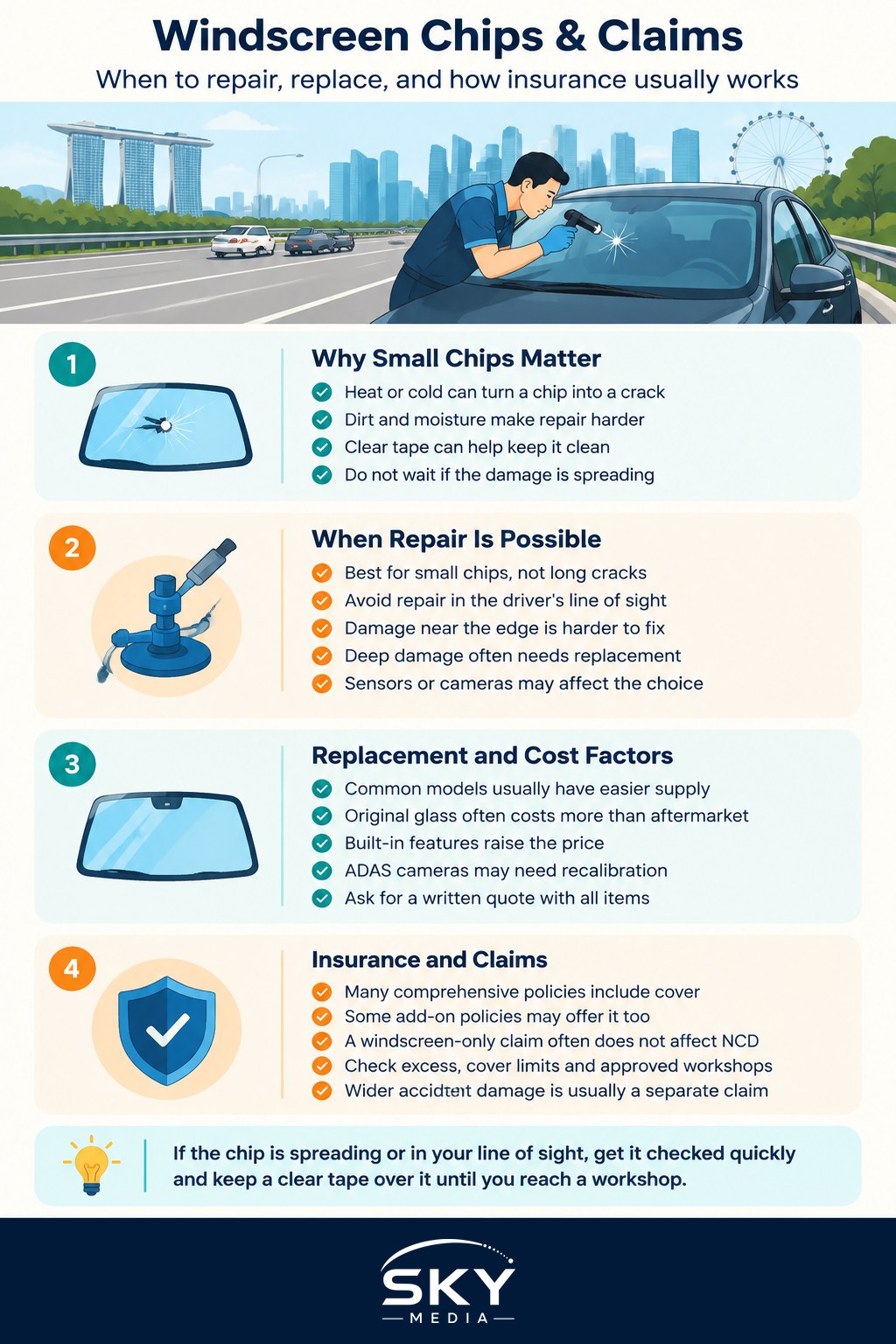
Why You Should Not Ignore a Small Chip
Car windscreens are made of laminated glass: two layers of glass bonded to a plastic interlayer. When a stone hits, the outer layer can chip while the inner layer stays intact. That is why a chip often looks harmless.
The problem is that a chip is a weak point. Heat from the midday sun, a blast of cold air-conditioning on the inside, slamming a door or driving over a bumpy road can all put stress on the glass. A chip can spread into a long crack within days or even hours. Once that happens, repair is often no longer an option and you are looking at a full replacement.
Dirt and moisture can also get into an open chip, which makes a clean repair harder. If you cannot get to a workshop straight away, a piece of clear tape over the chip helps keep it clean until it is looked at.
When a Chip Can Be Repaired
Chip repair works by injecting a clear resin into the damaged area, curing it with UV light and polishing the surface. Done well, it restores strength and makes the damage much less visible, though a faint mark may remain.
Whether a repair is possible depends on a few factors that a windscreen specialist will check:
- Size: small chips, roughly the size of a coin or smaller, are usually good candidates. Long cracks generally are not.
- Location: damage directly in the driver’s line of sight is often replaced rather than repaired, because even a good repair can leave slight distortion.
- Distance from the edge: chips close to the edge of the glass tend to spread and are harder to repair reliably.
- Depth: if the damage has gone through to the inner layer, replacement is usually needed.
- Number of chips: several chips in one area can weaken the glass enough that replacement is the safer choice.
- Sensors and cameras: damage near the rain sensor or the camera mounting area may affect those systems.
A reputable workshop will tell you honestly if repair is not suitable. Be wary of anyone who pushes a replacement for a tiny chip far from the driver’s view, or who promises an invisible repair for a long crack.
Repair vs Replacement Compared
| Factor | Chip repair | Full replacement |
|---|---|---|
| Suitable for | Small chips away from the edge and driver’s view | Long cracks, deep damage, damage in the driver’s line of sight |
| Time needed | Often under an hour | Usually a few hours, plus time for adhesive to cure |
| Original glass kept | Yes, factory seal untouched | No, new glass is bonded in |
| Cost | Generally much lower | Higher, especially for cars with sensors or heated or tinted glass |
| Camera recalibration | Not usually needed | May be needed for cars with driver assistance cameras |
What Affects Windscreen Replacement Cost
Replacement prices vary widely, so we will not quote figures that may be out of date. Instead, here is what pushes the cost up or down:
- Car make and model: windscreens for common models are more widely available than those for luxury or rare cars.
- Original or aftermarket glass: original equipment glass from the car manufacturer typically costs more than compatible aftermarket glass. Both can be safe, but ask what you are getting.
- Features built into the glass: rain and light sensors, heated elements, acoustic layers, solar tint and head-up display compatibility all add to the price.
- Driver assistance systems (ADAS): many newer cars have a camera behind the windscreen for lane keeping or emergency braking. After replacement, this camera often needs recalibration so it reads the road correctly. Ask whether recalibration is included and whether the workshop can do it.
- Tint film: if your old windscreen had a tint film, it will need to be reapplied to the new glass, and the film must still meet LTA’s light transmission rules. Check the current requirements on the LTA website.
Always get a written quote that lists the glass type, labour, sealant, recalibration and tint, so you can compare like for like.
How Windscreen Cover Usually Works in Motor Insurance
Many comprehensive motor policies in Singapore include windscreen cover, and some third-party, fire and theft policies offer it as an add-on. It typically pays to repair or replace damaged windscreen and window glass, subject to an excess and sometimes a cap.
The point most drivers care about is the No Claim Discount (NCD), the discount on your premium that builds up for each claim-free year. Under many policies, a claim made only for windscreen or window damage does not affect your NCD. That is a big reason windscreen cover is valued.
However, the details vary between insurers and policies, so check these points in your policy schedule and wording:
- Whether windscreen cover is included or needs to be added.
- The windscreen excess, which is the amount you pay yourself per claim. It is often lower than the general own damage excess, but not always zero.
- Whether NCD is protected for windscreen-only claims, and whether there is a limit on how many such claims you can make in a year.
- Approved workshops: some insurers require you to use their appointed windscreen specialists or authorised workshops. Going elsewhere may reduce what they pay.
- What counts as windscreen damage: sunroofs, side mirrors and headlamps are usually treated differently.
- Combined damage: if the windscreen broke as part of a wider accident, it is usually handled as part of an accident claim rather than a standalone windscreen claim, and your NCD may be affected. Our guide to car insurance claims explains how accident claims work.
Making a Windscreen Claim Step by Step
- Take photos of the damage, inside and out, plus a wide shot showing the whole windscreen.
- Note when and where it happened, for example on which road and roughly what time.
- Call your insurer or check their app to confirm cover and get a list of approved workshops.
- Book the repair or replacement at an approved workshop. Many can handle the paperwork with the insurer directly.
- Pay the excess at the workshop, if one applies, and keep the invoice.
- Check the result: no leaks, no wind noise, clean wipers, sensors and camera working normally.
For general tips on documentation and timelines, see our guide on making an insurance claim.
Safety and Road Rules
A cracked windscreen is more than a cosmetic issue. It can reduce visibility, especially at night when light from oncoming headlamps scatters across the crack, and a badly damaged windscreen offers less structural support in a crash. Vehicles with damaged windscreens may also run into trouble at periodic inspections. If the damage is in your line of sight or spreading, get it seen to promptly rather than waiting for your next service.
For smaller paintwork blemishes picked up at the same time, our guide to fixing small car scratches and chips covers what you can safely do yourself.
Frequently Asked Questions
Can I fix a windscreen chip myself with a DIY kit? Kits exist, but results depend on the type and position of the damage and on how carefully you work. A poor repair can leave the chip more visible or weaker. If the chip is in your line of sight or near the edge, it is safer to see a professional.
Can I be fined for driving with a cracked windscreen in Singapore? Vehicles must be in a roadworthy condition, and a windscreen that obstructs your view can be a problem on the road and at inspection. Penalties and requirements are set by the authorities, so check the current rules with LTA and get any serious damage fixed promptly.
How soon can I drive after a windscreen repair or replacement? After a chip repair you can usually drive soon after, but a replacement needs time for the adhesive to cure. Follow the workshop’s instructions on how long to wait, avoid slamming doors and keep windows slightly open if advised.
Is it worth claiming if the windscreen excess is close to the repair cost? Compare the excess with the quote first. If the difference is small, paying yourself can save the trouble of a claim, though some policies protect your NCD for windscreen-only claims. Check your policy wording and ask your insurer before deciding.
How can I reduce the chance of chips on my windscreen? Keep a safe distance from lorries and vehicles carrying loose material, especially on expressways, and avoid driving close behind them. Park in the shade where you can, and have small chips fixed early. Keeping the glass clean also makes damage easier to spot.
Further reading: How to Choose a Windscreen Sunshade That Fits Well