
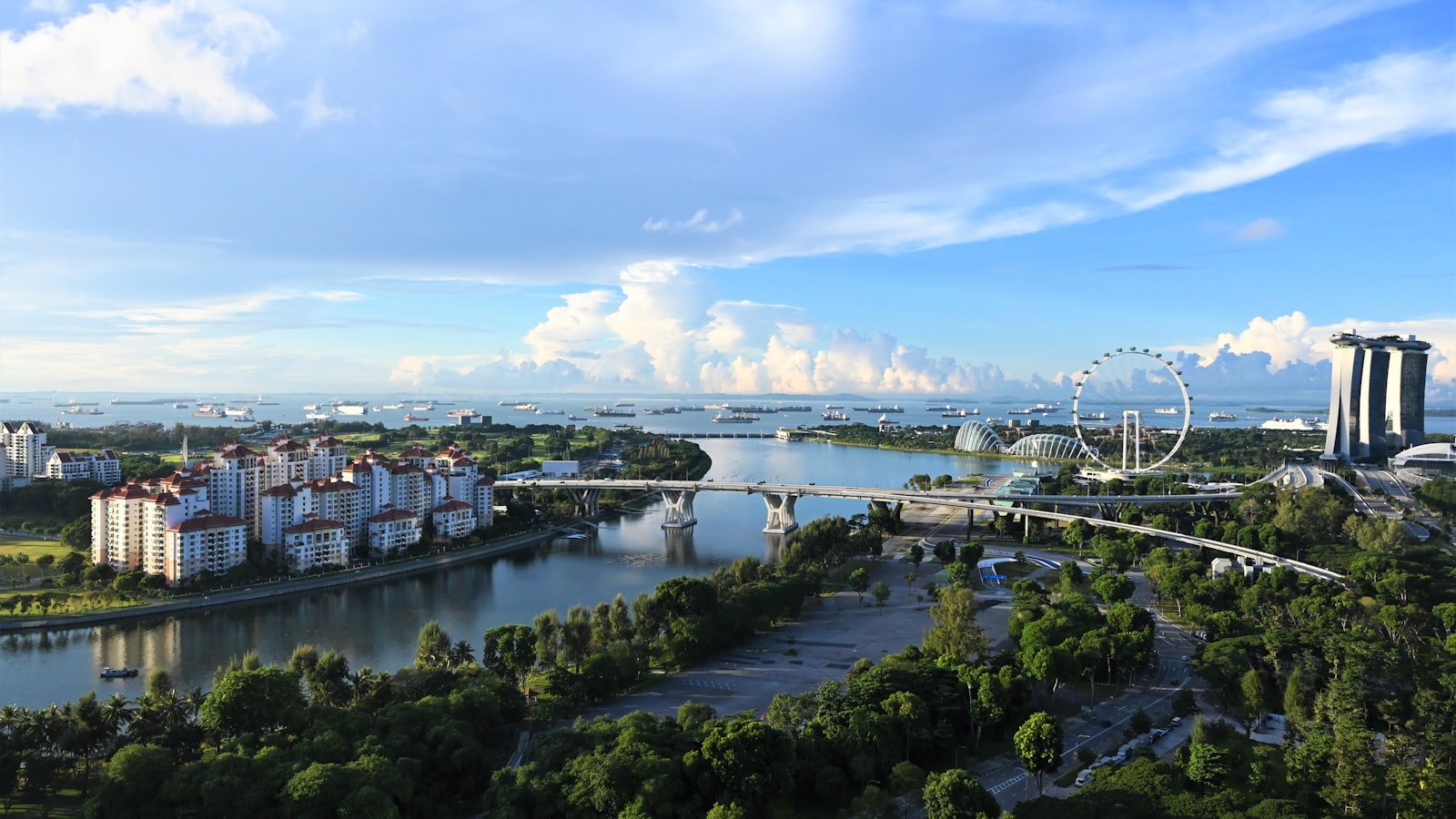
Queenstown holds a special place in Singapore’s story as one of the country’s first satellite towns, and a day here is a walk through decades of housing history. If you are looking for queenstown things to do singapore that mix heritage with modern living, this estate on the western fringe of the city delivers a quiet, rewarding day out. You get low rise blocks from an earlier era standing beside the striking Dawson estates, leafy parks, old markets and a strong sense of community. Here is how to spend a full day exploring it.
Morning: Heritage Blocks and Old Streets
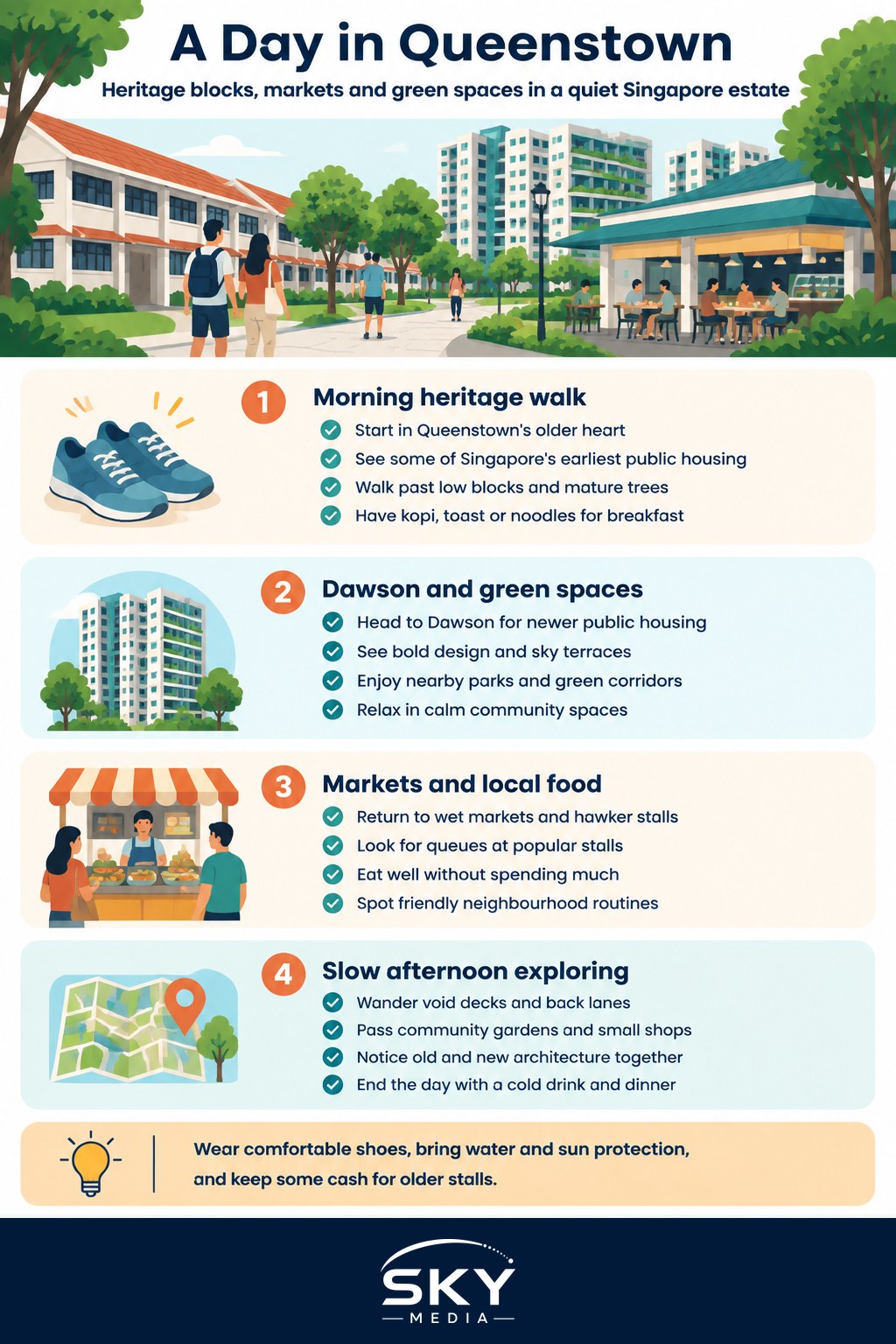
Begin in the older heart of Queenstown, where some of the earliest public housing in Singapore still stands. Walking these streets, you notice the human scale of it all, with low blocks, wide corridors and mature trees that have grown up alongside the neighbourhood. This is a living museum of how the country chose to house its people, and it is best appreciated slowly and on foot.
Grab breakfast at a neighbourhood coffee shop or one of the estate’s long running hawker centres. Order kopi and toast, or a bowl of noodles, and watch the morning routine unfold. Elderly residents chat over newspapers, families run errands and stallholders trade friendly banter. It is unhurried and genuine, the kind of scene that has largely defined Queenstown for generations.
Getting here is straightforward. Queenstown MRT on the East West Line sits close to the estate, and nearby stations such as Commonwealth and Redhill give you more entry points. A good approach is to enter at one station, explore on foot, and exit at another, letting the walk stitch the estate together. Buses also thread through the area if you prefer to hop between clusters.
Midday: Dawson Estates, Markets and Green Space
By late morning, make your way to the Dawson area, where the contrast with the older blocks is stunning. Here you will find newer public housing that has won attention for its bold design, with soaring blocks, sky terraces and green communal spaces woven between the buildings. Walking from the vintage estates to Dawson in a single morning is like watching Singapore’s housing story fast forward before your eyes.
Queenstown is also blessed with parkland. The estate is close to green corridors and neighbourhood parks that give residents room to stroll, exercise and gather. These pockets of calm are part of what makes the town feel balanced, and they are free to enjoy. If you want to plan a greener version of this day, our guide to the best parks in Singapore helps you extend the outdoor time.
For lunch, return to the food centres and markets that anchor the community. Queenstown has wet markets and hawker stalls where you can eat well without spending much. Look out for stalls with steady queues, since the locals know exactly where the good food is. Eating like this is one of the great low cost pleasures of the estate, and you can find plenty more ideas in our roundup of free things to do in Singapore.
Afternoon and Evening: Slow Exploring and Winding Down
Spend the afternoon simply wandering. Queenstown rewards curiosity, so follow the void decks, community gardens and quiet back lanes wherever they lead. Look up at the mix of architecture, from the plainer blocks of the early years to the sculptural forms of the newest ones. Along the way you will pass provision shops, tailors, bakeries and other small businesses that have served the estate for years.
As the day cools, the neighbourhood shifts gear. Coffee shops fill with residents unwinding after work, and the smell of dinner drifts from the hawker stalls. It is a fine time to settle at a table, order a cold drink and watch the estate ease into evening. There is no rush and no spectacle, just the steady rhythm of a well loved town.
A few practical notes will make the day smoother. Wear comfortable shoes, since much of the pleasure comes from walking. Bring water and sun protection for the exposed stretches between blocks. Carry a little cash for older stalls, though cashless payment is widely accepted. And keep your plans loose, because the best moments in Queenstown tend to be the ones you stumble upon.
If this heritage focused day appeals to you, pair it with another old neighbourhood such as A Day in Tiong Bahru, or a very different heartland experience in A Day in Bedok. Queenstown may not shout for attention, but for anyone curious about how Singapore lives, it is one of the most quietly fascinating estates you can visit.
Frequently Asked Questions
Why is Queenstown important in Singapore’s history? It was one of the country’s first satellite towns, so it shows how early public housing was planned and built. Walking its older low rise blocks beside the newer Dawson estates gives a quick view of how housing design has changed.
What is special about the Dawson estates? Dawson has newer public housing known for bold design, with tall blocks, sky terraces and green communal spaces between the buildings. Seeing it right after the older blocks shows how far Singapore’s housing has come in a single morning.
Which MRT stations should I use to explore Queenstown on foot? Queenstown station is close to the estate, and Commonwealth and Redhill give extra entry points. A neat approach is to enter at one station, walk through the estate and leave from another. Buses help if you prefer to hop between clusters.
Is Queenstown a good place to learn about public housing? Yes, because you can see old and new blocks, community gardens and markets in daily use rather than in a museum. For official background on HDB history and housing types, the HDB website and national archives are good sources.
How long does a Queenstown heritage walk take? Plan on a half day to a full day, depending on how often you stop to eat and wander. The estate rewards slow, loose plans, so avoid packing the schedule. Bring water and sun protection for the exposed stretches between blocks.
Further reading: A Day in Sengkang · A Day in Balestier · A Day in Clementi