
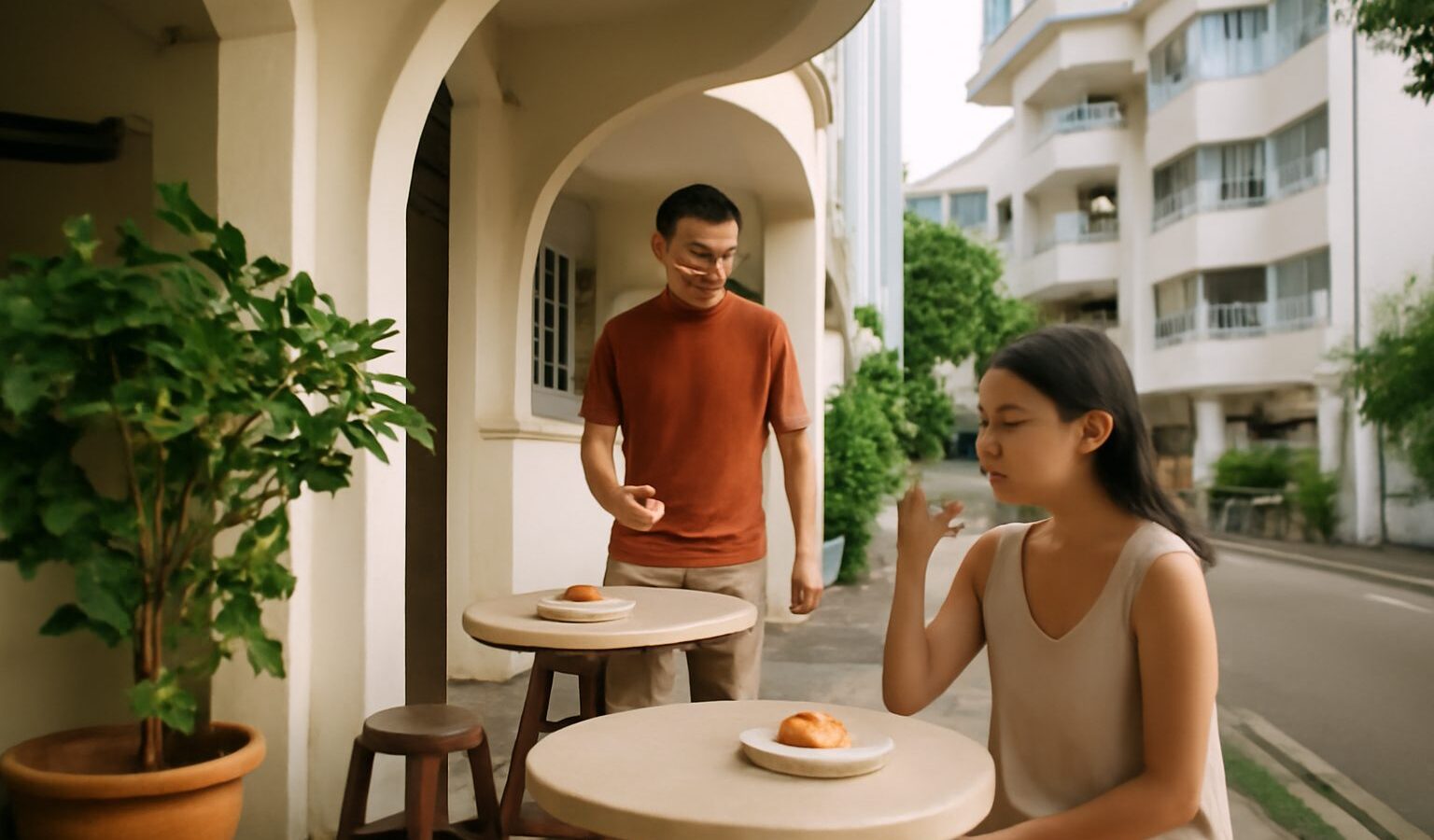
Some Singapore neighbourhoods rush at you. Tiong Bahru does the opposite. Spend a day in Tiong Bahru and you settle into a slower rhythm, one measured in coffee refills, quiet lanes, and the low hum of a market at work. It is one of the island’s oldest housing estates, and somewhere along the way it became a favourite of cafe hoppers, book lovers, and anyone who likes their heritage served with a flat white. The pleasure here is not a single big attraction. It is the whole unhurried mood of the place.
This guide walks you through a full, easy day, from an early market visit to a lazy afternoon among bookshops and low-rise flats. There are no fixed schedules to keep, which is rather the point.
Why Tiong Bahru Feels Different
Tiong Bahru sits just beyond the city centre, close enough to reach easily yet far enough to feel like a proper neighbourhood rather than a tourist strip. What sets it apart is the low scale of everything. Instead of towers, you get walk-up blocks of a few storeys, curved balconies, and courtyards where residents have lived for generations. Cats doze in doorways, older uncles read the papers over kopi, and young families push prams past design studios.
That mix of the old and the new is the whole charm. A traditional provision shop might sit a few doors from a minimalist coffee bar, and neither feels out of place. It is a rare Singapore estate where you can trace decades of daily life on a single stroll, which makes it perfect for a slow, curious wander.
Start at the Market
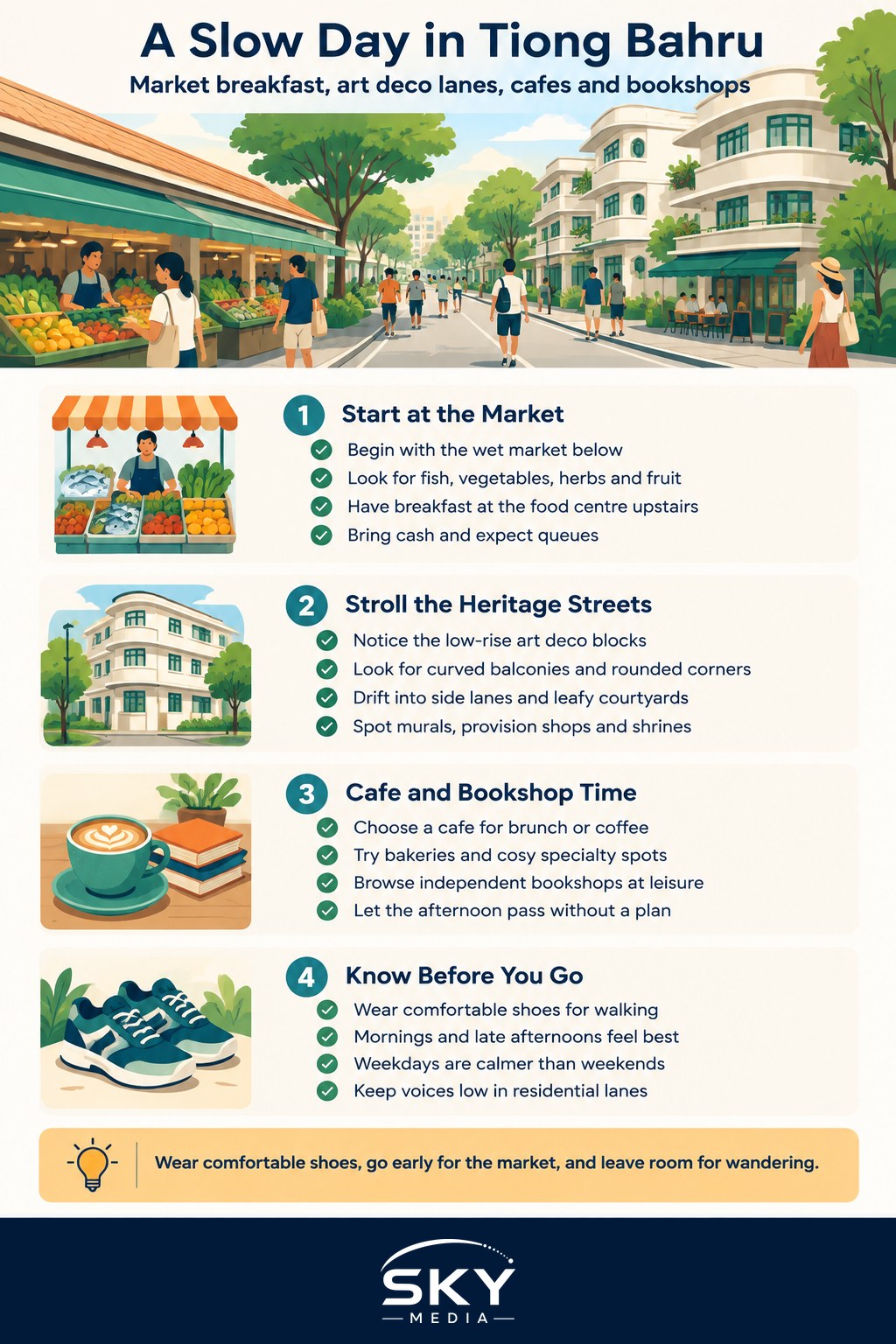
The natural way to begin a day in Tiong Bahru is at the market, and the earlier the better. The lower floor is a wet market where stallholders lay out fish, vegetables, herbs, and fruit, and the whole place buzzes with the sort of morning energy that has not changed in decades. Even if you are not shopping, it is worth a slow loop simply to watch a real neighbourhood market in motion.
Upstairs is the food centre, and this is where you should have breakfast. Hawker stalls here cover the classics, and part of the fun is joining a queue, seeing what regulars order, and finding a seat among locals starting their day. A few tips for the market visit:
- Go early for the best selection and the liveliest atmosphere
- Bring some cash, as many stalls prefer it
- Be patient with popular stalls, since queues move but rarely vanish
- Clear your own tray when you are done, as is the local habit
Eat well, because the rest of the day is built for walking it off.
Wander the Art Deco Streets
With breakfast settled, step out into the estate itself, and look up. Tiong Bahru is known for its streamlined art deco architecture, with rounded corners, long horizontal lines, and those distinctive curved balconies that give the blocks a gentle, ship-like feel. The low-rise walk-ups are a snapshot of a particular era of Singapore housing, and wandering between them is like stepping into a quieter version of the city.
There is no set route to follow, and that freedom is the joy of it. Let yourself drift down the side lanes, notice the spiral staircases tucked behind the blocks, and peek into leafy courtyards. You will pass tucked-away murals that nod to the estate’s past, small provision shops, and the odd shrine. Take it slowly. A camera helps, but honestly the best way to enjoy this stretch is to put the phone away for a while and simply amble.
Cafes, Bookshops and a Slow Afternoon
By late morning, the neighbourhood’s famous cafe culture takes over, and this is where many visitors happily lose the middle of their day. Tiong Bahru is dense with independent coffee places, brunch spots, and bakeries, ranging from serious specialty roasters to cosy corners perfect for a long sit with a pastry. Pick one that looks inviting, settle in, and let the afternoon unspool.
The other great pleasure here is browsing. The estate has a reputation for characterful independent bookshops, the kind where you go in for nothing in particular and leave an hour later with something you did not know you wanted. Between the pages and the coffee, you can easily fill an afternoon without a plan.
Here is a loose way to shape your hours, adjust freely to taste:
| Time of day | What to do | The mood |
|---|---|---|
| Early morning | Market breakfast and a wet-market loop | Lively and local |
| Late morning | Art deco street stroll | Quiet and curious |
| Midday | Cafe brunch and coffee | Relaxed and lingering |
| Afternoon | Bookshop browsing and boutiques | Unhurried and indulgent |
| Late afternoon | A final slow walk | Golden and gentle |
Between the fixed points, leave gaps. The neighbourhood rewards aimless wandering more than a tight timetable.
Practical Tips for Your Visit
A day in Tiong Bahru asks very little of you, but a few pointers help. Wear comfortable shoes, because the pleasure here is walking and standing rather than sitting on transport. Mornings and late afternoons are the most pleasant times to be outdoors, so plan your indoor cafe and bookshop time for the hotter middle of the day. Weekdays feel calmer, while weekends bring more life and longer queues.
Remember that this is a living neighbourhood, not a theme park. Keep your voice down in the residential lanes, ask before photographing people or shopfronts up close, and be considerate of residents going about their day. Opening hours, individual shops, and cafes change often, so it is worth checking current details before you set out if there is a particular place you have your heart set on.
Above all, do not over-plan. The best souvenir from Tiong Bahru is the feeling of having slowed down for a few hours in one of Singapore’s most quietly lovely corners.
Explore More
If you enjoyed this gentle pace, try a day in Katong and Joo Chiat for another heritage-rich neighbourhood full of colour and food. History buffs can extend the walking with our heritage walking trails, and if you would rather roam without spending much, our guide to Singapore on a budget pairs perfectly with a day of strolling and browsing.
Frequently Asked Questions
How do I get to Tiong Bahru by MRT? Tiong Bahru MRT station on the East-West Line is the closest stop, a short walk from the estate’s art deco blocks and market. Outram Park is another option if you are coming from the north-east or Thomson-East Coast lines, and several buses serve the area.
Is Tiong Bahru Market ever closed? Like other hawker centres, it shuts for periodic cleaning and maintenance, and individual stalls keep their own rest days. Check NEA’s hawker centre closure schedule before you go, especially if breakfast at the market is the centrepiece of your day.
What can I combine with Tiong Bahru in one day? Chinatown and Outram are a short walk or one MRT stop away, so you can add temples, shophouses and more food. Some people walk on towards the Singapore River in the late afternoon for a riverside dinner.
Is Tiong Bahru a good day out with kids? It suits older children who enjoy snacking, bookshops and spotting murals, and the low-rise lanes are easy with a pram. Younger kids may get restless during long cafe stops, so mix in breaks at the estate’s courtyards and keep the walk short.
Are there self-guided heritage trails in Tiong Bahru? The estate has heritage markers and murals that tell the story of its early public housing and residents, and you can follow them at your own pace. Check the National Heritage Board’s website for the current trail map before you set out.
Further reading: Touring the Tiong Bahru Air Raid Shelter: How to Join · A Day in Everton Park and Kampong Bahru · Tiong Bahru Neighbourhood Guide