
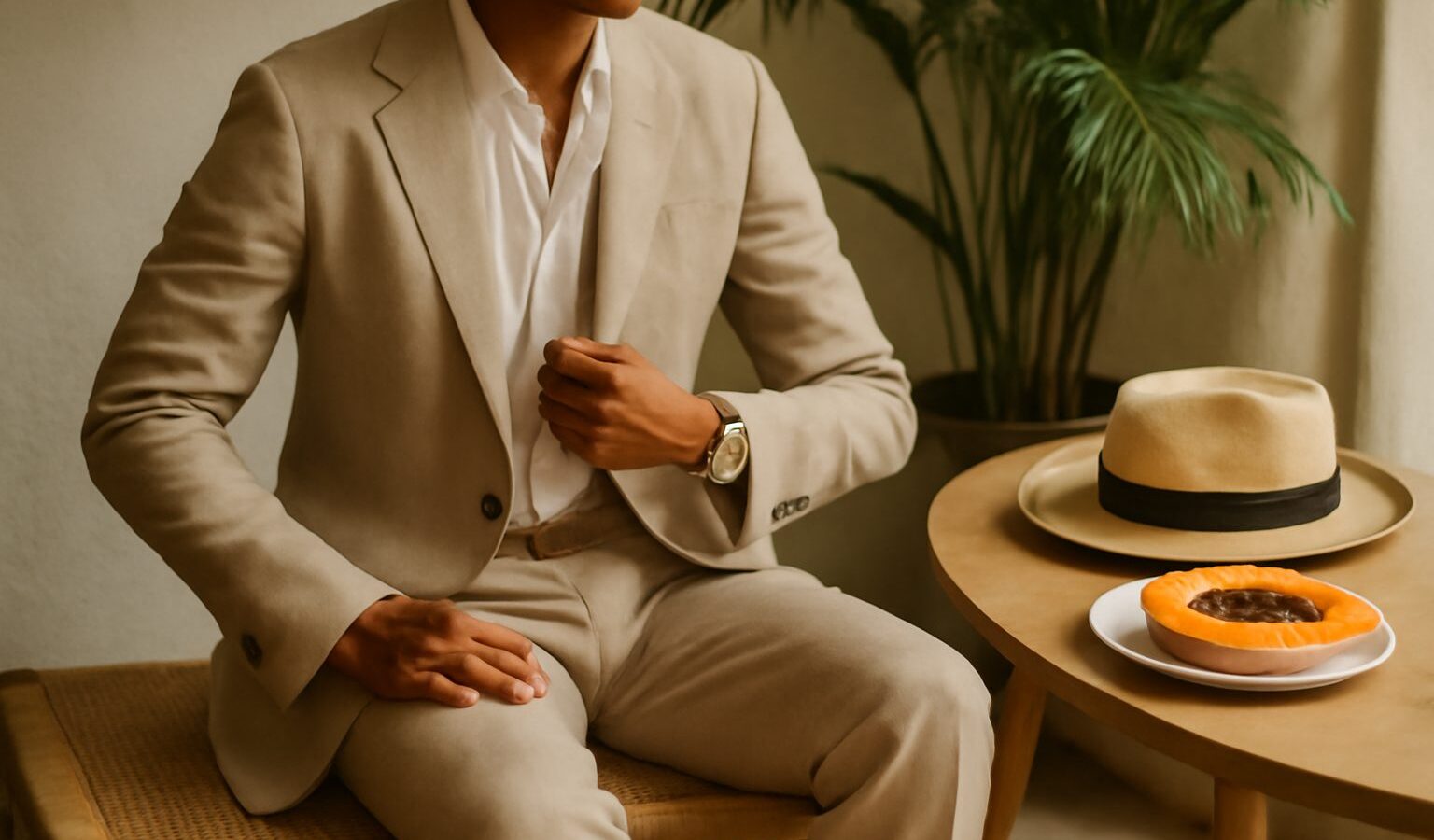
Wearing tailored clothing in Singapore can feel like a losing battle against the heat, but it does not have to. Tropical tailoring is the art of looking sharp in jackets, trousers and shirts that are built for warm, humid weather rather than European winters. The secret is not to suffer through heavy suits, but to choose lighter fabrics, softer construction and smarter details so you stay cool and crisp. This guide walks you through the fabrics, cuts and habits that make tailoring genuinely wearable in our climate.
Fabric Comes First
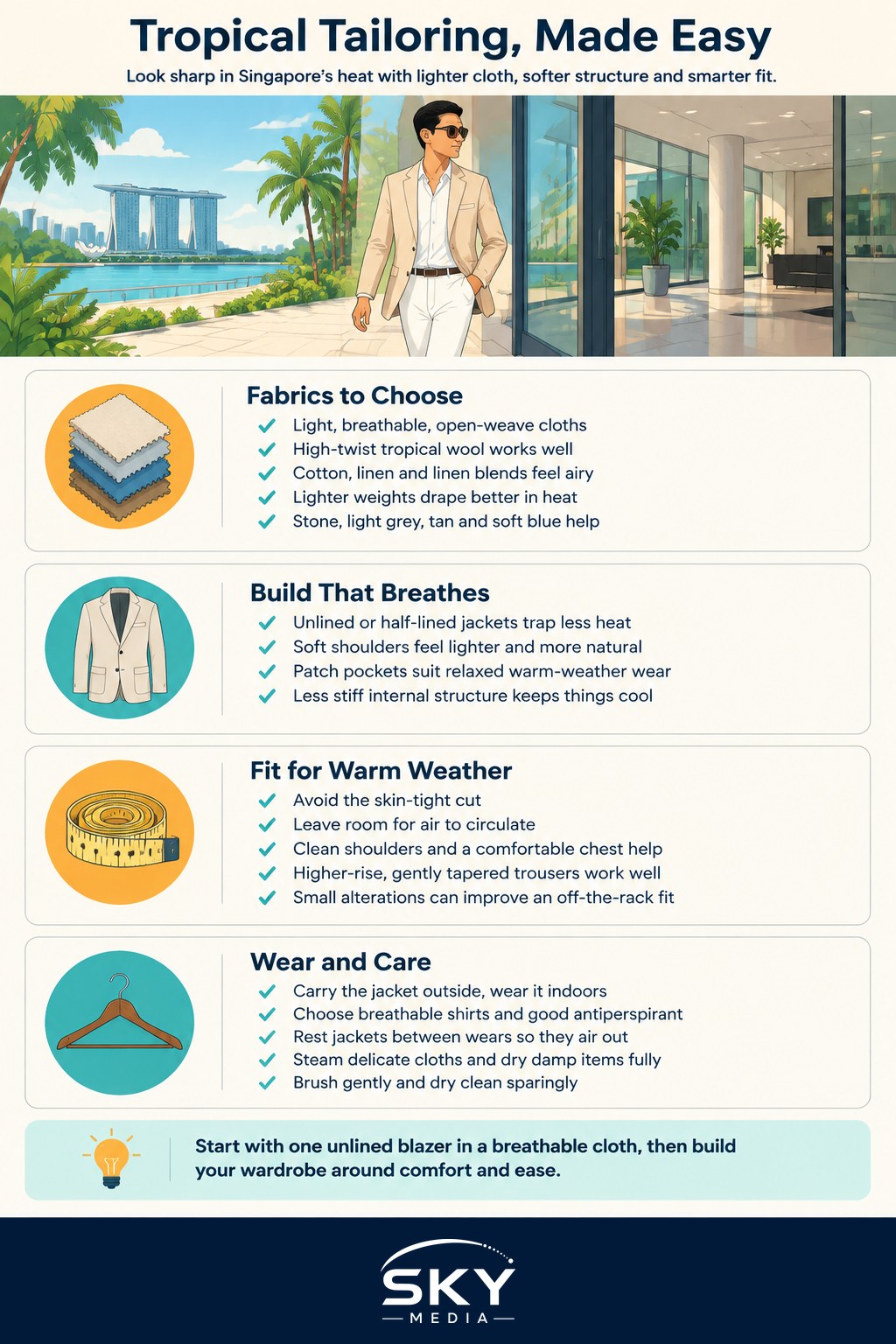
In the tropics, fabric matters more than almost anything else. A cheaper jacket in the right cloth will feel better than an expensive one in heavy wool. Look for lightweight, breathable, open-weave materials that let air move and heat escape. High-twist tropical-weight wool is a classic for a reason: it breathes, resists creasing and holds a clean line even when it is warm. Cotton, linen and linen blends are wonderfully airy, though pure linen creases readily, which many men embrace as part of its relaxed charm.
Pay attention to weight, measured in how heavy the cloth is per length. Lighter cloths are cooler and drape softly, which suits our weather. Our guide to fabric weight and drape explains this in more detail, and if you love how linen behaves in the heat, linen clothing for the tropics is worth a read. Pale and mid tones like stone, light grey, tan and soft blue also feel cooler and more relaxed than heavy dark suits.
Construction That Breathes
The way a jacket is built changes how hot it feels. Fully canvassed, heavily padded jackets with thick linings trap heat, while lightly constructed ones let your body breathe. For Singapore, look for these features:
- Unlined or half-lined jackets, which cut down on trapped heat dramatically.
- Soft or minimal shoulder padding for a lighter, more natural shape.
- Patch pockets and lighter internal construction rather than stiff, structured builds.
- Breathable buttons and details that suit relaxed, warm-weather dressing.
An unlined, unstructured blazer is the workhorse of a tropical wardrobe because it looks tailored yet wears almost like a shirt. It pairs easily with trousers or even good chinos, and it slips off the moment you step outside. If you want the sharpness of tailoring without the full jacket, a waistcoat can bridge the gap, and our guide to styling a waistcoat or vest shows how.
Fit and Cut for the Heat
Good tropical tailoring is not skin-tight. A little breathing room actually helps air circulate and keeps you cooler, so avoid squeezing into the slimmest possible cut. Aim for a clean shoulder, a comfortable chest, and trousers that sit well without clinging. Slightly higher-rise, gently tapered trousers in a breathable cloth feel far better than heavy, tight ones across a long day.
Fit is where tailoring earns its keep, and small adjustments make a big difference. A jacket taken in slightly at the waist or trousers hemmed to the right length transform an off-the-rack piece. Our guide to made-to-measure and tailoring in Singapore explains your options, and if you are buying a full suit, our dedicated suit-buying guide covers the essentials. Whatever route you take, prioritise comfort in the shoulders and through the seat, because a jacket you can move in is one you will actually wear.
Wearing It Well Day to Day
Tailoring in Singapore is a game of managing the gap between blazing streets and freezing offices. Carry your jacket outdoors and put it on inside, where the aircon makes a light layer welcome. Choose breathable shirts underneath, keep an undershirt or good antiperspirant in play, and give jackets a rest day between wears so they air out and recover their shape. Steam rather than over-iron delicate cloths, and always let anything damp dry fully before storing it, since humidity invites mould.
Care extends the life of your tailoring, so hang jackets on shaped hangers, brush them occasionally, and dry clean sparingly rather than after every wear. Delicate fabrics like fine wool and linen may need professional pressing now and then, so follow the care label and the maker’s advice.
Done right, tropical tailoring lets you look polished for work, weddings and dinners without ever looking like you are melting. Start with one unlined blazer in a breathable cloth, get the fit right, and build from there. Sharp and cool really can go together in Singapore.
Frequently Asked Questions
Is an unlined blazer smart enough for the office? Usually yes. An unlined, unstructured blazer in a breathable cloth looks tailored yet wears almost like a shirt, and it pairs well with trousers or good chinos. For very formal settings or client meetings, check your company’s dress expectations first.
What colours of suit feel coolest in Singapore? Pale and mid tones such as stone, light grey, tan and soft blue feel cooler and more relaxed than heavy dark suits. Pair them with a breathable shirt, and save the darker colours for evenings or indoor events.
Is made-to-measure worth it for hot weather? It can be, because fit is where tailoring earns its keep, and a good fit lets air circulate while keeping a clean line. Compare options and ask about fabrics suitable for the tropics, and weigh the cost against how often you will wear the piece.
How often should I dry clean my tailored jackets? Sparingly rather than after every wear. Give jackets a rest day between wears so they air out, hang them on shaped hangers, brush them occasionally and steam instead of over-ironing. Delicate cloths like fine wool and linen may need professional pressing now and then.
Can I wear a waistcoat instead of a full jacket in the heat? Yes, a waistcoat bridges the gap by giving you the sharp tailored look without a full jacket. Choose a light, breathable cloth and wear it with a crisp shirt. Carry a light jacket for freezing offices if you need one.
Further reading: Style Tips for Shorter Men: Fit, Proportion and Tailoring