
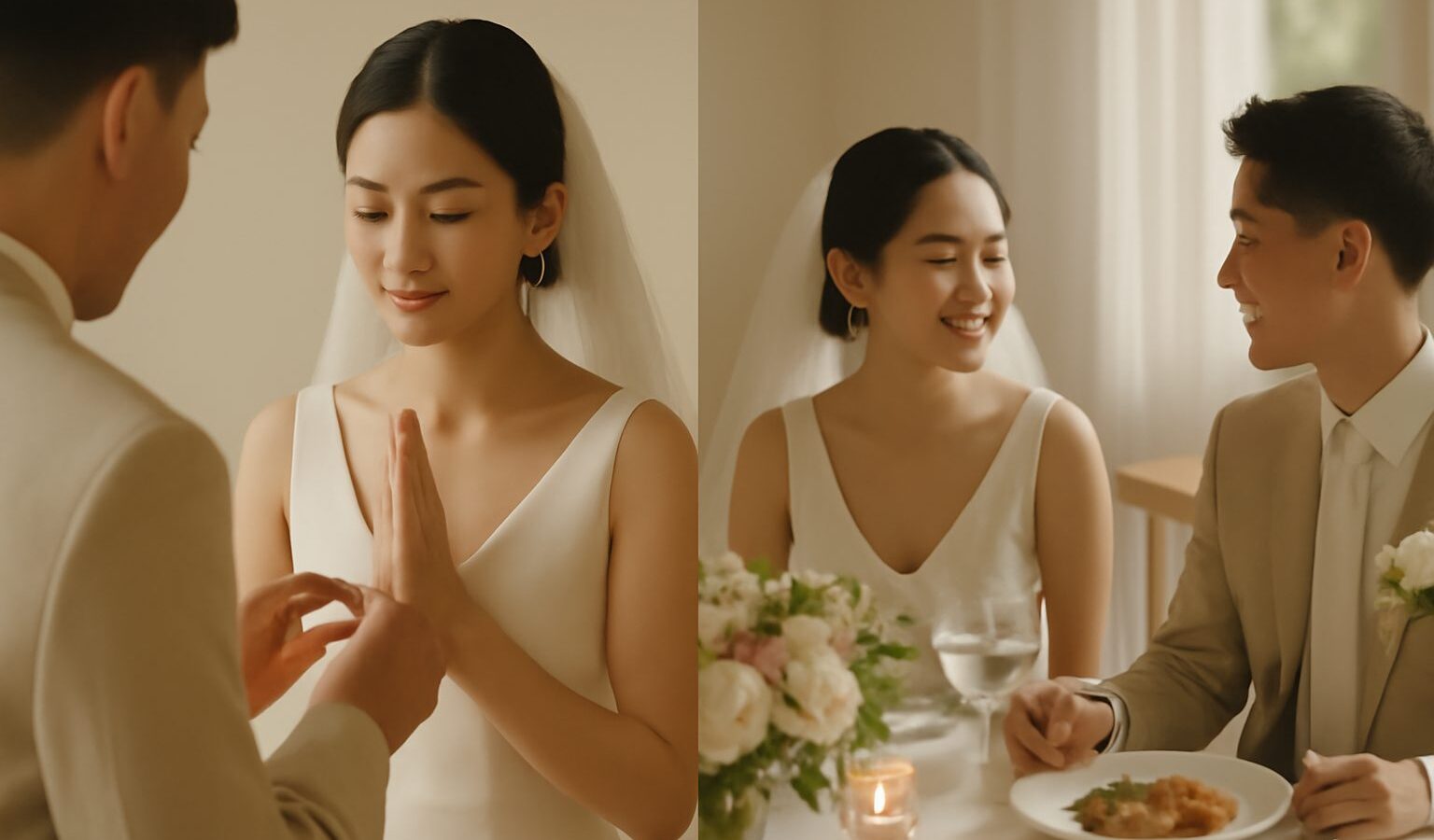
Many couples here find that one day cannot hold everything they want. Perhaps you want an intimate solemnisation with only close family, then a big banquet weeks later. Perhaps your ceremony is at a place of worship and your celebration is at a hotel across town. Splitting your celebration into a two-part wedding in Singapore is not only common, it is often the calmer, more meaningful choice. This guide explains the main ways to do it, how to keep the two halves feeling connected, and the practical details that make each part run smoothly.
Why Split Your Ceremony and Reception
The idea of a two-part wedding is simple. Your ceremony, the legally or spiritually binding part, happens at one time and place, and your reception, the party, happens at another. There are several good reasons couples choose this.
- Different guest lists. You may want your vows witnessed by a handful of loved ones, then celebrate more widely later. Our guide to planning your wedding guest list helps you decide who belongs to each part.
- Practical timelines. BTO handover dates, overseas family travel, and venue availability rarely line up neatly. Splitting the day gives you flexibility around all three.
- Cultural or religious needs. A church, temple, mosque, or ROM ceremony often has its own timing and setting that a banquet hall cannot replicate. Keeping them separate lets each be done properly.
- Cost and comfort. A smaller ceremony can ease pressure, and a separate reception can be planned once the emotional core of the day is already done.
Common formats include a morning solemnisation followed by an evening banquet on the same day, a quiet ROM in one month and a grand celebration in another, and a religious ceremony on one weekend with a dinner reception the next. Understanding the difference between the legal and the celebratory parts is worth reading up on, and our guide to ROM versus customary marriage sets that out clearly.
Keeping the Two Parts Feeling Like One Wedding
The risk of splitting your day is that it can feel like two disconnected events. A little intention keeps them woven together into a single story.
- Carry a visual thread. Repeat a colour, a flower, a motif, or a phrase across both parts. Even if the venues differ wildly, matching details signal that this is one celebration.
- Tell the story in order. At the reception, a short video or a few words from your emcee that recall the ceremony lets guests who missed the first part feel included.
- Photograph both. Booking your photographer for both halves gives you a complete album rather than two fragments. It is worth confirming this coverage early with your wedding photography and videography vendor.
- Reuse where sensible. Flowers, signage, and stationery can often move from a morning ceremony to an evening reception, which saves both money and waste.
If your two parts fall on different days, treat each with its own gentle run of show so nothing is rushed. If they fall on the same day, build in real buffer time between them. Singapore traffic, afternoon storms, and the simple need to eat and breathe all take longer than you expect.
Practical Details to Get Right
A two-part wedding has more moving pieces, so a few logistics deserve special care.
- Communicate clearly. Your invitations should make it obvious which guests are invited to which part, and at what time and place. Ambiguity here causes the most confusion.
- Plan transport and gaps. If guests attend both parts on one day, consider how they fill any gap in between, and whether they need help getting from one venue to the other. Our guide to wedding transport for your guests is useful here.
- Confirm the legal part. Make sure your solemnisation meets all Registry of Marriages requirements regardless of how you stage the celebration. The legal ceremony is what makes you married, so give it the attention it deserves and confirm details directly with ROM.
- Feed and pace yourselves. Splitting the day is meant to reduce stress, so protect that. Eat properly, rest between parts, and do not pack the schedule so tightly that the calm you wanted disappears.
- Brief your helpers twice. Anyone helping, from bridesmaids to your coordinator, needs to understand both halves. A helper who is perfect at the ceremony may not know the reception plan unless you tell them.
Plan the mood of each part deliberately. A ceremony can be tender and quiet, and a reception can be loud and joyful, and the contrast is a feature, not a flaw.
A two-part wedding lets you honour both the sacred and the celebratory without cramming them into a single exhausting stretch. Give each half the attention it deserves, tie them together with a few thoughtful threads, and you will end up with a wedding that feels spacious, meaningful, and true to you both. However you divide the day, the promise at the heart of it stays whole.