

Moving as an introvert can feel like a lot at once. Singapore is dense, fast and social, and the first few weeks throw new faces, new small talk and new group settings at you before you have found your footing. If crowds tire you and you recharge best on your own, that is completely normal, and it does not mean you will struggle to settle. It simply means you get to build a settling-in plan that works with your temperament rather than against it. This guide walks through practical, low-pressure ways to make Singapore feel like home at your own pace.
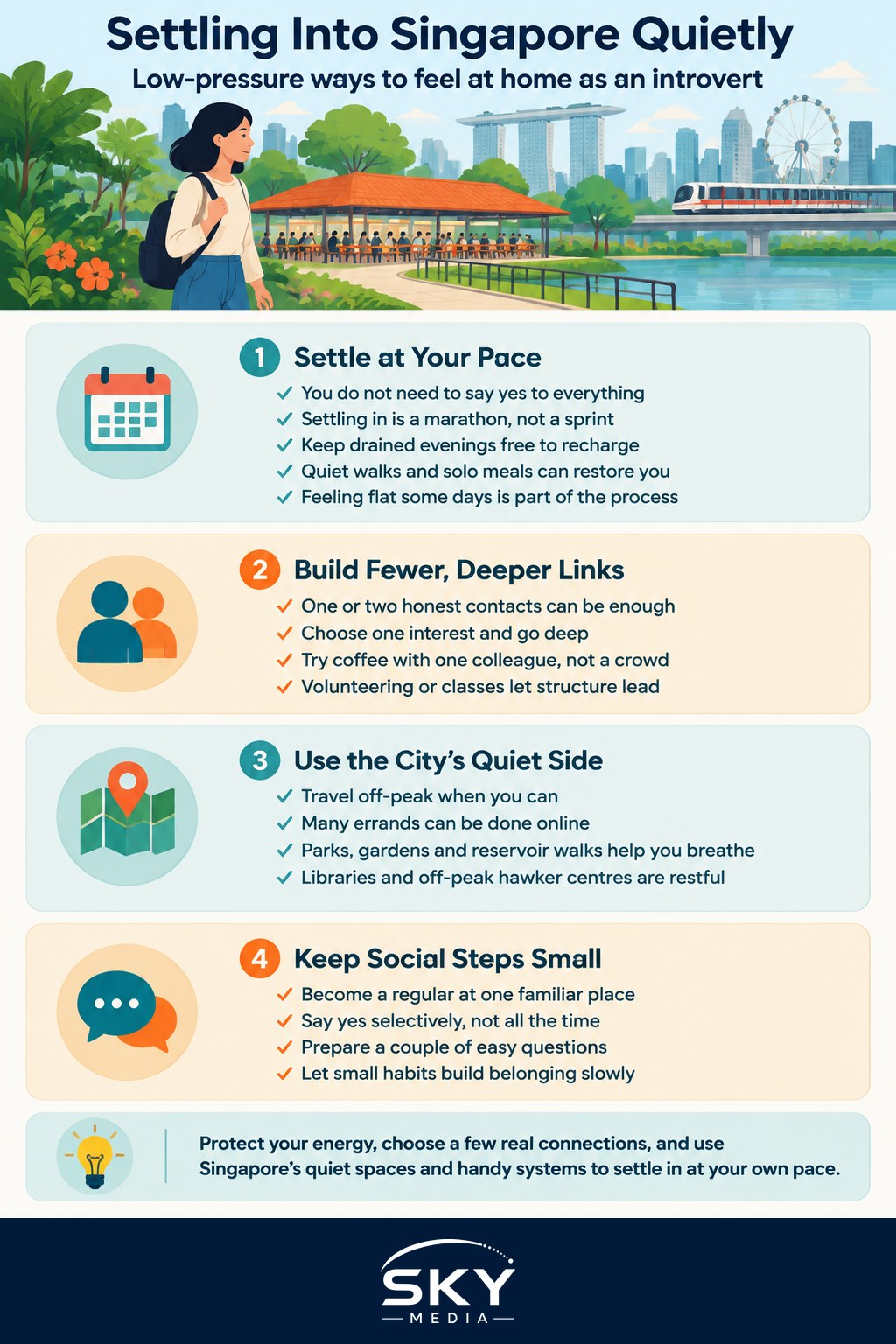
Give Yourself Permission to Settle Slowly
The pressure many newcomers feel is the sense that they should be out every night, saying yes to everything, and collecting friends quickly. You do not have to. Settling in is a marathon, not a sprint, and the quiet, steady approach often lasts longer than a frantic one.
Start by protecting your baseline energy. Work out when you feel most drained (for many people it is after a full day around colleagues) and keep those evenings free. A calm flat, a walk in one of the many parks, or a solo meal at a hawker centre where nobody expects conversation can all be genuinely restorative here.
It also helps to normalise the dips. The first six months in a new country bring ups and downs for everyone, extrovert or introvert. If you feel flat some days, that is part of the process, not a sign you have made a mistake. Our piece on overcoming loneliness as a new arrival has gentle, practical ideas if the quiet tips into feeling isolated rather than restful.
Make a Few Real Connections, Not Many Shallow Ones
Introverts usually prefer depth to breadth, and Singapore is a good place for that. You do not need a big social circle to feel settled. One or two people you can text honestly will do more for you than a dozen acquaintances.
Here are some lower-pressure ways to meet people:
- Choose one interest and go deep. A running group, a book club, a language class or a hobby workshop gives you a built-in reason to be there and a built-in topic to talk about, so you are not stuck making cold small talk.
- Use one-to-one settings. Coffee with a single colleague is far easier than a big after-work gathering. Suggest it yourself so you can pick a quiet cafe and a time that suits you.
- Let structure carry the conversation. Volunteering, a class or a shared task means the activity does the talking, which takes the weight off you.
If you would like a fuller playbook, making friends in Singapore covers where newcomers tend to meet people, and pairing up with someone through finding a mentor or buddy when you move can give you one steady point of contact instead of a whole crowd.
Work With the City, Not Against It
Singapore rewards a bit of planning, which suits introverts well. You can do a surprising amount without ever being in a scrum of people.
Travel at off-peak times when you can. The MRT and buses are calm mid-morning and mid-afternoon, and avoiding the crush makes daily life much less draining. Many errands, from paying bills to booking appointments, can be done online through Singpass and various apps, so you can handle admin quietly at home instead of queueing.
For quiet you can rely on, Singapore has more green and calm than its reputation suggests. The park connector network, the Botanic Gardens, reservoir walks and neighbourhood parks give you space to breathe. Libraries are free, air-conditioned and welcoming for hours. Even a hawker centre at an off-peak hour can be a peaceful place to sit with a plate of food and no obligation to chat.
At work, a little planning goes a long way too. If open-plan noise wears you down, ask about quiet corners or booking a small room for focused work. As you learn the local rhythm, our guide to adjusting to the pace of life in Singapore can help you find a tempo that feels sustainable rather than relentless.
Small Social Steps That Add Up
You do not have to transform your personality to fit in. A few small, repeatable habits build familiarity without draining you.
- Become a regular somewhere. The same coffee stall or hawker uncle or auntie greeting you by sight is a quiet, low-effort form of belonging.
- Say yes selectively. Pick one gathering a week rather than all of them, and give yourself full permission to leave when your energy runs out.
- Prepare a couple of easy questions. Asking someone where they grew up or where they get good food takes the spotlight off you and lets them do the talking.
A Gentle Wrap-Up
Moving as an introvert to Singapore is very doable, and in many ways your instincts are an advantage here. You are likely to build fewer but stronger relationships, protect your energy, and enjoy the quiet corners this city genuinely does have. Go at your own pace, look after your downtime, and let a handful of real connections grow slowly. If some weeks feel harder than others, treat that as ordinary, be kind to yourself, and reach out to someone you trust when you need to. Singapore has room for quiet people, and there is a comfortable, settled version of life here waiting for you.