
Step out of the airport and Singapore’s climate greets you at once, warm, thick with humidity, and unlike anything many newcomers have felt before. Adjusting to weather Singapore throws at you is one of the first physical realities of your move, and while it can feel intense in the beginning, your body and your habits adapt more quickly than you might expect. This guide offers gentle, practical ways to stay cool, comfortable, and ready for whatever the sky is doing.
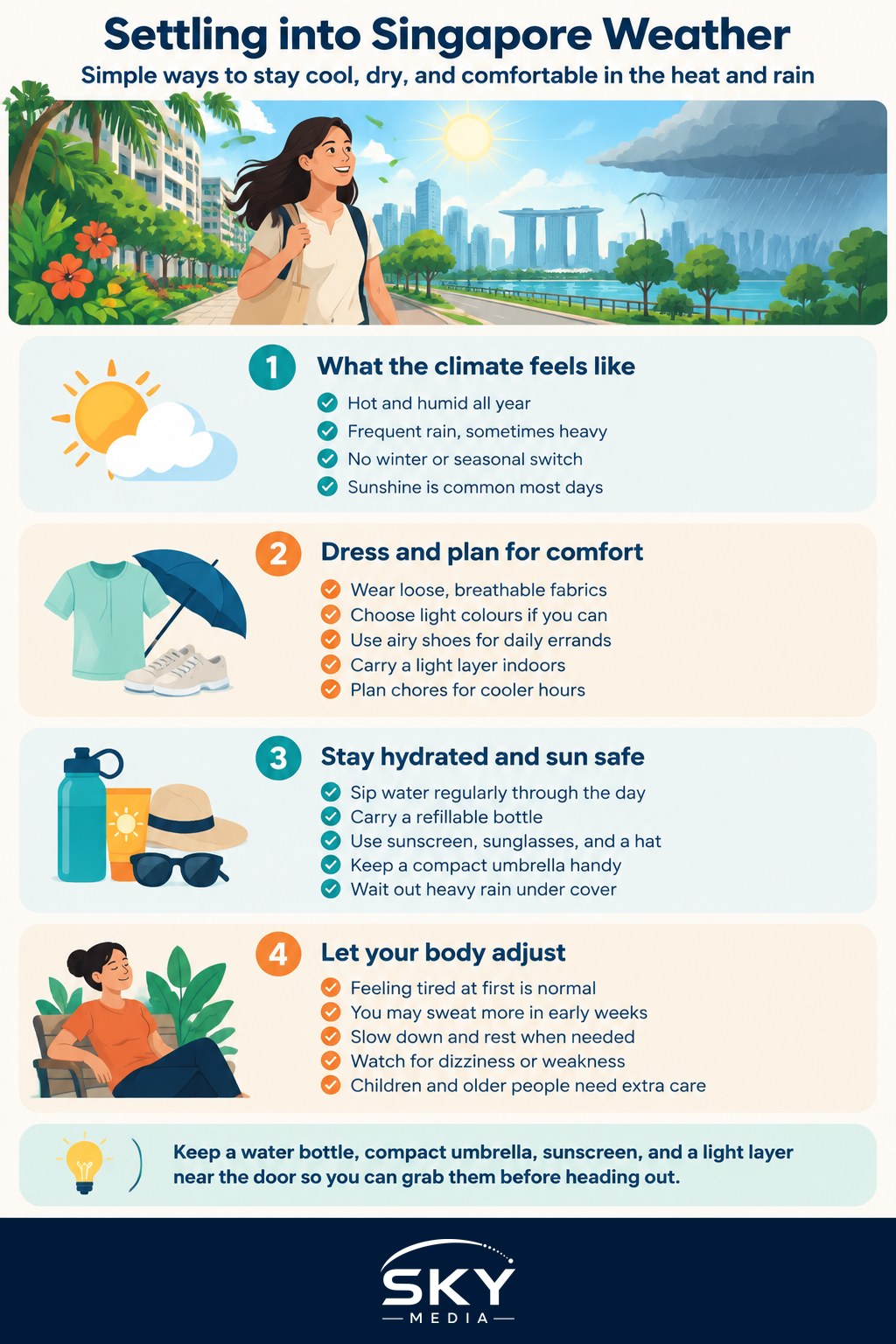
Singapore sits close to the equator, so the pattern is steady rather than seasonal. It is hot and humid all year, with plenty of sunshine and frequent, sometimes heavy, rain. There is no winter to wait for, which is wonderful once you learn to work with the climate rather than against it.
Understanding the Tropical Climate
The two things that define daily life here are heat and humidity. Temperatures stay warm throughout the year, and because the air holds so much moisture, it often feels warmer still. Humidity is why a short walk can leave you glistening and why washing takes longer to dry. It is completely normal, and locals simply build their day around it.
Rain is the other constant. Downpours can arrive suddenly, drum hard for a while, then clear to blue skies within the hour. Some months are wetter than others, but a shower is possible on almost any day. Rather than seeing rain as a nuisance, it helps to treat it as a natural rhythm, one that cools the air and gives a welcome pause.
The upside of this steadiness is that you never have to pack away a summer or winter wardrobe. Light clothing works all year, and once you accept that you will feel the heat, you can focus on the small choices that keep you comfortable.
Staying Cool and Comfortable
Your body needs a little time to acclimatise, often a few weeks, during which you may feel more tired or thirsty than usual. Be kind to yourself in this period and let these habits ease the way.
Dress for the climate. Loose, light, breathable fabrics such as cotton and linen let air move and sweat evaporate. Pale colours feel cooler in the sun than dark ones. Comfortable, airy footwear beats heavy closed shoes for everyday errands. Keep a light layer to hand too, because indoor spaces are a story of their own.
Embrace air-conditioning, but pack for it. Malls, offices, buses, and trains are often cooled quite strongly, so the temperature swing between a humid street and a chilly office can be sharp. A thin cardigan or scarf in your bag means you stay comfortable indoors without wilting outdoors.
Plan your day around the heat. The sun is fiercest in the middle of the day, so if you can run errands or exercise in the cooler early morning or the evening, you will feel far better. When you do go out at midday, stick to the shade, use covered walkways, which are wonderfully common here, and take breaks in cool spots.
Staying Hydrated and Sun Safe
Drinking enough water is the single most important habit in this climate. You lose fluid steadily through sweat, often without noticing, so sip regularly through the day rather than waiting until you feel thirsty. Carry a refillable bottle, top it up often, and reach for water more readily than you would in a cooler country.
Protect yourself from the sun as well. The equatorial sun is strong even on cloudy days, so sunscreen, sunglasses, a hat, and shade all earn their place in your routine. A small folding umbrella is a beloved local tool, shielding you from both sun and sudden rain.
Speaking of rain, being ready for it removes most of the frustration. Keep that compact umbrella or a light rain jacket in your bag every day, because showers rarely give much warning. If a heavy downpour begins, there is no shame in simply waiting it out under cover for twenty minutes, as many locals do, since it often passes as fast as it arrived.
Here is a simple daily kit to keep by your door.
| Item | Why it helps |
|---|---|
| Refillable water bottle | Keeps you hydrated through the heat |
| Compact umbrella | Shields from both strong sun and sudden rain |
| Sunscreen | Protects against a strong equatorial sun |
| Light layer | Keeps you comfortable in cool indoor spaces |
| Breathable clothing | Lets sweat evaporate and air move |
Assemble this little kit once and grabbing it becomes second nature, so you are ready for whatever the day brings.
Listening to Your Body
As you acclimatise, pay attention to how you feel. Feeling more tired, sweating heavily, or wanting to slow down in your first weeks is normal. Rest when you need to, keep your fluids up, and do not push yourself to match your old pace straight away.
Be sensible in the strongest heat. If you feel dizzy, unusually weak, or unwell after time in the sun, move somewhere cool, drink water, and rest. Take extra care with young children and older family members, who feel the heat more keenly, and never leave anyone in a parked vehicle. These are the same common-sense precautions locals take, and they quickly become habit.
The good news is that adaptation truly happens. Within a month or two, the humidity that once felt overwhelming becomes the ordinary backdrop of your day. You learn which walkways stay shaded, which cafes are pleasantly cool, and how to read the sky before you head out.
Learning to Love the Warmth
There is a lot to enjoy in a climate with no cold, dark winter. Evenings are balmy and made for strolling, outdoor dining runs all year, and the greenery stays lush and vivid in every month. Once you have your water bottle, your umbrella, and your light layer sorted, the weather stops being an obstacle and becomes simply the texture of life here.
Give yourself a few weeks of patience, lean into the local habits, and you will find your own rhythm. Adjusting to the weather is less about enduring the heat and more about learning a gentler, sun-warmed pace, and that is a rather pleasant thing to get used to.
Explore more
- First Month in Singapore
- Your First 30 Days in Singapore
- Settling in Singapore Guide
- Making Friends in Singapore
Frequently Asked Questions
What should I do on hazy days? Check the air quality readings on NEA’s website or app, and limit strenuous outdoor activity when the readings are high. Keep windows closed if the haze is heavy, and use a mask rated for fine particles when you must be outside. Those with asthma should keep their medicine close.
How do I prevent and treat heat rash? Wear loose, breathable clothing, keep skin dry, and shower after sweating heavily. Cool, dry skin usually settles prickly heat on its own. If the rash is persistent, painful or looks infected, see a doctor or pharmacist, especially for babies.
Is it safe to run or exercise outdoors in the heat? Yes, if you adapt gradually. Choose early mornings or evenings, wear light kit, carry water and shorten your first sessions. Stop if you feel dizzy, nauseous or unusually weak, and move somewhere cool.
Will the humidity make asthma or allergies worse? It can for some people, because damp conditions encourage dust mites and mould. Keep homes dry and ventilated, wash bedding regularly and manage clutter. Ask a doctor about your own triggers and medication before you arrive.
Are some months of the year wetter than others? Yes, there are wetter monsoon periods and drier spells, though neither is rigidly fixed. Rain is possible on most days, so carry an umbrella all year. For current conditions, check the weather forecast before outdoor plans.
Further reading: Adjusting to a Smaller Home When You Move