
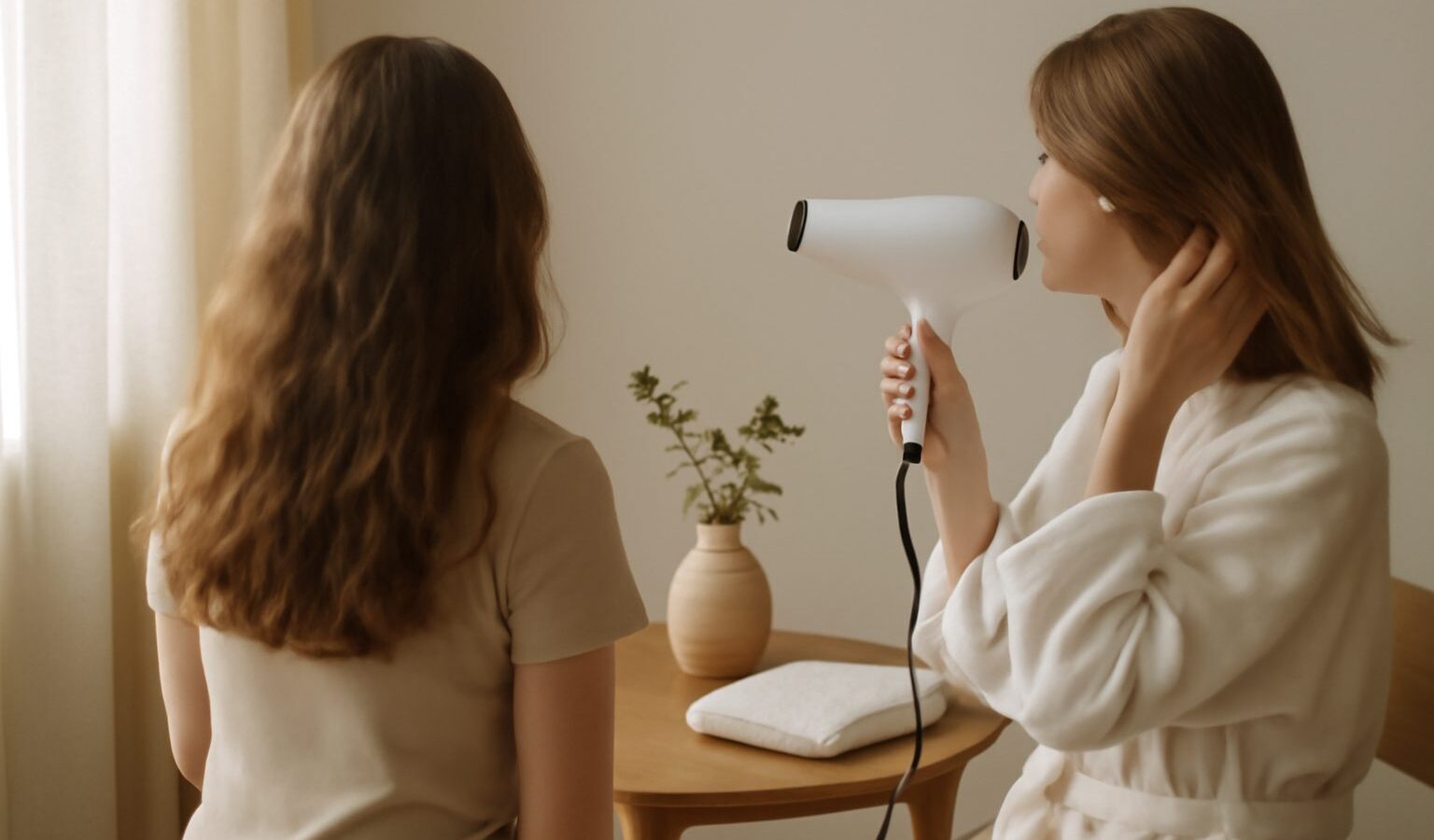
Deciding between air drying hair in Singapore and reaching for the blow-dryer is not just a matter of time. Our climate is warm and humid almost all year, which changes how your hair behaves as it dries. Wet hair is at its most fragile, and the way you take it from soaking to dry affects frizz, shine, breakage and how long your style holds. Neither method is automatically better. The right choice depends on your hair type, how much time you have, and how kind you want to be to your strands. This guide walks through both approaches honestly so you can pick what suits you, or mix the two.
How Wet Hair Behaves in a Humid Climate
When hair absorbs water it swells and the outer layer, the cuticle, lifts. In a dry country hair loses that moisture quickly and settles down. In Singapore, the surrounding air already holds a lot of moisture, so hair can stay damp for a long time and the cuticle stays raised, which reads as frizz. This is the core reason air drying that works beautifully overseas can feel disappointing here.
A few things follow from this. First, the longer hair sits wet, the more it can swell and frizz, especially for wavy, curly and coily textures. Second, walking straight into strong sun or a hot bus with dripping hair is not doing it any favours. Third, going to bed with soaking hair means hours of friction against the pillow while strands are weak. If you want to understand why your hair puffs up the moment you step outside, our guide to taming frizz in Singapore’s humidity explains the science and the products that help.
The Case for Air Drying
Air drying is gentle because it uses no heat at all, so there is no thermal stress on the hair shaft. For fine, fragile, chemically treated or heat-damaged hair, that break from heat is genuinely valuable. It is also free, needs no tools, and lets natural texture form the way it wants to.
To air dry well rather than just letting hair drip:
- Gently squeeze out excess water with a soft cotton T-shirt or a microfibre towel rather than rubbing with a rough terry towel, which roughens the cuticle.
- Apply a leave-in conditioner or a light cream while hair is damp to smooth the surface as it dries.
- Detangle with a wide-tooth comb or your fingers, working from the ends up, so you are not tearing through knots.
- Try not to touch your hair while it dries. Fiddling with drying hair is one of the biggest causes of frizz.
Air drying suits people with time in the morning or those who wash at night and can let hair dry before bed. The honest downsides in Singapore are the slow dry time, the risk of a damp scalp for hours, and less control over the final shape. A persistently damp scalp under long hair can also feel uncomfortable, so make sure the roots actually dry.
The Case for Blow-Drying
Blow-drying gives control, volume and a smoother finish, and it gets hair dry fast, which matters before work or an event. Done with care it is not the enemy people assume. The damage comes from high heat held too close for too long, not from blow-drying itself.
To blow-dry more safely:
- Rough-dry to about 70 to 80 percent first, either by air or with the dryer on a low setting held away from the hair, before you start styling. Blasting soaking wet hair on high heat is the most damaging point.
- Always use a heat protectant on damp hair. It is a simple layer that reduces heat stress, much like the approach in our guide to heat styling and hair protection.
- Keep the nozzle moving and pointed down the hair shaft, which smooths the cuticle and adds shine.
- Finish with a blast of the cool shot button. Cool air helps set the style and close the cuticle, which fights frizz once you are out in the humidity.
Blow-drying is a good friend to anyone who wants a polished look, has thick hair that stays wet forever, or needs their style to survive a humid commute. The trade-off is the heat exposure and the few extra minutes of effort.
Which Should You Choose
There is no single winner, and most people are best served by a flexible approach. If your hair is fine, damaged or you are trying to recover its health, lean towards air drying and save heat for special occasions. If your hair is thick, coarse or you need reliable smoothness in humidity, a careful blow-dry may actually leave hair looking healthier day to day. Your hair type is a big factor here, and knowing your porosity helps too. Our guide to understanding your hair porosity explains why some hair drinks up water and dries slowly while other hair barely absorbs it.
A practical middle path works for many in Singapore: rough-dry the roots and heavy sections with the dryer to avoid a damp scalp, then let the rest air dry with a leave-in for a softer, lower-heat finish. On days you air dry fully, plan the timing so you are not heading into strong sun or bed with soaking hair.
Whichever you pick, the fundamentals stay the same. Be gentle with wet hair, protect it if you apply heat, and match the method to your texture and your schedule. There is no prize for suffering through a slow air dry if it leaves you frizzy, and no shame in air drying to spare your strands. Pay attention to how your own hair responds over a couple of weeks and let that, rather than any rule, guide your routine.