

Knowing how to avoid scams in Singapore has become an essential life skill, for locals and newcomers alike. Scammers are increasingly sophisticated, using phone calls, messages, fake websites and social engineering to trick people into handing over money or personal details. The good news is that almost every scam relies on the same handful of pressure tactics, so once you learn the patterns, you can spot them. This guide covers the common types of scam, the universal warning signs, practical ways to protect yourself, and exactly what to do if you are targeted. It is general information, so also refer to the official anti-scam resources for the latest advice.
Why scams work
Scams succeed by manipulating emotions rather than logic. They create urgency, fear, greed or trust, then rush you into acting before you can think. A caller might claim to be from a bank or government agency and say your account is in danger. A message might promise a prize or a too-good investment. A fake romance might build weeks of trust before asking for money. Understanding that the goal is always to make you act fast and feel pressured is the single most protective insight you can have.
Common types of scam
While the details change, most scams fall into familiar categories:
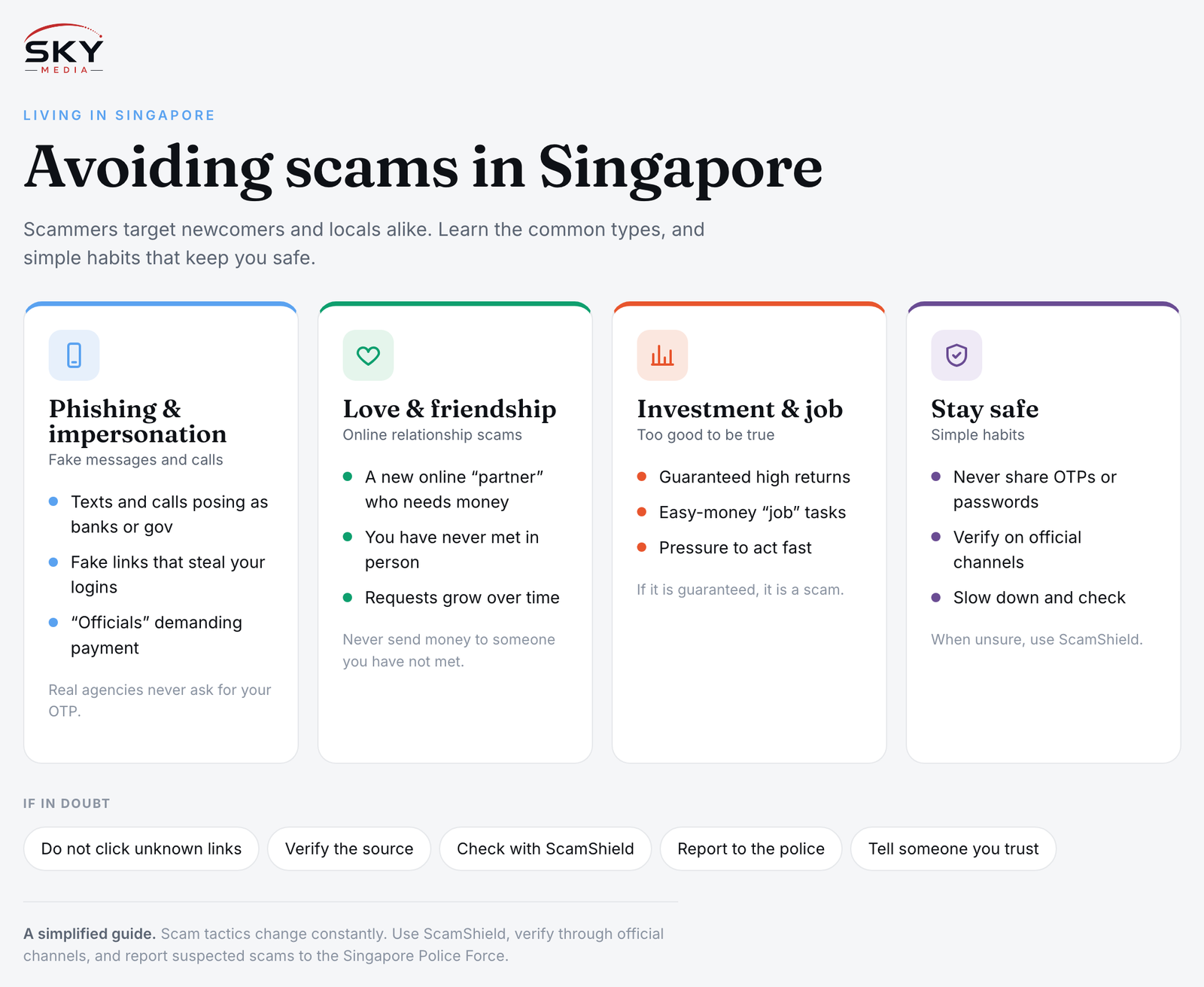
- Phishing. Fake messages or websites that impersonate banks, agencies or companies to steal your logins or card details.
- Impersonation scams. Callers pretending to be from a bank, the police, a government agency or a delivery firm, often claiming there is a problem only you can fix.
- Investment scams. Offers promising unusually high or guaranteed returns, sometimes via fake platforms or social media.
- Job scams. Fake job offers asking you to pay fees or do suspicious online tasks for commission.
- E-commerce scams. Fake listings or sellers who take payment and never deliver.
- Romance scams. Building an online relationship, then inventing a crisis that requires money.
- Loan and prize scams. Fake loans requiring upfront fees, or prizes you never entered.
The universal warning signs
You do not need to memorise every scam. Instead, watch for these red flags, which cut across almost all of them:
- Urgency and pressure. You are told to act immediately or face dire consequences.
- Requests for money or transfers, especially to unfamiliar accounts or in unusual forms.
- Requests for credentials, such as passwords, PINs, one-time passwords or Singpass details.
- Unsolicited contact offering deals, prizes, jobs or warnings you did not seek.
- Too-good-to-be-true offers, including guaranteed high returns.
- Links in messages urging you to log in or verify, which lead to fake sites.
The golden rule: no legitimate bank, government agency or official will ever ask for your password, PIN or one-time password, or demand an urgent transfer to keep your money safe. That request alone is proof of a scam.
How to protect yourself
Building a few firm habits stops the vast majority of scams:
- Pause before you act. Scammers rely on speed. Slow down and think.
- Verify independently. If someone claims to be from your bank or an agency, hang up and call the official number yourself, never the one they give you.
- Never share credentials or one-time passwords, and never approve a login or transaction you did not start.
- Do not click links in unsolicited messages. Type official website addresses yourself or use official apps.
- Use available tools, such as call and message filtering features and the official ScamShield app and resources that help detect and block scams.
- Enable transaction alerts on your accounts so you notice anything unusual quickly.
- Keep software updated and use strong, unique passwords with two-factor authentication.
Quick anti-scam checklist
- Treat urgency and pressure as a warning, not a reason to hurry.
- Never share passwords, PINs or one-time passwords with anyone.
- Verify callers by contacting the organisation through official channels.
- Avoid links in unsolicited messages; use official apps and typed addresses.
- Use scam-filtering tools and enable account alerts.
- Talk to family, especially elderly relatives, about these tactics.
Protecting vulnerable family members
Scammers often target those who may be less familiar with technology or more trusting, such as elderly relatives or newcomers still learning how things work here. Protecting them is one of the most valuable things you can do. Talk openly and without judgement about the common tactics, especially the golden rule that no official will ever ask for passwords, one-time passwords or urgent transfers. Help them set up call and message filtering and any official scam-blocking tools on their phones, and enable transaction alerts on their accounts. Encourage them to check with you before acting on any urgent or unusual request involving money or personal details. A quick family conversation and a habit of asking before acting can prevent the great majority of losses.
What to do if you are targeted
If you suspect a scam, act quickly and calmly:
- Stop all contact with the scammer immediately.
- If you have shared banking details or made a transfer, contact your bank at once to try to freeze or recover funds.
- Change any compromised passwords, and secure your accounts.
- Report it to the official anti-scam and police channels, which can advise and act.
- Warn others, since sharing what happened helps friends and family avoid the same trap.
Falling for a scam can happen to anyone, and it is nothing to be ashamed of. Acting fast gives you the best chance of limiting the damage.
Staying one step ahead
Scam tactics evolve constantly, so the best defence is a mindset rather than a fixed list: be sceptical of unsolicited contact, refuse to be rushed, protect your credentials absolutely, and verify everything independently. Talk about scams openly with family and colleagues, particularly those who may be more vulnerable, because awareness spreads protection. For the latest scam trends and tools, keep an eye on the official anti-scam resources, which are regularly updated as new schemes appear.
Learning how to avoid scams in Singapore ultimately comes down to slowing down and trusting the warning signs over the pressure. If something feels urgent, too good, or asks for your credentials, treat it as a scam until you have verified otherwise through official channels. That single habit will protect you more than any other.
Explore more: Singpass guide, Online security basics in Singapore, PayNow and payments in Singapore