
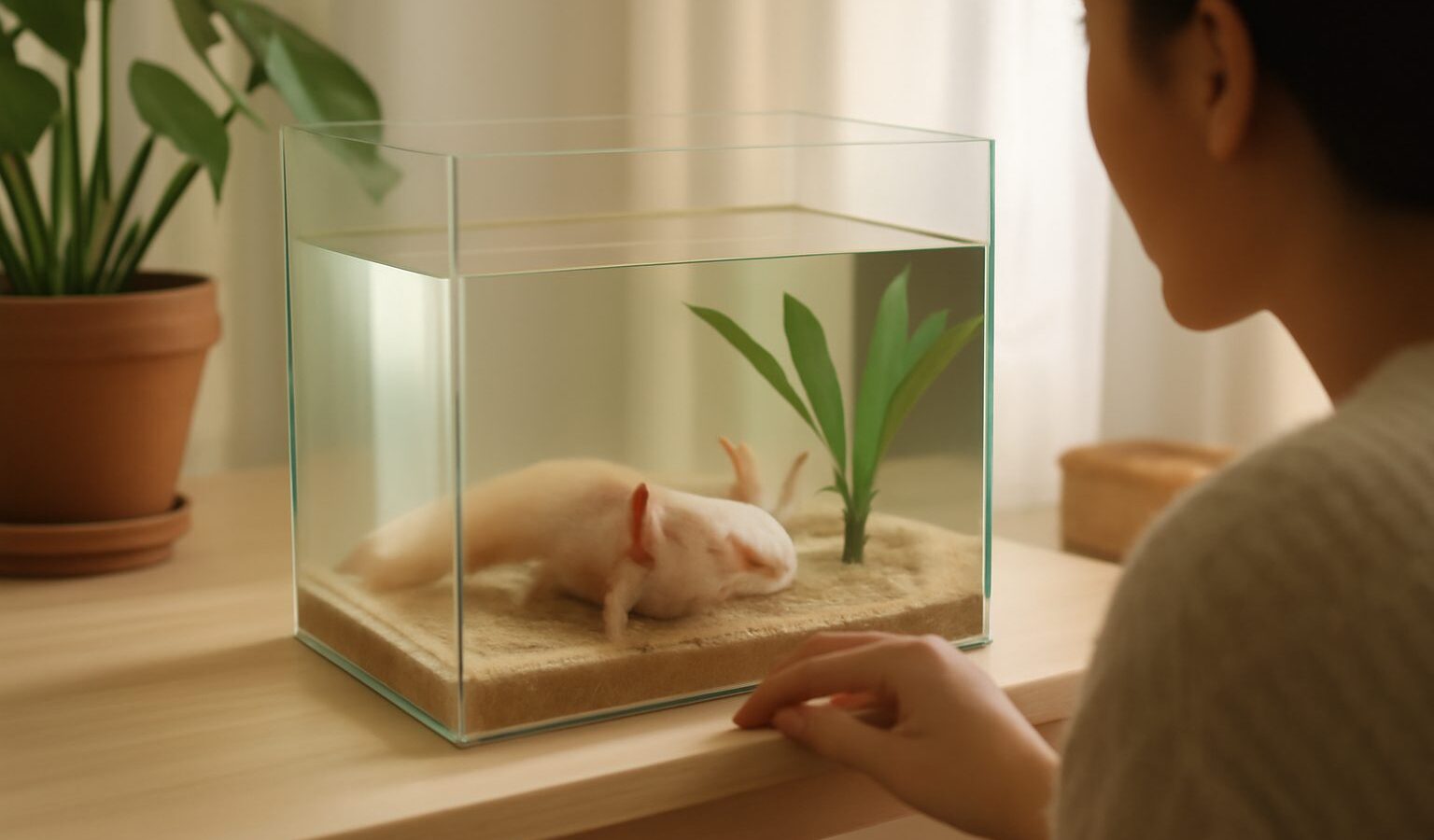
With their frilly gills, permanent smile and unhurried charm, axolotls have become one of the most talked-about aquatic pets. They are gentle, quiet and genuinely fascinating to watch. Yet good axolotl care in Singapore asks more of an owner than many people expect, because these are cool-water creatures living in one of the warmest, most humid places on earth. This guide walks you through what an axolotl needs, why temperature is the make-or-break factor here, and how to set up a tank that keeps one happy for years. It is general information, not veterinary advice, so please see a vet experienced with exotic or aquatic animals for anything specific to your pet.
Are Axolotls Legal to Keep in Singapore?
Before you fall for those feathery gills, check the rules. Only animals on the current NParks AVS approved-pet list may be kept in Singapore, and many exotic animals people admire online, including most reptiles, sugar gliders and hedgehogs, are illegal to own here. Axolotls have generally been permissible, but lists and conditions do change, so confirm the current AVS position for yourself before buying rather than trusting a shop’s word or an old forum post.
Just as important, buy only from a licensed source. A reputable seller keeps healthy stock, can tell you the animal’s age and origin, and will not push a sickly or wild-caught animal on you. If anyone offers a smuggled or unlisted exotic, walk away and, where appropriate, report it to AVS or ACRES. Doing this right protects both your future pet and yourself.
What an Axolotl Actually Is
An axolotl is a type of salamander that never grows up. Most amphibians hatch as aquatic larvae and later change into land animals, but the axolotl keeps its larval form for life, staying fully aquatic and breathing through those external gills. This is why it lives underwater permanently and why it has such delicate, porous skin.
That soft body shapes everything about its care. Axolotls have no scales and no protective shell, so they are sensitive to water quality, rough surfaces and warm temperatures. They are also long-lived for their size, often reaching ten years or more with good care, which makes them a real commitment rather than a passing novelty. Take them on knowing you are signing up for the better part of a decade.
The Biggest Challenge: Keeping the Water Cool
This is the part Singapore owners cannot skip. Axolotls are cold-water animals that do best in water that stays comfortably cool, well below room temperature in a tropical flat. Our indoor conditions, especially in a warm HDB unit without constant air-conditioning, sit far above what an axolotl finds comfortable. Warm water stresses them, weakens their immune system and, if it climbs too high, becomes life-threatening.
In practice this almost always means an aquarium chiller, a device that actively cools the water and holds it steady. A small fan blowing across the surface can help a little through evaporation, and running the tank in an air-conditioned room reduces the load, but neither is reliable on its own through a Singapore heatwave or a power-saving night. Treat a chiller as core equipment, not an optional extra, and budget for it before you buy the animal.
| Water temperature | Effect on the axolotl | What to do |
|---|---|---|
| Cool, steady range | Comfortable, active, feeding well | Maintain with a chiller and monitor daily |
| Mildly too warm | Stressed, off food, gills curling forward | Cool the water gradually, check your chiller |
| Clearly too warm | Serious risk of illness and death | Act at once to lower temperature, seek expert help |
| Sudden swings | Shock even within an otherwise safe band | Keep temperature stable, avoid rapid changes |
Fit a reliable thermometer and check it every day. Stable and cool beats a tank that lurches warm each afternoon and cools each night.
Setting Up the Tank
Give an axolotl room. A single adult needs a generously sized aquarium, and bigger is better because more water holds a stable temperature and dilutes waste. Before an axolotl ever moves in, the tank must be cycled, which means running the filter for several weeks so that helpful bacteria build up to process the ammonia in the animal’s waste. An uncycled tank poisons its occupant, so be patient and test the water rather than rushing.
A few essentials make the difference between a thriving pet and a struggling one:
- Gentle filtration. Axolotls dislike strong currents, so choose a filter with a soft flow or baffle a stronger one.
- A safe floor. Use either bare glass or fine, soft sand. Avoid gravel and small stones, which axolotls can swallow while feeding, causing dangerous blockages.
- Hiding spots. Add smooth caves or shaded corners so your pet can retreat and feel secure.
- Cool, dim conditions. Bright light is stressful, so keep lighting low and out of direct sun.
- Steady, clean water. Do regular partial water changes with dechlorinated water and test for ammonia and nitrite.
Keep the setup simple and smooth. Sharp decorations can tear that delicate skin, so run your hand over anything before it goes in.
Feeding, Handling and Staying Healthy
Axolotls are carnivores. Suitable foods include specially formulated axolotl or sinking carnivore pellets and appropriate live or frozen items sold for aquatic pets. Feed the right amount for your animal’s age and size, remove uneaten food promptly so it does not foul the water, and ask your seller or an exotics vet if you are unsure how much or how often.
Now the golden rule: axolotls are look-but-do-not-touch pets. Their skin is fragile and their skeleton is largely soft cartilage, so handling stresses them and can cause real injury. Never lift one out into the air except in a genuine emergency, and even then support it fully in water using a soft container rather than bare hands, whose warmth and oils are harmful. Enjoy them by watching, not holding.
Watch for signs that something is wrong: going off food, gills shrinking or curling forward, unusual floating, a change in skin, or lethargy. These often trace back to warm water or poor water quality, so check both first. Because axolotls are unusual patients, not every clinic sees them, so find a vet comfortable with exotic or aquatic animals before you have an emergency, and keep the details handy.
Kept cool, kept clean and left in peace, an axolotl is a calm and rewarding companion that can share your home for many years. Get the temperature right, get your animal and information from licensed and current sources, and let a knowledgeable vet guide you whenever your pet seems unwell.