

The first few months with a newborn pass in a blur of feeds, naps and very little sleep. By the time your baby reaches 100 days, things often feel more settled, and many families mark the moment with a small celebration. A baby 100 days celebration is especially common in Chinese and Korean families, though parents of all backgrounds in Singapore enjoy the idea of pausing to celebrate this milestone.
This guide explains where the custom comes from, what families commonly do, how it differs from the full-month celebration and how to plan a simple, low-stress gathering. Customs vary widely between families, regions and generations, so treat everything here as common practice rather than rules.
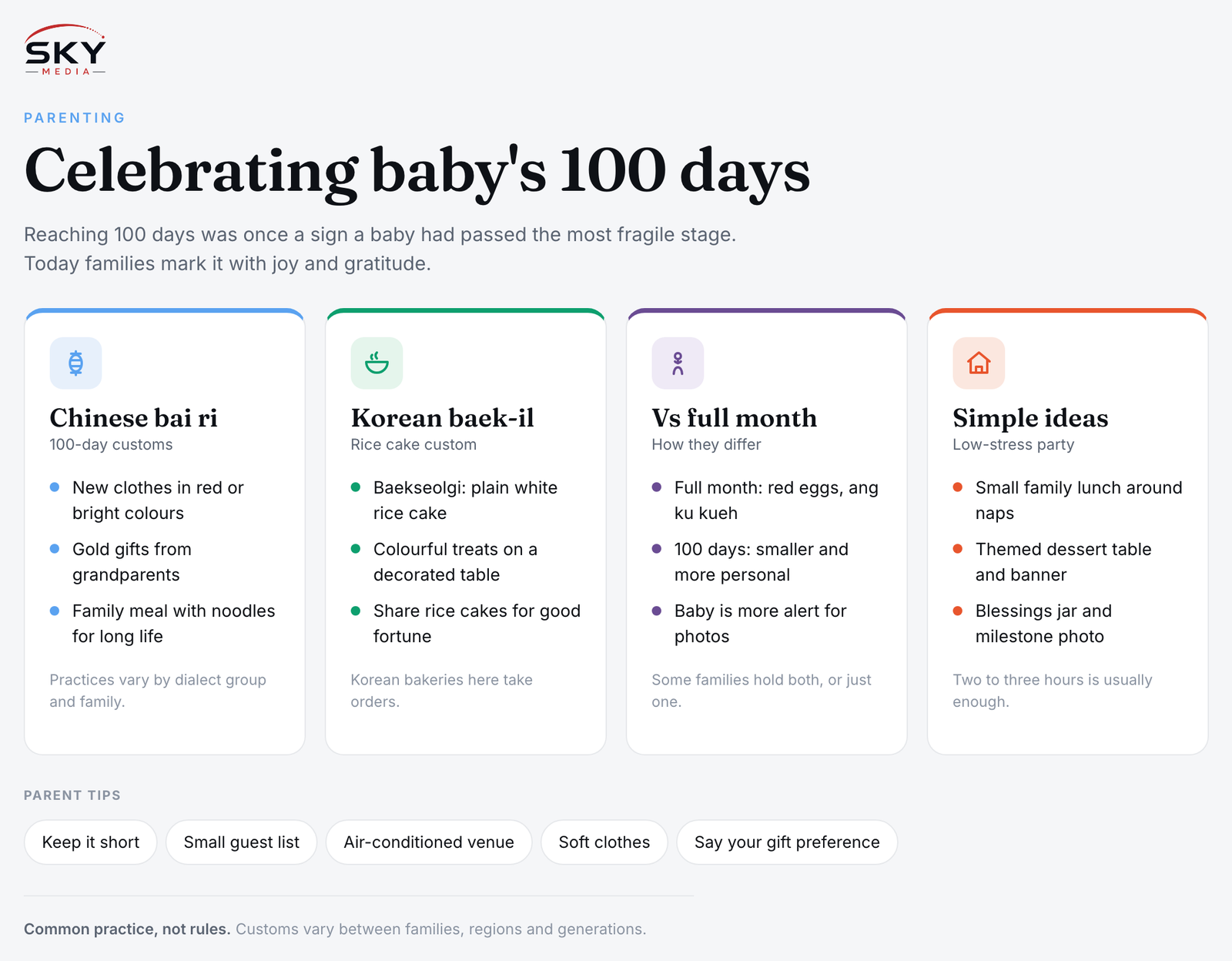
Why 100 Days Is a Milestone
In the past, infant illness was far more common, and reaching 100 days was seen as a sign that a baby had passed through the most fragile early stage. Celebrating it was a way of giving thanks and wishing the child a long, healthy life.
Today, the meaning is more about joy and gratitude. For many parents, it is also the first time they feel ready to welcome guests after the confinement period and the early weeks at home.
The number 100 itself carries a sense of completeness and long life in both Chinese and Korean traditions, which adds to its appeal.
The Chinese 100-Day Custom (Bai Ri)
In Chinese, the 100-day milestone is often called bai ri (百日) or bai sui wishes, linked to the hope that the child will live to a hundred years. Practices differ by dialect group and family, and some families celebrate the full month more elaborately while keeping the 100 days small, or the other way round.
Things you might see at a Chinese 100-day celebration:
- New clothes for the baby, often in red or other bright, auspicious colours
- Gifts of gold, such as small bangles, anklets or pendants, given by grandparents and close relatives
- A family meal, either at home or at a restaurant, with dishes chosen for good meanings such as noodles for long life
- Photos, sometimes a formal family portrait or a simple 100-day photo with a sign or number
- Offerings or prayers, in families who observe ancestral or religious practices
Some families also keep the old “hundred families” (bai jia) idea in spirit, collecting small blessings or tokens from many relatives and friends. Ask the grandparents what they remember, as it is a lovely way to connect generations.
The Korean 100-Day Custom (Baek-il)
In Korea, the 100th day is called baek-il (백일), and it remains a popular milestone alongside the first birthday celebration known as doljanchi.
Common elements include:
- Baekseolgi, a plain white steamed rice cake that symbolises purity and a long life
- Colourful rice cakes and other treats, set out on a decorated table
- Sharing rice cakes with others. A traditional belief holds that sharing them with many people brings the baby good fortune, so families often give small packs to neighbours, colleagues and friends
- Photos and a themed table, which have become a big part of modern baek-il, with backdrops, balloons and props
Korean families in Singapore often order rice cakes from Korean bakeries or make a simplified version at home, then share them with friends and colleagues.
Full Month vs 100 Days: How They Differ
Many families in Singapore already know the full-month celebration, with its red eggs, ang ku kueh and gift boxes. The 100-day celebration is related but usually different in tone. For more on the one-month tradition, see our guide to full moon and red egg customs.
| Aspect | Full-month celebration | 100-day celebration |
|---|---|---|
| Timing | About one month after birth, often after confinement ends | About 100 days after birth |
| Common traditions | Red eggs, ang ku kueh, glutinous rice, gift boxes to friends | Family meal, gold gifts, photos; rice cakes in Korean families |
| Typical scale | Can be large, with many guests or delivered gift sets | Often smaller and more personal |
| Baby’s involvement | Baby is very young and may not be shown to many guests | Baby is more alert, smiling and ready for photos |
| Main focus | Announcing the birth and thanking well-wishers | Celebrating good health and the family’s first months |
Some families choose one or the other, and some hold both. There is no single right way.
Simple 100-Day Party Ideas
You do not need a big event. Many parents prefer something calm that fits around the baby’s routine.
At Home
- A small family lunch. Invite grandparents, close relatives and a few friends. Plan the timing around your baby’s nap and feeding schedule.
- A themed dessert table. A simple cake, rice cakes or kueh, fruit and a “100 Days” banner make a good photo backdrop.
- A blessings jar. Ask each guest to write a wish for the baby on a card. Keep them in a memory box for when your child is older.
Photos and Keepsakes
- A milestone photo. Lay your baby on a soft blanket with a number 100 made of flowers, toys or paper. Natural light near a window works well.
- Hand and foot prints. Ink-free print kits or clay keepsakes are a quiet activity for a baby this age.
- A first family portrait. Some families book a photographer; others set a phone on a tripod with a timer.
Sharing With Others
- Small treat packs. Following the Korean custom, share rice cakes or simple snacks with neighbours or colleagues.
- A video call. If grandparents live overseas, such as in China or Korea, set up a call so they can join the celebration and see the baby’s outfit.
Practical Tips for Parents in Singapore
- Keep it short. Babies at this age tire quickly. Two to three hours is usually enough.
- Mind the crowd. If you are concerned about illness, keep the guest list small, ask unwell guests to stay home and follow your doctor’s advice.
- Weather and venue. Indoor, air-conditioned spaces help keep babies comfortable. If you book a restaurant private room, check whether it has space for a pram and a quiet corner for feeding.
- Dress for comfort. Choose soft, breathable clothes for your baby. Our guide on what to wear to a baby’s full-month celebration also has tips for guests that apply to 100-day parties.
- Set expectations on gifts. Some families say no gifts; others welcome practical items. Let guests know what you prefer.
The Bottom Line
A baby 100 days celebration can be as traditional or as simple as you like. Whether you serve Korean rice cakes, gather for a Chinese family meal or just take a special photo at home, the heart of it is the same: giving thanks for your baby’s first 100 days and sharing the joy with the people you love.
Explore more: Birthday Celebration Ideas in Singapore
Frequently Asked Questions
What gift should I bring to a baby’s 100-day party? Ask the parents first, since some families prefer no gifts. If they welcome them, choose practical items such as soft clothes in a slightly larger size, books, or a keepsake. Gold pieces are a traditional gift mainly from grandparents and close relatives.
Can my baby eat cake or rice cake at the 100-day celebration? Not usually. At around this age babies are generally still on milk, and when to start solids is something to discuss with your paediatrician. Rice cakes and cake can be a choking risk, so keep them for the guests and the table display.
Does the celebration have to be on exactly day 100? No. The number is symbolic, so most families pick the weekend closest to day 100 or a day when the baby is rested and the grandparents can come. Choose a time around naps and feeds rather than a fixed date.
How do I stay safe when taking 100-day photos at home? Keep the baby supported at all times, never leave them alone on a bed or sofa, and avoid small props, loose flowers or ribbons near the face. Use soft natural light rather than a harsh flash, and stop when the baby gets fussy.
How do I tell relatives we want a small gathering without offending them? Say it early and warmly, explaining that you are keeping things short around the baby’s routine and health. Offer a video call or photos for those who cannot come, and invite the grandparents and close family first.
Further reading: What to Put in a Baby Full Month Gift Box