
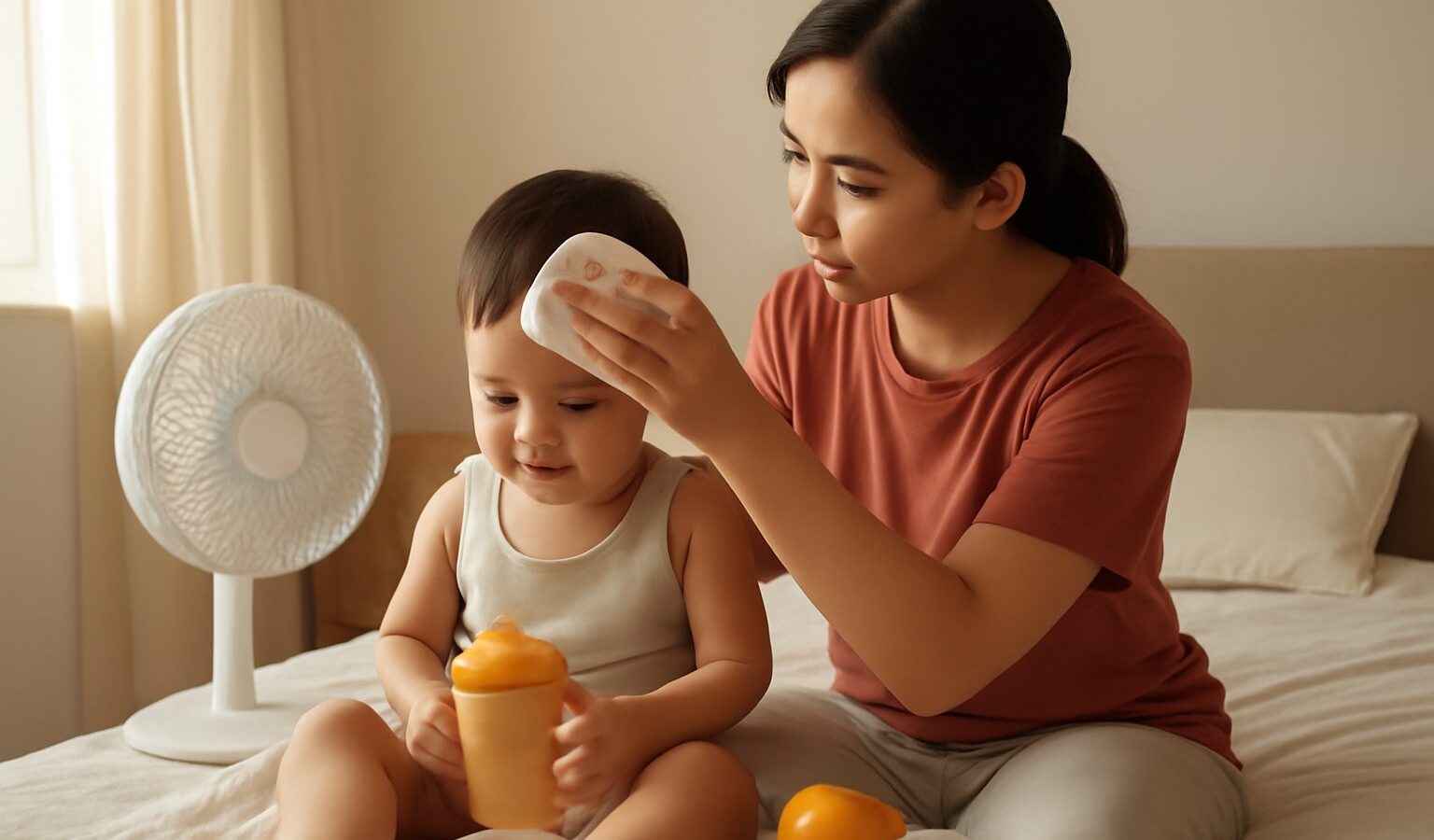
Singapore is warm all year, but the stretch from around April to June, and other spells of unusually hot weather, can be hard on the smallest members of the family. Babies and toddlers heat up faster than adults, sweat less efficiently and cannot tell you clearly that they feel unwell. These baby hot weather tips focus on children under three: how to plan outings, how to keep them hydrated, how to dress them and what warning signs mean it is time to cool down or see a doctor.
This is general information, not medical advice. If you are worried about your child at any point, speak to your paediatrician, a polyclinic or a GP, and in an emergency call 995.
Why Under-Threes Struggle More in the Heat
Young children are not simply small adults when it comes to temperature. A few things work against them:
- More skin surface for their size. They absorb heat from hot air and surfaces more quickly.
- Less efficient sweating. Their bodies are still learning to regulate temperature, so they cool down more slowly.
- No way to act on discomfort. A baby cannot take off a layer, move into the shade or ask for a drink. A toddler may be too absorbed in play to notice they are flagging.
- Fluid loss adds up quickly. Sweating, a runny tummy or a fever on a hot day can leave a small body short of fluid faster than you might expect.
The good news is that most heat problems are preventable with a bit of planning, and the habits below quickly become second nature.
Planning Outings Around the Heat
You do not have to stay indoors all day. Singapore has plenty of shaded, air-conditioned and water-friendly places for little ones. The trick is choosing the right time and place.
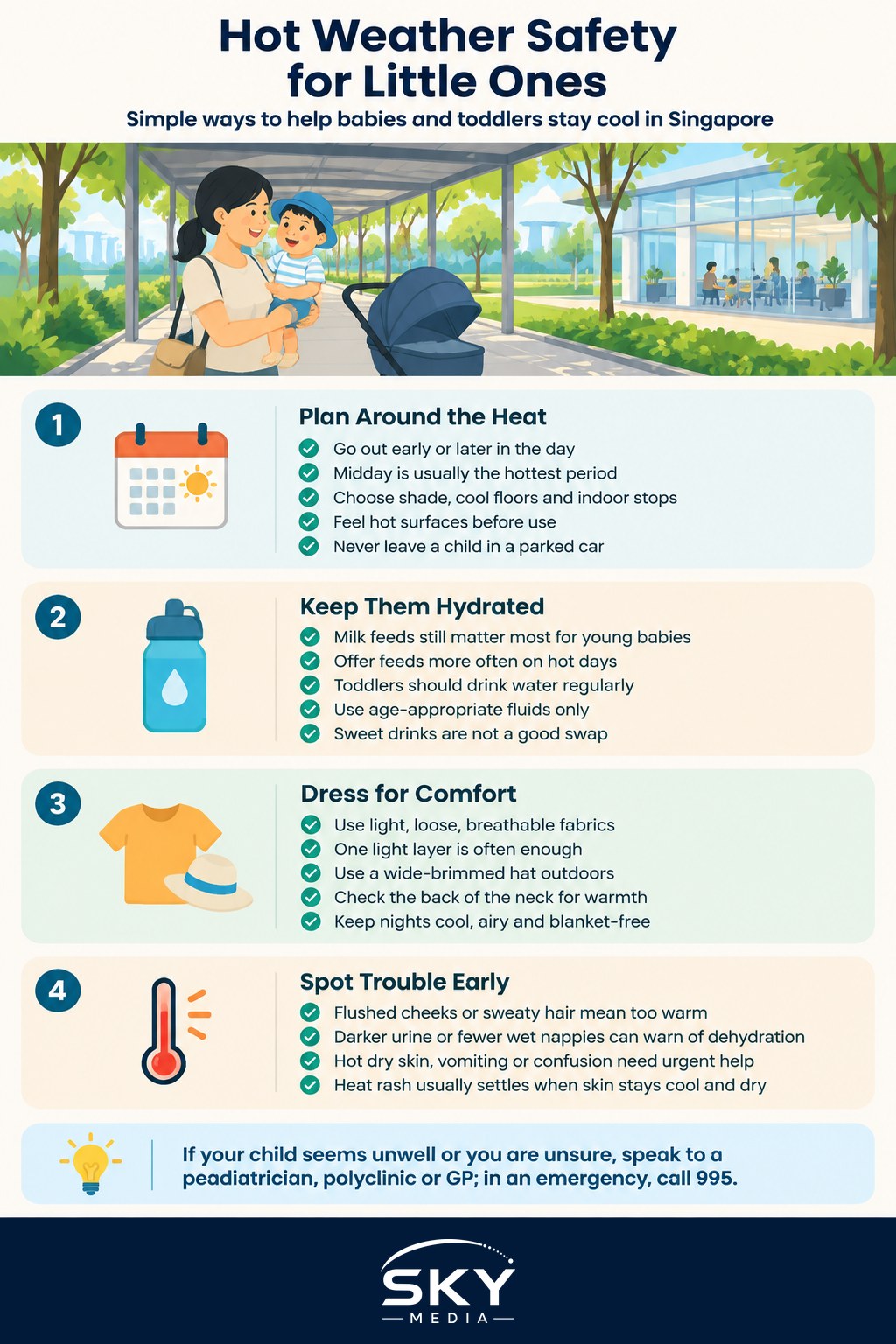
- Go early or late. Mornings before about 10am and late afternoons are usually more comfortable for playgrounds and park walks. Midday into mid-afternoon tends to be the hottest and brightest part of the day.
- Check the weather first. The Meteorological Service Singapore and the myENV app share forecasts and heat-related updates. NEA also publishes heat stress information that is useful when planning outdoor time.
- Pick shade and cool floors. Covered playgrounds, void decks, shaded park connectors and indoor play areas are kinder than open fields and rubber play surfaces that soak up the sun.
- Touch-test surfaces. Slides, swings, car seats and buckles can get very hot in direct sun. Feel them with the back of your hand before your child sits down.
- Build in cool-down breaks. Plan a stop at an air-conditioned mall, library or community centre in the middle of a longer outing.
- Never leave a child in a parked car, not even for a minute with the windows down. Cars heat up very quickly in Singapore’s sun.
A Word on Strollers
It is tempting to drape a muslin or blanket over the stroller to block the sun, but covering it fully can trap hot air inside and reduce airflow. Use the stroller’s own canopy, park in the shade, and choose a breathable stroller liner. Some parents use a clip-on stroller fan; if you do, make sure it is secure and that little fingers cannot reach the blades. Check on your baby often rather than relying on any single gadget.
Hydration for Babies and Toddlers
How you keep a child hydrated depends very much on their age. Always follow the advice of your own doctor or the guidance on HealthHub, as recommendations can be updated.
- Babies under about six months: Breast milk or formula usually provides the fluid they need. Offer feeds more often on hot days. Do not give plain water to young babies unless your doctor has advised it.
- Babies around six to twelve months: Milk feeds remain the main drink. Once solids have started, your doctor may suggest small sips of cooled boiled water with meals.
- Toddlers: Offer water regularly through the day rather than waiting for them to ask. A fun cup or a bottle with a straw can help. Water-rich foods such as cut fruit can contribute too; our list of finger foods for babies and toddlers has ideas.
- Go easy on sweet drinks. Juice and sugary drinks are not a good substitute for water or milk.
Simple ways to check hydration include looking at wet nappies (fewer than usual can be a warning sign), urine colour (darker can suggest they need more fluid) and whether their lips and mouth look moist.
Dressing Them Right, Day and Night
Over-dressing is one of the most common reasons little ones overheat in Singapore. A good rule of thumb is to dress a baby in roughly the same number of layers you are comfortable in, and in the tropics that often means one light layer.
- Choose light, loose cotton or other breathable fabrics. Our guide to the best breathable fabrics for hot weather explains what to look for.
- Use a wide-brimmed hat outdoors and keep babies out of direct sun as much as possible. Ask your doctor or pharmacist about sunscreen for young babies before using it.
- Check the back of the neck or the tummy rather than hands and feet to judge whether your child is too warm. Sweaty, hot skin there suggests removing a layer.
- Babywearing: A carrier puts your body heat against theirs, so keep sessions shorter on hot days, choose breathable carriers and make sure their face stays visible and uncovered.
At night, keep the room comfortably cool and well ventilated, and avoid heavy blankets, hats or swaddles that make babies too warm. Overheating is a recognised risk factor in sleep safety, so read our guide to safe sleep practices for your baby alongside this one. A fan or air-conditioning set to a comfortable level is fine; point fans so they circulate air in the room rather than blowing straight onto the baby.
Warning Signs and What to Do
Knowing the difference between a child who is a bit warm and one who needs help makes all the difference. The table below is a simple guide, not a diagnostic tool. When in doubt, seek medical advice.
| What you notice | What it may mean | What to do |
|---|---|---|
| Flushed cheeks, sweaty hair, fussiness, heat rash | Your child is too warm | Move to shade or air-conditioning, remove a layer, offer a feed or water as appropriate for age |
| Fewer wet nappies, darker urine, dry lips, unusual sleepiness | Possible dehydration | Offer fluids, cool down, and call your doctor or polyclinic for advice |
| Sunken soft spot on a baby’s head, no tears when crying, very few wet nappies | More significant dehydration | See a doctor promptly |
| Hot dry skin, floppiness, confusion, vomiting, fast breathing, fits or difficulty waking | Possible heat-related emergency | Call 995 immediately and start cooling while you wait |
While waiting for help in a serious case, move your child to a cool place, loosen or remove clothing, and sponge their skin with tepid (not icy) water while fanning them. Do not force fluids into a child who is drowsy or vomiting.
Heat rash, the tiny red bumps that often appear on the neck, chest or in skin folds, is common in Singapore and usually settles once the skin is kept cool and dry. If it spreads, looks infected or your child seems unwell, have it checked.
Sharing the Load With Grandparents and Helpers
Make sure everyone who looks after your child knows your hot-day routine: when to head out, how often to offer drinks and which warning signs to watch for. The same heat-safety thinking applies to grandparents who help with childcare, since older adults are also more vulnerable in hot weather. Our guide to keeping active and safe in hot weather as a senior is worth sharing with them.
With sensible timing, light clothing and plenty of fluids, little ones can enjoy Singapore’s outdoors all year round. Trust your instincts, check on them often, and do not hesitate to call a professional if something does not seem right.
Official sources: HealthHub
Further reading: Staying Cool and Safe During Pregnancy in Hot Weather · Can Babies Drink Water? Water for Infants in a Hot Climate · Choosing a Safe Mosquito Repellent for Babies and Kids · How to Babywear Safely in Singapore’s Heat