

Going back to work after CNY can feel strangely heavy. You have spent several days visiting relatives, eating pineapple tarts and staying up later than usual, and suddenly the alarm is back, the inbox is overflowing and your manager wants to talk about first-quarter targets. The first week back sets the tone for the next few months, so it is worth handling with a plan rather than just bracing yourself.
This guide is for young professionals who want to clear the backlog without panic, re-plan the quarter while the year still feels fresh, and look after their energy during a week that often overlaps with Ramadan bazaars, Chingay crowds and late-night catch-ups with friends.
Why the First Week Back Feels Harder Than It Should
The Chinese New Year break in Singapore is short on paper, often just the two public holidays plus a weekend or a few days of leave, but it packs in a lot. Late nights of house visiting, rich food, travel to Malaysia or China for some families, and broken sleep routines all add up. Many people return more tired than when they left.
There is also a mental shift from family and celebration to focus and quick decisions. Planning a ramp-up over two to three days is kinder and usually more productive than expecting to switch instantly.
Finally, the calendar does not reset neatly. Visiting may continue on weekends until the fifteenth day of the lunar new year (Chap Goh Meh), so some of your evenings are still spoken for. If you are invited to Ren Ri, the seventh day of Chinese New Year, or to Ramadan iftar gatherings with Muslim colleagues and friends, budget your energy for those too.
A Day-by-Day Plan for Your First Week Back
A loose structure stops you spending all of Monday reading emails.
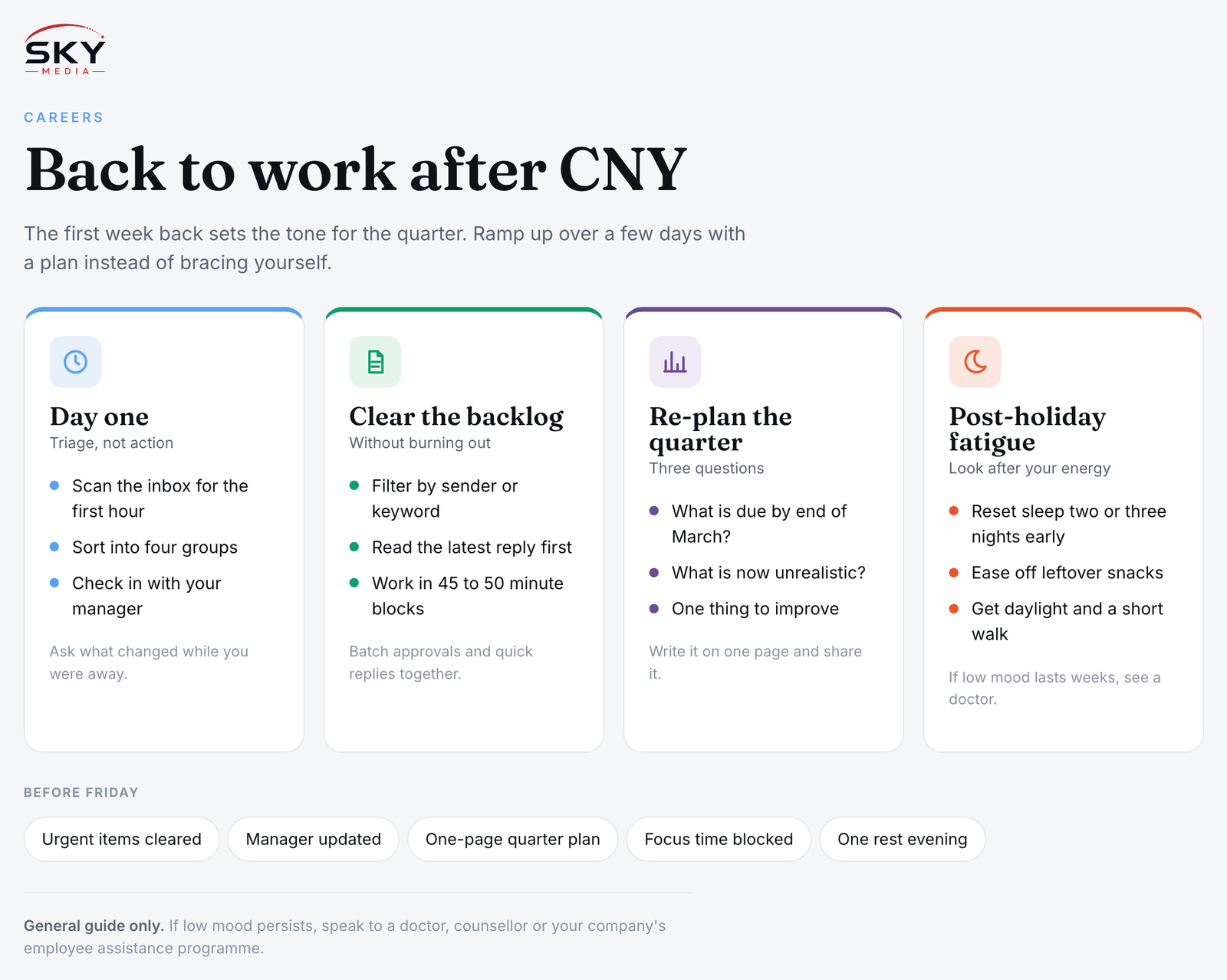
Day one: triage, not action. Spend the first hour scanning, not replying. Sort messages into four groups: urgent and important, important but not urgent, quick replies, and everything else. Archive newsletters and automated notifications in bulk. Reply only to items that genuinely cannot wait until the afternoon.
Day one afternoon: reconnect. Send short check-in messages to your manager and key teammates. Ask what changed while you were away and whether any priorities shifted. This saves you from working hard on something that is no longer needed.
Day two: clear the quick wins. Work through the quick replies and small tasks in focused blocks. Finishing many small items early gives a sense of progress and shrinks the mental load.
Day three: tackle one big item. Choose the most important project in your backlog and give it an uninterrupted morning. Block the time in your calendar so meetings do not eat it.
Days four and five: plan ahead. Use the end of the week to re-plan the quarter (see below) and set up the next week so you start Monday already knowing your top three priorities.
Clearing the Backlog Without Burning Out
A backlog after a holiday is normal. The goal is to clear it in a way that does not leave you exhausted by Wednesday.
- Use filters and search. Most email tools let you filter by sender or keyword. Clear entire threads at once instead of opening every message.
- Read the latest message first. In a long thread, the most recent reply often makes earlier messages irrelevant.
- Batch similar tasks. Do all your approvals together, all your short replies together, and all your file updates together.
- Set a timer. Work in 45 to 50 minute blocks, then stand up, refill your water bottle and stretch.
- Say when you will reply. If something needs proper thought, send a quick acknowledgement with a realistic time frame. People are usually fine with “I will get back to you by Thursday”.
Here is a simple way to decide what to do with each item in your backlog:
| Type of item | What to do | When |
|---|---|---|
| Urgent and important (client issue, deadline this week) | Handle personally, update stakeholders | Day one or two |
| Important, not urgent (project planning, reports) | Schedule a focused block in your calendar | Days three to five |
| Quick replies (confirmations, simple questions) | Batch in one or two sessions | Day two |
| Low value (old notifications, FYI threads, festive greetings) | Archive or skim, no reply needed | Day one, in bulk |
Re-Planning the Quarter While It Still Feels Fresh
Chinese New Year usually falls in late January or February, which means the first quarter is already partly gone when you return. That is a useful prompt to check whether your plans still make sense.
Start with three questions:
- What must be delivered by the end of March? List fixed deadlines, reviews and commitments.
- What did I plan in January that is now unrealistic? Be honest. Moving a deadline early is better than missing it quietly.
- What is one thing I want to improve this quarter? It could be a skill, a habit such as clearer meeting notes, or a relationship with a difficult stakeholder.
Write your answers on one page and share the relevant parts with your manager. It gives you a reference point when new requests arrive.
Managing Post-Holiday Fatigue and Low Mood
Feeling flat after the festivities is common. You go from busy social days to routine work, and the contrast can make ordinary tasks feel dull.
- Fix your sleep first. Aim to return to your usual bedtime two or three nights before you go back, not the night before.
- Ease off the snacks gradually. Leftover love letters and bak kwa are tempting at your desk. Keep a small portion for a treat rather than grazing all day.
- Get daylight and movement. A short walk at lunch helps more than another coffee.
- Limit back-to-back evening plans. If you have house visits, a friend’s iftar and a team dinner in one week, space them out.
If low mood lasts for weeks, affects your sleep or appetite, or makes it hard to function, speak to a doctor, your company’s employee assistance programme if there is one, or a counsellor. That is a sensible step, not a sign of weakness. Our guide on how to get back on track after falling off also covers rebuilding habits gently.
Working Around Leave, Festive Customs and Colleagues
Singapore offices are diverse, and the weeks after Chinese New Year often overlap with other occasions. A few points of workplace courtesy help:
- Lo hei and office celebrations. Many workplaces hold a yusheng toss in the first two weeks. Join in if you are comfortable, and it is fine to sit out the food if you have dietary needs.
- Colleagues on extended leave. Some colleagues take extra days to travel back to Malaysia or China. Check their out-of-office messages and route urgent items to their backup.
- Ramadan considerations. If Ramadan falls in the same period, be thoughtful about scheduling lunch meetings and long late-afternoon sessions for colleagues who are fasting. Ask rather than assume.
If you are new to Singapore and want to understand why the festive period runs the way it does here, our explainer on Chinese New Year in Singapore vs China is a helpful background read.
A Simple Checklist Before Friday
Before you close your laptop at the end of the first week, check that you have:
- Cleared or scheduled every urgent item from the backlog.
- Updated your manager on priorities and any changes.
- Written a one-page plan for the rest of the quarter.
- Blocked focus time for next week’s biggest task.
- Planned at least one rest evening over the weekend.
Getting back to work after CNY is not about a dramatic productivity sprint. It is about a calm, deliberate restart that carries you into the rest of the year with clear priorities and enough energy to enjoy them.
Explore more: Returning to Work After a Career Break in Singapore