

Bariatric surgery, sometimes called weight loss or metabolic surgery, is a medical treatment for severe obesity and related conditions such as type 2 diabetes, high blood pressure and sleep apnoea. If you are researching bariatric surgery in Singapore, you probably want to know whether you would qualify, which operation might suit you, how the bill can be paid and what life looks like afterwards. This guide explains the general picture. It is general information, not medical advice: only a doctor who has assessed you can say whether surgery is right for you.
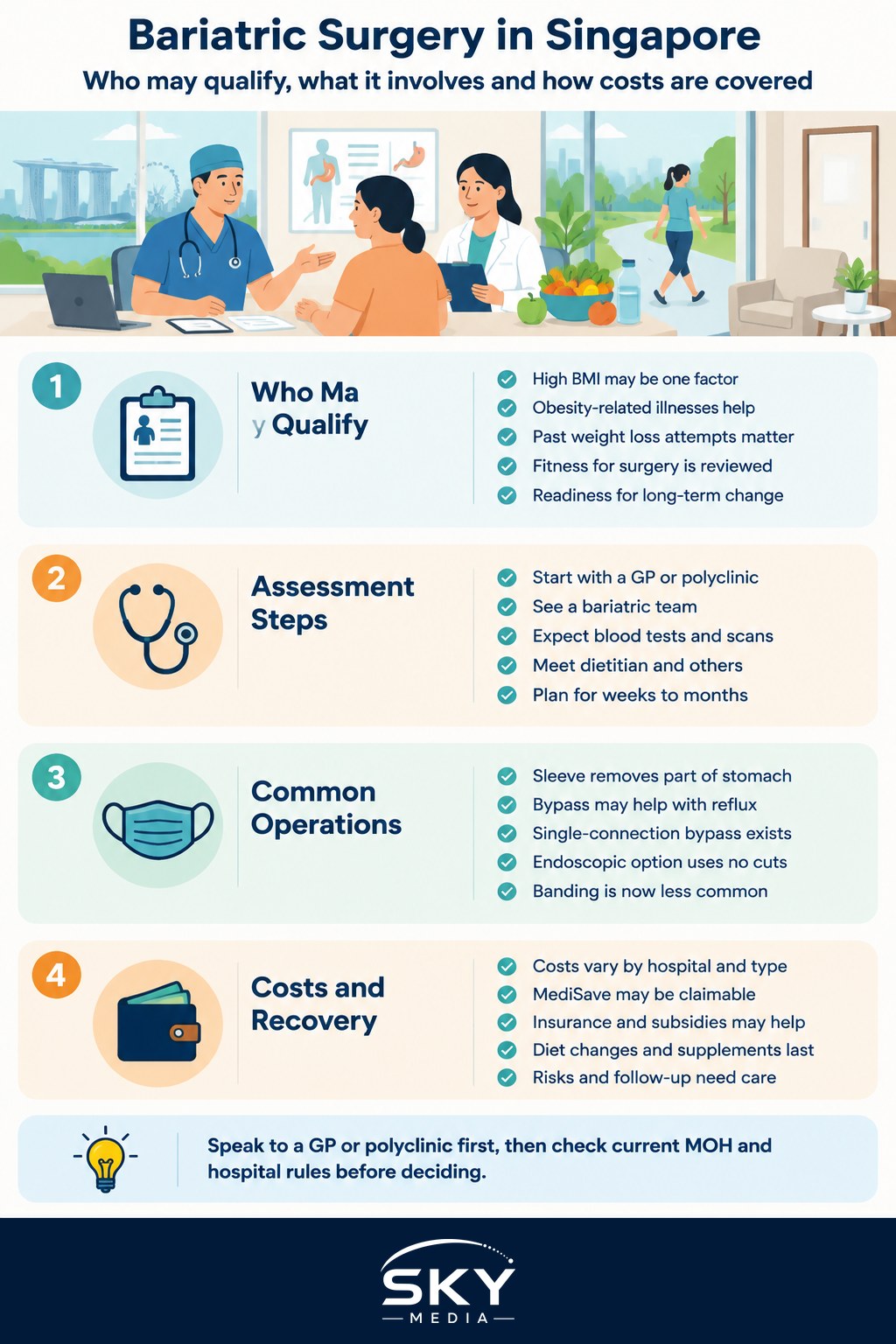
Who Qualifies for Bariatric Surgery
Eligibility is decided by doctors, usually a multidisciplinary team, not by a single number. That said, the main factors are fairly consistent.
- Body mass index (BMI). Surgery is generally considered for people with a high BMI, either on its own or combined with obesity-related health problems. Asian populations tend to develop diabetes and heart disease at lower BMIs than Western populations, so clinical guidelines used in Singapore apply lower BMI cut-offs than those you may read about in American or European sources. Your doctor will tell you which thresholds apply.
- Obesity-related conditions. Type 2 diabetes, high blood pressure, high cholesterol, obstructive sleep apnoea, fatty liver and joint problems can all strengthen the case for surgery.
- Previous attempts at weight loss. Doctors usually want to see that diet, exercise and, where suitable, medication have been tried under supervision.
- Fitness for surgery and anaesthesia. Heart and lung health, other medical conditions and medications are reviewed.
- Readiness for long-term change. You will need to follow a new eating pattern, take supplements and attend follow-up for years. Many programmes include a psychological assessment to check you are prepared and supported.
Surgery is usually not recommended where there is untreated alcohol or substance dependence, certain uncontrolled psychiatric conditions, or during pregnancy. Again, the team assesses each case individually.
How the Assessment Process Usually Works
Most people start with a GP or polyclinic visit and are referred to a hospital weight management or bariatric programme, in either the public or private sector. A typical pathway includes:
- A consultation with a bariatric surgeon or weight management physician.
- Blood tests, and often scans or a scope of the stomach.
- Reviews by a dietitian, and sometimes a psychologist, physiotherapist or endocrinologist.
- A pre-operation diet, often low in calories for a short period, to shrink the liver and make surgery safer.
- A case discussion where the team agrees whether to proceed and which operation fits.
This can take weeks to months. Use the time to ask questions and line up support at home and at work.
Common Types of Bariatric Surgery
Most operations in Singapore are done by keyhole (laparoscopic) surgery, which uses small cuts and usually means a shorter hospital stay than open surgery.
| Procedure | What is done | Points to discuss with your surgeon |
|---|---|---|
| Sleeve gastrectomy | A large part of the stomach is removed, leaving a narrow tube-shaped stomach | Commonly performed; not reversible; can worsen acid reflux in some people |
| Roux-en-Y gastric bypass | A small stomach pouch is made and connected directly to a lower part of the small intestine | Often considered where reflux or diabetes is significant; higher need for lifelong vitamin and mineral supplements |
| One-anastomosis gastric bypass | A longer pouch is joined to the small intestine with a single connection | Variant of bypass; ask about bile reflux and nutrient monitoring |
| Endoscopic sleeve gastroplasty | The stomach is stitched smaller from the inside using a scope, without cuts on the abdomen | Less invasive; suitability and expected weight loss differ from surgery |
Gastric banding, once popular, is now done far less often in many centres. Your surgeon will explain which options their hospital offers and why they recommend one over another for you.
What It Costs and How MediSave Can Help
Costs vary widely depending on the procedure, whether you go to a public or private hospital, your ward type, length of stay and any complications. We will not quote figures because they change; ask the hospital for a written cost estimate, which in Singapore usually lists the expected total bill and how much may be covered.
Some points to understand:
- MediSave. Bariatric surgery that meets clinical criteria may be claimable from MediSave, subject to withdrawal limits for surgery and hospitalisation. Limits are set by the Ministry of Health (MOH) and can change. Check the current rules on the MOH and CPF Board websites, or ask the hospital’s financial counsellor.
- MediShield Life. This basic health insurance may help with large hospital bills if the procedure is clinically indicated and claimable, subject to deductibles, co-insurance and claim limits.
- Integrated Shield Plans. If you have a private Integrated Shield Plan, check the policy wording or ask your insurer about pre-existing conditions, waiting periods and pre-authorisation. Some plans have specific exclusions for obesity treatment.
- Subsidies. Patients referred to public hospitals as subsidised patients may receive government subsidies, which can make a big difference. Means testing may apply.
- Not covered. Pre-operation programmes, follow-up visits, supplements and later plastic surgery to remove excess skin may need to be paid separately, and cosmetic procedures are generally not claimable.
Always ask the hospital what is included in any package, such as follow-up consultations and dietitian sessions.
Recovery: The First Weeks and Beyond
Recovery has two parts: healing from the operation and adjusting to a new way of eating.
In hospital and the first weeks. Many patients stay in hospital for a short period after keyhole surgery. You will usually be asked to walk soon after the operation to reduce the risk of blood clots. Most people take some time off work, depending on the job; your surgeon will advise, and you will get a medical certificate as appropriate.
Diet stages. Eating usually progresses in stages over several weeks, from clear fluids to full fluids, then pureed and soft foods, then regular textures in small portions. Your dietitian sets the timeline. Common rules include eating slowly, chewing thoroughly, stopping at the first sign of fullness, prioritising protein and not drinking with meals.
Lifelong habits. Most patients need daily vitamin and mineral supplements and regular blood tests for life, especially after bypass. Alcohol can affect you more strongly after surgery, so discuss it with your team. Pregnancy is generally advised against for a period after surgery, so plan this with your doctor.
Exercise. Gentle walking starts early, and your team will advise when to add more. Building strength helps protect muscle as you lose weight. Our guide on recovering well after surgery as a senior has general recovery tips that apply to many adults too.
Risks and Realistic Expectations
Like any major operation, bariatric surgery carries risks, including bleeding, infection, leaks where the stomach or bowel is joined, blood clots and reactions to anaesthesia. Longer-term issues can include nutritional deficiencies, gallstones, reflux, low blood sugar after meals and weight regain if habits slip. Your surgeon should explain the risks that apply to your chosen procedure and your health.
Results vary. Surgery is a tool that makes healthy eating easier to sustain, not a quick fix. People who keep attending follow-up, take their supplements and stay active tend to do best.
Questions to Ask Before Deciding
- Which procedure do you recommend for me, and why?
- How many of these operations does your team perform, and what follow-up is included?
- What will my estimated bill be, and how much can MediSave, MediShield Life or my insurance cover?
- What support is there for diet, exercise and mental wellbeing after surgery?
- What happens if I regain weight or develop complications?
Speak to your GP or polyclinic doctor as a first step, and check MOH and HealthHub for current information on obesity treatment and healthcare financing.
Explore more: Knee and Hip Replacement Surgery for Seniors in Singapore
Frequently Asked Questions
Is there an age limit for bariatric surgery in Singapore? Doctors consider age alongside health, and there is no single cut-off that suits everyone. Teenagers and older adults are assessed more carefully, usually at specialist centres. Ask a bariatric team whether surgery is appropriate for you.
Can foreigners or PRs get bariatric surgery or MediSave support in Singapore? Foreigners can generally seek surgery as private or foreign patients, but government subsidies and MediSave rules depend on citizenship and residency. Check MOH and CPF Board websites, and ask the hospital’s financial counsellor for a written estimate.
Are weight-loss injections or medicines a substitute for bariatric surgery? They are separate options, and a doctor decides which suits you. Medicines may help some people with weight loss but are not a replacement for surgery in everyone, and they usually work only while taken. Discuss both with a specialist.
Can bariatric surgery put type 2 diabetes into remission? Some people see big improvements in blood sugar and need fewer medicines after surgery, but results vary and diabetes can return. Do not stop medicines on your own. Your doctor will monitor your blood sugar and adjust treatment.
Is it safe to go overseas for cheaper bariatric surgery? Cost is not the only issue. Complications, follow-up and revision care may be harder to manage from another country, and standards differ. Ask your Singapore doctor for advice and make sure follow-up arrangements are in place before travelling.
Official sources: HealthHub