
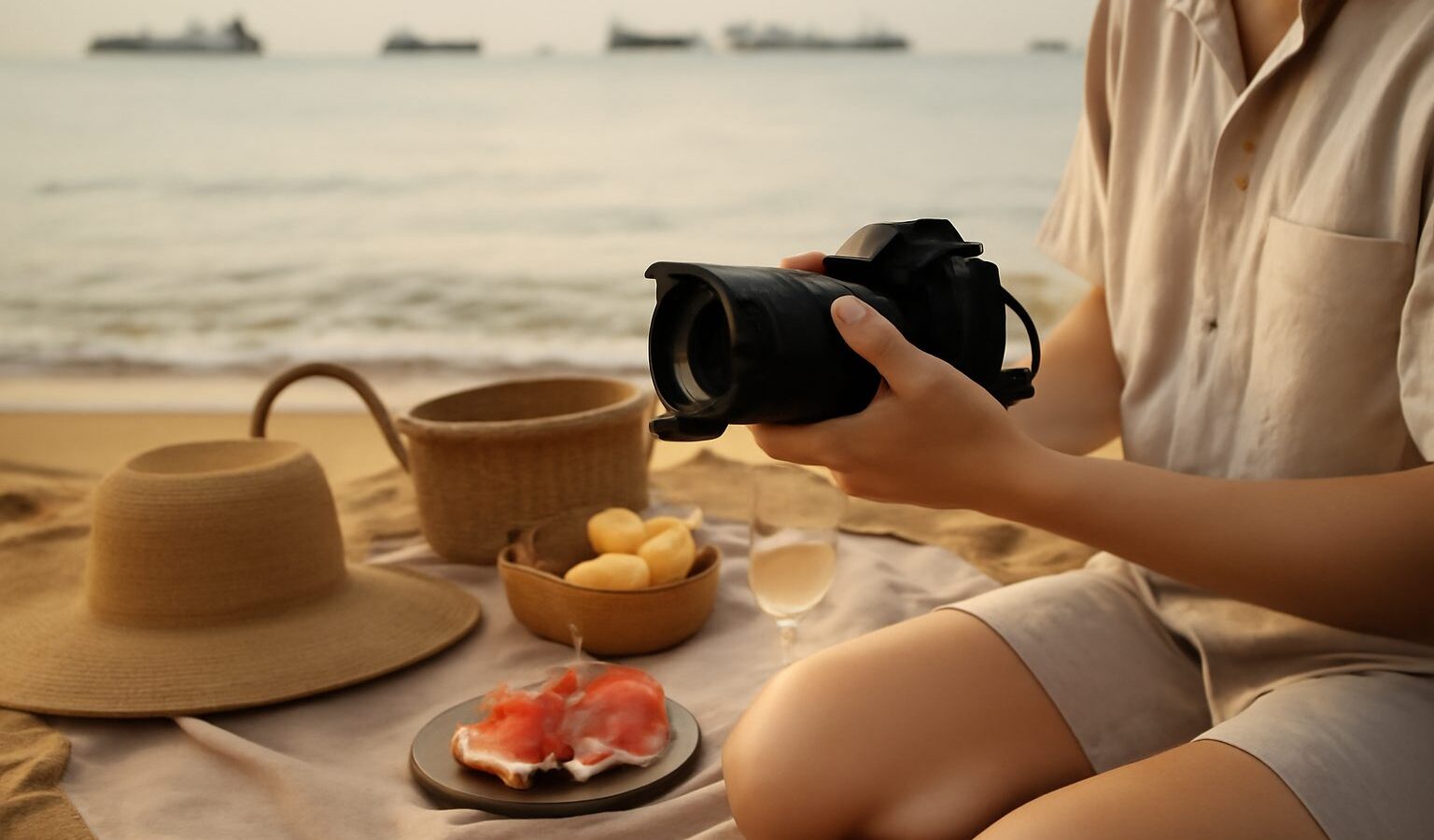
Singapore’s beaches look inviting, but they are surprisingly tricky to photograph well. The sun is strong and nearly overhead for much of the day, the air is humid and often hazy, the shoreline is busy with ships on the horizon and people on the sand, and fine sand plus salty spray can quietly damage your gear. Beach photography in Singapore is less about finding a secret location and more about handling these conditions. This guide covers the practical problems you will face on local shores and how to solve them with any camera, including your phone.

Why Singapore Beaches Are Hard to Shoot
Before you head out, it helps to understand what you are up against.
- Haze and humidity. Moisture in the air softens distant detail and washes out colour, especially towards the horizon. On days when regional haze drifts in, contrast can drop sharply.
- Harsh overhead sun. Near the equator, the sun climbs high quickly. Midday light creates hard shadows under eyes and hats, and bright sand and water reflect glare everywhere.
- Busy horizons. Ships anchored offshore are a familiar part of the view. They can be a feature, but they can also clutter a clean seascape.
- Crowds. Popular beaches fill up at weekends and on public holidays, especially in the evening.
- Sand, salt and heat. Fine sand gets into zoom rings and ports, salt spray leaves a film on lenses, and a camera left in the sun can overheat.
Dealing With Haze and Flat Light
You cannot clear the air, but you can work with it.
Check air quality first. The National Environment Agency (NEA) publishes haze and air quality readings. If visibility is poor, consider shooting close-up subjects rather than wide horizons. When the haze is heavy, it is also better for your health to limit time outdoors.
Shoot at golden hour and blue hour. The hour after sunrise and before sunset gives warmer, lower light that cuts through haze more pleasingly. Haze can even make sunsets glow in soft oranges and pinks. Blue hour, just after sunset, gives calm, even tones.
Shorten the distance. Haze affects distant objects most. Put a strong foreground in your frame, such as rocks, driftwood, footprints or a person, so the main subject stays crisp even if the horizon is soft.
Lift contrast gently in editing. Most editing apps have “dehaze”, “clarity” or contrast sliders. Use them lightly. Pushing too far creates halos and ugly noise in the sky.
Embrace the mood. Sometimes the best approach is to lean into the haze. Soft, pastel layers of sea and sky can make calm, minimalist images.
Controlling Glare and Harsh Sun
Glare is the most common problem on bright days.
- Use a polarising filter. A circular polariser reduces reflections on water and wet sand, deepens blue skies and helps colours look richer. Rotate it while looking through the viewfinder or screen to find the best effect. Clip-on versions exist for phones.
- Expose for the highlights. Bright sand and sky blow out easily. Lower your exposure compensation slightly, or tap on a bright area on your phone to set exposure, then lift shadows in editing.
- Turn your subject. For portraits, place people with the sun behind them or to the side, and use a reflector, a white towel or even the bright sand to bounce light back into faces.
- Find shade. Trees along the back of the beach give softer light for portraits in the middle of the day.
- Use a lens hood. It reduces flare and also shields the front element from spray.
Choosing the Right Time and Setting
The table below compares typical shooting windows on Singapore beaches so you can match the time to your goal.
| Time of day | Light and conditions | Crowd level | Best for |
|---|---|---|---|
| Sunrise and early morning | Soft, low light; often calmer air | Usually quieter | Clean seascapes, joggers, fishing scenes |
| Late morning to mid afternoon | Strong overhead sun, heavy glare, heat | Varies | Close-ups in shade, bold graphic shapes |
| Late afternoon and sunset | Warm light, long shadows, hazy glow | Often busy, especially weekends | Silhouettes, family portraits, colourful skies |
| Blue hour and night | Even, cool tones; ships light up offshore | Moderate | Long exposures, ship lights, city glow |
Tides also matter. Low tide can reveal rocks, tidal pools and reflective wet sand, while high tide gives cleaner water lines. Check tide tables from official sources before you go, and never wade out to rocks or breakwaters when the tide is turning.
Protecting Your Gear From Sand and Spray
A few habits will keep your camera or phone healthy:
- Change lenses away from the beach. Do it in a car, a shelter or a sealed bag. Ideally, pick one lens for the session and stick with it.
- Carry a microfibre cloth and blower. Use the blower first to remove sand, then wipe gently. Rubbing sand across glass can scratch it.
- Bag it between shots. A zip-lock bag or a dry bag protects against blowing sand and sudden spray.
- Wipe off salt afterwards. At home, wipe the body and lens with a slightly damp cloth, then dry thoroughly. Follow your manufacturer’s care advice.
- Keep it cool. Do not leave gear on hot sand or in direct sun. Phones may overheat and shut down.
- Mind humidity. Moving from an air-conditioned car into the tropical heat can fog your lens. Let the gear warm up in its bag for a few minutes first.
Getting Clean Shots on Crowded Shorelines
You can still create calm images on a busy beach.
- Go early. Mornings are usually the quietest time.
- Shoot low or high. Crouching low makes wet sand and sky fill the frame; a higher angle can isolate patterns in the sand.
- Use long exposures. With a tripod and a neutral density filter, a long exposure can blur moving people until they almost disappear, and it smooths the sea.
- Crop tightly. A longer focal length lets you pick out a single shape, wave or figure.
- Respect privacy. Ask permission before photographing strangers closely, especially children, and be considerate of families enjoying the beach. Follow any signage and park rules on drones and photography.
Beaches are also great backdrops for groups. For tips on arranging families and friends, see how to photograph large groups. If storms roll in over the sea, read how to photograph lightning safely before you stay out, and for close-ups of shells and sand ripples, our guide to photographing textures and details has useful ideas.
Look After Yourself, Too
Bring water, a hat and sunscreen, and take breaks in the shade. Heat exhaustion can creep up during a long sunset shoot. If thunder or lightning is around, leave the open beach immediately. Good beach photography in Singapore is about patience: pick the right light, protect your gear, and you will come home with sharp, colourful images even on a hazy day.
Further reading: Underwater and Pool Photography in Singapore