

Plenty of people emcee once, usually at a friend’s wedding, and discover they love the microphone. Turning that into paid work is a different job altogether. If you want to become an event emcee in Singapore as a side income or a full career, you need a portfolio clients can trust, a clear sense of what to charge, and a niche that sets you apart in a crowded market. This guide walks through how working emcees build that business, how corporate and wedding gigs differ, and why bilingual hosting is such a strong selling point here.
If you are simply preparing to host a friend’s big day once, our guide to being a wedding emcee is the better starting point. This article is for people who want repeat, paying clients.
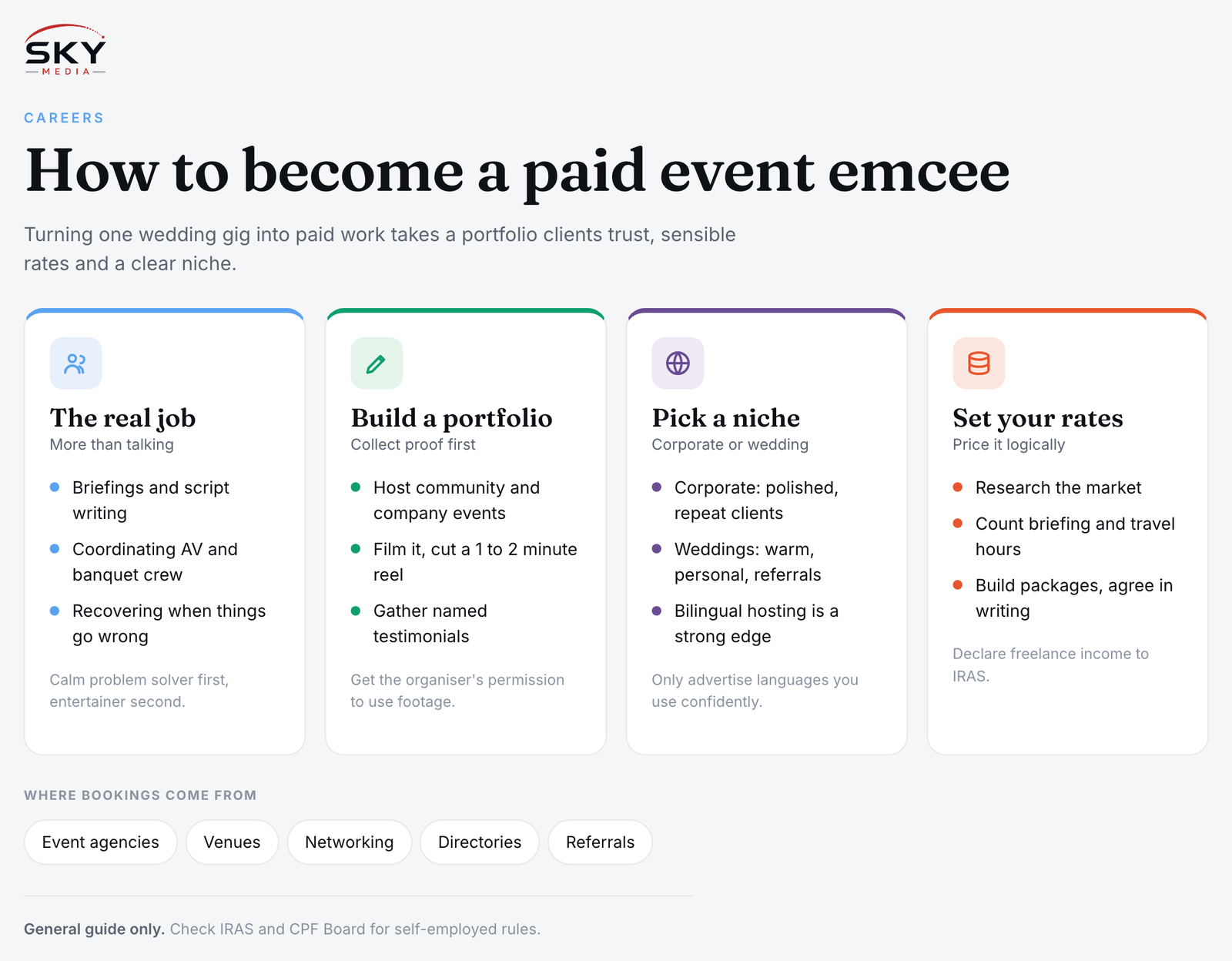
What a Professional Emcee Actually Does
Clients rarely pay for the talking alone. They pay for someone who keeps the event on schedule, smooths over problems and makes the host look good. A typical paid engagement involves:
- Pre-event briefing: going through the run-down (the minute-by-minute programme), names, titles and pronunciations, sponsor mentions and any sensitive topics to avoid.
- Script writing or editing: many clients give a rough outline and expect the emcee to turn it into a polished script.
- Coordination on the day: working with the AV crew, banquet captain, photographer and event planner, often through a headset or hand signals.
- Crowd management: filling dead air when a speaker is late, running games or lucky draws, and reading the room.
- Recovery: handling a failed video, a microphone cutting out or a VIP running late without letting the audience notice the stress.
The best emcees are calm problem solvers first and entertainers second. Keep that in mind when you market yourself.
Building a Hosting Portfolio From Scratch
Nobody books an emcee they cannot see in action. Your early goal is to collect proof, not money.
Start with low-risk stages. Volunteer to host community events, school alumni nights, residents’ committee gatherings, charity runs, church or temple functions, and company dinner and dance events at your own workplace. Toastmasters clubs and similar public speaking groups also give you regular, structured stage time and feedback.
Record everything. Ask a friend to film each event from the audience on a steady phone mount, and ask the official photographer for a few shots of you on stage. Always get the organiser’s permission before using footage publicly, especially at private or corporate functions.
Cut a short showreel. Aim for a tight video of one to two minutes showing your opening, a transition between segments, an interactive moment with the crowd and, if you are bilingual, a clip in each language. Clients watch the first 20 seconds and decide, so lead with your strongest moment.
Collect testimonials. A short written line from an organiser, with their name and the event type, carries more weight than any description you write about yourself.
Build a simple online presence. A one-page website or a well-organised social media profile with your showreel, photos, event types you cover and a contact form is enough to start. Keep it professional; clients will check.
Corporate vs Wedding Gigs: How They Differ
Most emcees in Singapore eventually lean towards one of two markets. They reward different skills, and the comparison below can help you decide where to focus first.
| Aspect | Corporate events | Wedding banquets |
|---|---|---|
| Typical events | Annual dinners, product launches, conferences, award nights, town halls | Wedding dinners, tea ceremonies at banquets, solemnisation receptions |
| Who books you | HR, marketing or events teams, event agencies | The couple, their families, wedding planners |
| Tone | Polished, on-brand, time-disciplined | Warm, personal, celebratory |
| Prep work | Corporate briefings, VIP protocol, sponsor messaging | Couple’s story, family names, cultural customs, yam seng toasts |
| Peak periods | Year-end and Chinese New Year dinner season, plus conference season | Auspicious dates and weekends throughout the year |
| Payment | Invoices, purchase orders, sometimes longer payment terms | Usually a deposit and balance from the couple |
Corporate work tends to bring repeat business, because a company that likes you will book you for next year’s dinner too. It also demands punctuality, a sharp appearance and comfort with formal protocol, such as addressing a Guest-of-Honour correctly.
Wedding work is more emotional and personal. You need to research the couple, handle extended family politely and know local customs well, from the march-in to the yam seng toast. Referrals from couples and wedding planners drive most bookings.
Many emcees do both, but leading with one niche makes your marketing clearer.
Bilingual Emceeing: Your Strongest Edge
Singapore’s audiences are mixed. A corporate dinner may include regional colleagues, and a wedding often has grandparents who are more comfortable in Mandarin, a dialect, Malay or Tamil. An emcee who can switch languages smoothly is valuable.
A few practical tips:
- Do not simply translate line by line. Good bilingual hosting alternates languages naturally, giving the key message in both without doubling the run time.
- Prepare scripts in both languages, and check names and titles in each. A wrongly pronounced Chinese name or a mistranslated honorific is noticed instantly.
- Be honest about your level. Only advertise a language you can use confidently under pressure, including ad-libbing when something goes wrong.
- Show it in your showreel. Clients searching for bilingual hosts want to hear it, not read about it.
If you speak a dialect such as Hokkien or Cantonese, even a few warm lines for older guests can make you memorable at weddings.
Setting Your Rates Sensibly
There is no official rate card for emcees, and fees vary widely with experience, language ability, event length and whether scriptwriting is included. Rather than copying a number you saw online, work out your pricing logically:
- Research the market. Look at how established emcees present their packages, and ask event planners or fellow hosts what is typical for your level.
- Count all your hours. A three-hour dinner can mean several more hours of briefings, script work, rehearsal and travel.
- Build packages. For example, a basic hosting package, a package with scriptwriting, and a bilingual or full-day conference package.
- Raise rates as your portfolio grows. Early on, slightly lower fees in exchange for footage and testimonials is a fair trade. Do not stay there for long.
- Put it in writing. Use a simple agreement covering the date, hours, deliverables, deposit, cancellation terms, overtime and attire.
If you earn income as a freelancer, you are responsible for declaring it to IRAS (the Inland Revenue Authority of Singapore) and for your own MediSave contributions where they apply. Check the current rules for self-employed persons directly with IRAS and the CPF Board, as this is general information rather than tax advice.
Finding Clients and Growing the Business
Once you have a showreel and a few testimonials, focus on where bookings actually come from:
- Event agencies and planners. They hire emcees repeatedly. Introduce yourself professionally and make it easy for them to share your reel with their clients. Our guide to starting an events business in Singapore explains how these businesses work, which helps you pitch to them.
- Venues and banquet teams. Hotel and restaurant event staff are often asked for emcee recommendations.
- Networking. Industry gatherings and business mixers are where corporate leads come from. See our guide to professional networking events in Singapore.
- Freelance platforms and directories. Useful early on, but read their terms and commission structures carefully.
- Referrals. Thank every client after an event and politely ask if they would recommend you.
Treat it as a business from the start. Reply quickly to enquiries, confirm details in writing, arrive early, dress one notch above the guests and send a short thank-you note afterwards. Reliability is what turns one booking into ten.
Skills to Keep Sharpening
Even busy emcees keep training. Consider voice coaching to protect your voice during peak season, improv classes to improve ad-libbing, and watching recordings of your own events to catch filler words and pacing issues. Learn basic AV terms so you can talk to technical crews confidently. Over time, you can expand into conference moderation, panel hosting and virtual or hybrid events, which reward the same core skills.
Becoming a paid emcee takes a few years of steady effort, but each event builds your reel, your network and your confidence.
Explore more: Being a Wedding Emcee · Professional Networking Events in Singapore
Frequently Asked Questions
How do I build an emcee portfolio when no one has hired me yet? Start with low-risk stages such as community events, alumni nights, charity runs and Toastmasters, and record each one with permission. Cut a one to two minute showreel, collect short testimonials and set up a simple website or social profile.
Should I specialise in corporate events or weddings? Many emcees do both, but leading with one niche makes marketing clearer. Corporate work brings repeat business and demands punctuality and formal protocol. Weddings are more personal and rely on referrals from couples and planners.
How should I decide what to charge as a new emcee? There is no official rate card, so research how established emcees present packages and count all your hours, including briefings, scripts, rehearsal and travel. Early on, slightly lower fees in exchange for footage and testimonials are fair, but do not stay there long.
What should an emcee’s written agreement include? A simple agreement covering the date, hours, deliverables, deposit, cancellation terms, overtime and attire. Putting this in writing prevents disputes with couples and companies alike, and it sets clear expectations for both sides before the day.
Do I need to declare emcee income to IRAS? Freelance income is yours to declare to IRAS, and MediSave contributions may apply to self-employed persons. Check the current rules directly with IRAS and the CPF Board, since this is general information rather than tax advice.