

Short-form video, brand content and online courses have made editing one of the most in-demand creative skills around. If you are hunting for a video editor job in Singapore, the good news is that you do not need a film degree to get started. Employers and clients care most about what you can show them: a tight reel, clean storytelling and the ability to hit deadlines.
This guide is for young adults weighing up editing as a career. It covers the skills that matter, the software to learn, how to build a portfolio from nothing, and how in-house, agency and freelance routes compare.
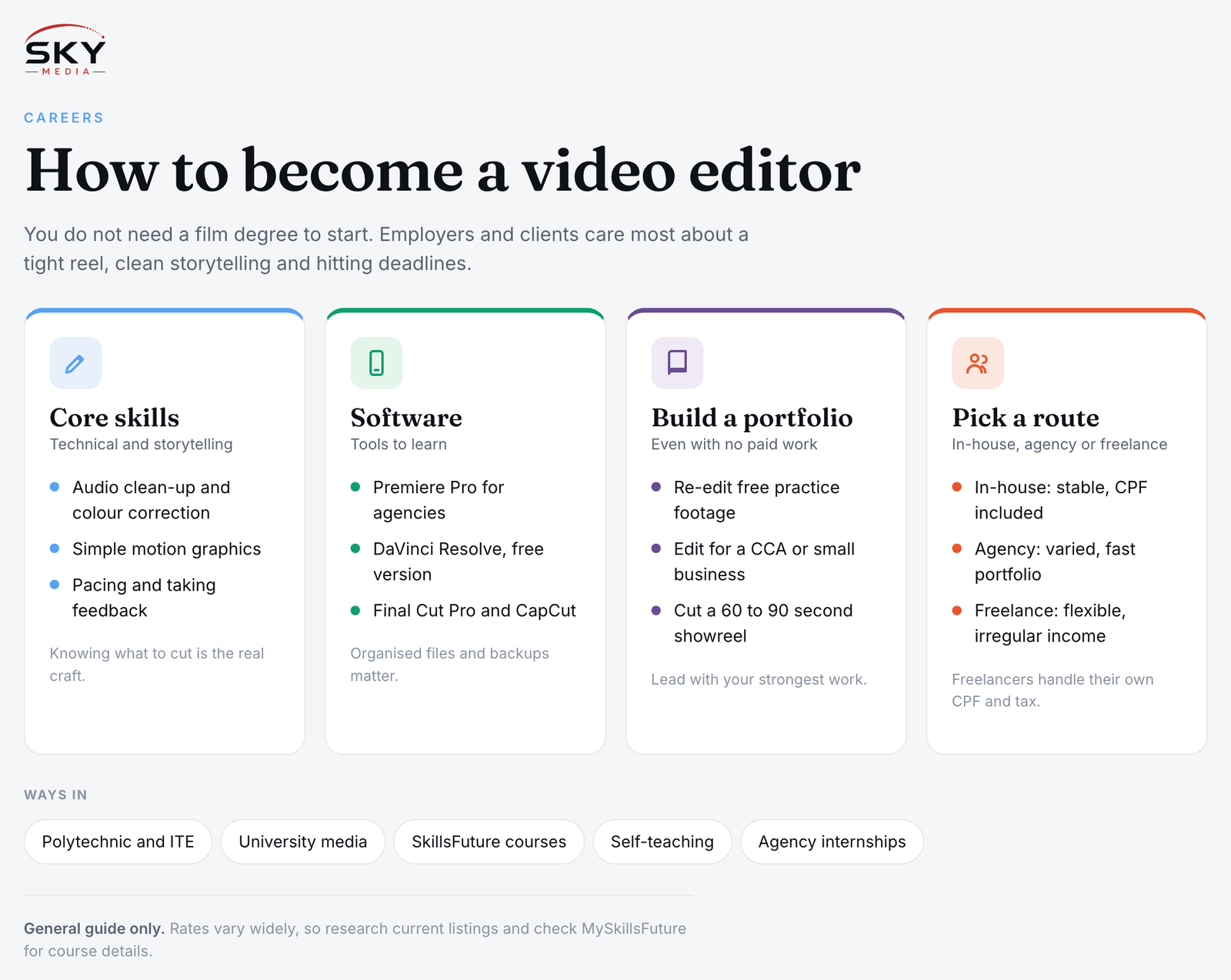
What a Video Editor Actually Does
Editing is more than cutting clips together. On a typical project, an editor will:
- Review and organise raw footage, audio and graphics
- Build a rough cut that tells the story or delivers the brief
- Refine pacing, transitions and music to fit the platform
- Clean up and balance audio, and add subtitles
- Do basic colour correction so shots match
- Add titles, lower thirds and simple motion graphics
- Export versions for different platforms, such as vertical for short-form apps and horizontal for YouTube or TV
- Handle client or producer feedback through several rounds of revisions
In Singapore, demand comes from digital agencies, corporate communications teams, media companies, production houses, e-commerce brands, schools and training providers, and individual creators. Bilingual skills can be a plus, since a lot of local content runs in English and Chinese or needs subtitles in both.
Core Skills and Software to Learn
Technical skills
- Editing software. Adobe Premiere Pro is common in agencies and corporate teams. DaVinci Resolve is widely used for colour work and has a capable free version, which makes it a smart starting point; see our guide to DaVinci Resolve for beginners. Final Cut Pro is popular with Mac users, and CapCut is everywhere for short-form social content.
- Audio basics. Levelling dialogue, reducing background noise and mixing music under speech. Bad audio ruins good footage.
- Colour correction. Matching shots and fixing white balance before attempting stylised grading.
- Motion graphics. Even simple animated titles in After Effects or built-in tools make you more employable.
- File management. Clear folder structures, proxies for heavy footage and reliable backups. Losing a client’s files once can end a relationship.
Storytelling and soft skills
- Pacing and structure. Knowing what to cut is the real craft. Watch content you admire and study why it holds attention.
- Platform sense. A 15-second vertical ad, a 3-minute corporate video and a 20-minute YouTube episode need very different rhythms.
- Taking feedback. You will revise work many times. Staying calm and organised through notes is a professional skill.
- Time management. Agencies and clients work to fixed launch dates.
How to Build a Portfolio From Scratch
Most hiring managers will ask for a showreel or links to your work before they look at your CV. If you have no paid work yet, you can still build one.
- Re-edit existing footage. Many creators publish free practice footage or run editing challenges. Re-cut a trailer, a music video or an interview to show range.
- Make your own content. Film a short documentary about your neighbourhood, a hawker stall or a hobby. Shooting your own material teaches you what editors need from camera operators.
- Help a CCA, club or small business. Editing videos for a school club, a friend’s business or a community event gives you real briefs and real feedback. Always agree on how the work may be used in your portfolio.
- Cut a 60 to 90 second showreel. Lead with your strongest work. Keep it short and show variety: a social clip, something with interviews, something with graphics.
- Host it properly. Use a simple portfolio page or a video platform link that loads quickly on a phone, and list your role on each project honestly.
If you are applying for in-house roles, a short self-introduction video can also help you stand out; our tips on video resumes for job seekers apply directly.
In-House, Agency or Freelance: Which Route Fits You
Editors in Singapore usually follow one of three paths, and many move between them over a career.
| Route | What the work looks like | Good for | Watch out for |
|---|---|---|---|
| In-house (brand or corporate team) | Steady stream of content for one organisation | Stable income, CPF contributions, learning a brand deeply | Work can become repetitive |
| Agency or production house | Many clients, fast turnaround, varied projects | Building a strong portfolio quickly and learning from seniors | Long hours near deadlines |
| Freelance | Projects from multiple clients you find yourself | Flexibility, choosing your projects, potentially higher rates once established | Irregular income, chasing payments, handling your own CPF and tax |
Going freelance the sensible way
Many editors start freelancing on the side while holding a full-time job, then switch once they have regular clients. If you freelance, you are treated as self-employed for tax purposes. Keep records of income and expenses, check your obligations with IRAS, and read up on MediSave contributions for self-employed persons on the CPF Board website. Use simple written agreements that set out deliverables, number of revisions, timelines and payment terms. If you hold a work pass rather than citizenship or PR, check MOM’s rules before taking on any freelance work, as permission depends on your pass.
Training, Courses and Getting Hired
You can enter editing through several doors:
- Polytechnic and ITE courses in media, film, broadcast or digital design give a structured foundation and industry contacts.
- University programmes in communications or media suit those who want broader skills in production and strategy.
- Short courses. SkillsFuture-eligible courses in editing, motion graphics and colour can help career switchers. Check course eligibility and current credit details on the MySkillsFuture portal.
- Self-teaching. Free tutorials and free software can take you a long way if you are disciplined about practising.
To get hired:
- Look for junior editor, video producer, content executive and post-production assistant roles on job portals and agency websites.
- Internships at agencies and production houses are often the fastest route into paid work.
- Join local creative communities and online groups where editors share work and job leads.
- Keep your portfolio updated every few months so your best work is always recent.
Salaries and rates vary widely by employer, experience and the type of work, so research current listings and talk to working editors rather than relying on a single figure.
Growing Your Career Over Time
Once you are comfortable with the basics, specialising can lift your value. Options include colour grading, motion design, documentary editing, commercial and advertising work, or becoming a post-production supervisor who manages workflows and teams. Some editors move into directing or producing, using their sense of story to shape projects from the start.
The editors who last are the ones who keep learning. Software updates, new platforms and changing audience habits mean the job never stays the same for long. Treat each project as a chance to try one new technique, and keep asking for honest feedback on your cuts.
Frequently Asked Questions
Do I need a degree to get a video editing job? Not necessarily. Employers and clients care most about your showreel, storytelling and ability to meet deadlines. Polytechnic, ITE or university media courses help with structure and contacts, but self-teaching and a strong portfolio can also open doors, especially for junior roles.
What laptop specs do I need for video editing? Look at the minimum system requirements published for the software you plan to use, then aim comfortably above them, with enough storage for heavy footage. Proxies and regular backups help on modest machines. Check the software maker’s official page, since requirements change with each update.
Is it worth learning both Premiere Pro and DaVinci Resolve? Start with one and learn it well, since the editing principles carry over. DaVinci Resolve has a capable free version, while Premiere Pro is common in agencies. Learning a second tool later widens your options, especially if job listings in your target area ask for it.
How do I find freelance video editing clients? Start with your network, small businesses, school clubs and community events, then add online creative communities and job portals. Show a short, varied showreel and agree deliverables, revisions and payment terms in writing. Check IRAS and MOM rules if you are self-employed or on a work pass.
Can I get SkillsFuture funding for video editing courses? Many editing, motion graphics and colour courses are SkillsFuture-eligible, but eligibility and credit amounts depend on the course and your own situation. Check the MySkillsFuture portal for current details. Compare syllabus, project work and trainer experience before you sign up.
Further reading: How to Become a Copywriter in Singapore · Exploring a Career in Film and Television in Singapore