
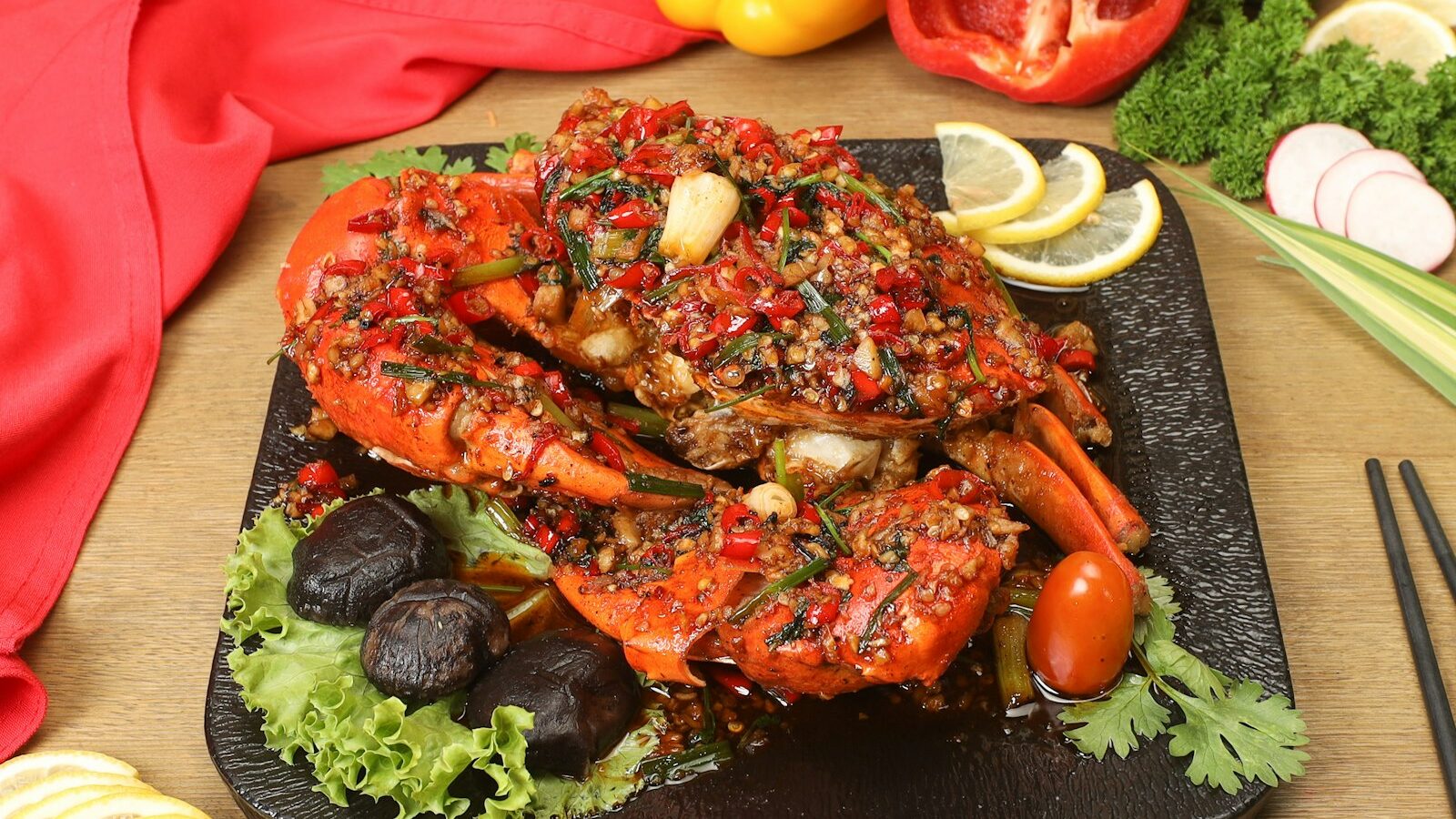
Ask anyone what Singapore’s national dish is and, sooner or later, someone will say chilli crab. To find the best chili crab Singapore serves, it helps to understand what you are actually looking at: a whole crab bathed in a thick, sweet-savoury, gently spicy gravy that begs to be mopped up with soft buns. It is messy, communal, and unapologetically hands-on. Whether you grew up cracking claws at family dinners or you have just landed and want to try the dish everyone raves about, this guide walks you through the crab, the sauce, the variations, and how to eat it without wearing half of it.
What chilli crab actually is
At its heart, chilli crab is a whole crab wok-fried and simmered in a rich tomato-and-chilli based gravy. Despite the name, it is not searingly hot. The sauce leans sweet and tangy, thickened to a glossy, almost soupy consistency, with a savoury depth from ingredients like fermented soybean paste. A beaten egg is usually swirled in near the end, which gives the gravy its signature silky ribbons.
The gravy is genuinely the star. Locals will happily tell you the crab is almost a vehicle for the sauce, which is why the mantou (soft, pillowy Chinese buns, served steamed or lightly fried) matter so much. You tear them, dunk them, and let them soak up gravy until they are golden and dripping.
The crab itself
The classic choice is the mud crab, often sold as Sri Lankan crab. These are prized for their heavy, meaty claws and sweet flesh, and they stand up well to a bold sauce. A good crab feels heavy for its size, which usually signals firm, full meat rather than a watery, under-filled shell. Freshness is everything in seafood Singapore kitchens: the best places keep their crabs live in tanks and cook to order, so the meat is tender rather than mushy.
Chilli vs black pepper vs salted egg
Chilli crab may be the headline act, but it is rarely the only crab on the menu. When you sit down for seafood Singapore style, you will usually get a choice of preparations, and it is worth knowing the main three.
- Chilli crab: the sweet, tangy, egg-laced tomato gravy described above. Mild heat, big flavour, and the one you order the mantou for.
- Black pepper crab: a drier, punchier alternative. Instead of a pool of gravy, the crab is coated in a fragrant, peppery, buttery crust. Black pepper crab is bolder and spicier in a warming, aromatic way, and it is less messy since there is far less sauce to contend with.
- Salted egg crab: a richer, more recent favourite. The crab is tossed in a creamy, grainy sauce made with salted egg yolk, often with curry leaves and a hint of chilli. It is indulgent and slightly savoury-sweet.
A simple rule of thumb: order chilli crab if you want the full messy, saucy, bun-dunking experience; go black pepper if you prefer intensity and cleaner hands; try salted egg if you want something rich and a little different.
If you are dining as a pair or a group, splitting one chilli and one black pepper between you is a popular move. You get the contrast, and nobody has to choose.
How chilli crab is served
Chilli crab almost always arrives as a shared dish in the middle of the table. The crab comes pre-cracked or partially cracked, sitting in its generous puddle of gravy. Alongside it you will find:
- Mantou buns, steamed or fried, for soaking up the sauce.
- Crackers or nutcracker-style tools for opening claws.
- Small forks or picks for coaxing meat out of the legs.
- A plastic bib, offered at many seafood restaurants, and a stack of wet wipes or a finger bowl.
- Steamed rice, if you would rather have that than, or as well as, the buns.
Portions are typically sold by weight, so the bill scales with the size of the crab you pick. It is normal, and expected, to eat with your hands.
How to eat chilli crab
If you have never done it, here is the honest truth: there is no elegant way, and that is the whole point. Here is how to eat chilli crab without stress.
- Put the bib on. Vanity has no place here. The gravy splatters.
- Start with the claws. They hold the most meat. Use the cracker to crack the shell, then pull the meat out with a pick or your fingers.
- Work the body. Break it open, and dig into the pockets of meat between the sections.
- Do not skip the legs. Snap them at the joints and either suck the meat out or push it through with a pick.
- Dunk the mantou. Tear a bun, drag it through the gravy, and eat. Repeat until the sauce is gone.
- Clean up. Wet wipes, then wash your hands properly afterwards. The scent of the sauce lingers.
Quick tips before you order
- Wear something you do not mind splashing, or roll your sleeves up.
- Ask how the crab is priced (usually per 100g) so the bill holds no surprises.
- Order the mantou; do not treat it as optional.
- If you dislike heat, say so. Kitchens can usually go milder.
- Have napkins and water within reach.
What makes a good plate
Once you know the basics, judging quality becomes much easier. When you are hunting for the best chili crab Singapore can offer, look for these signs of a plate done right:
- Fresh, live crab, cooked to order. The meat should be sweet and firm, pulling cleanly from the shell rather than turning to paste.
- Balanced gravy. Sweet, savoury, and tangy should sit in harmony, with the chilli present but not overwhelming. It should coat a bun without being cloying.
- Silky egg ribbons. A well-made gravy shows soft threads of egg, not a scrambled mess.
- Generous sauce. There should be enough gravy for all the mantou you want, because half the joy is in the mopping.
- Right consistency. Thick enough to cling, loose enough to soak into a bun.
A quiet sign of a good kitchen is that the crab does not smell fishy. It should smell of the sea and the sauce, clean and appetising.
Where to eat it, and roughly what to pay
You will find chilli crab across the island, from riverside dining strips to the well-known coastal seafood clusters in the east, as well as at countless neighbourhood “zi char” (home-style stir-fry) stalls tucked into HDB estates. The grand seafood restaurants offer atmosphere and river or sea views; the humble zi char places often serve just as satisfying a plate for less.
As a rough guide, expect chilli crab to be one of the pricier items on a seafood dinner, since it is charged by weight and a decent crab is not small. A single crab for two to share is a meaningful outlay, and a full seafood spread for a group climbs from there. Prices shift with crab size and season, so treat any figure you see as a ballpark and confirm when you order. For a lighter wallet, a neighbourhood zi char stall is almost always the friendlier option.
Chilli crab is a dish best shared, unhurried, over conversation and a growing pile of shells. Come hungry, dress down, and let the mantou do their work.
Explore more: Singapore’s must-try hawker food and the best chicken rice in Singapore.