
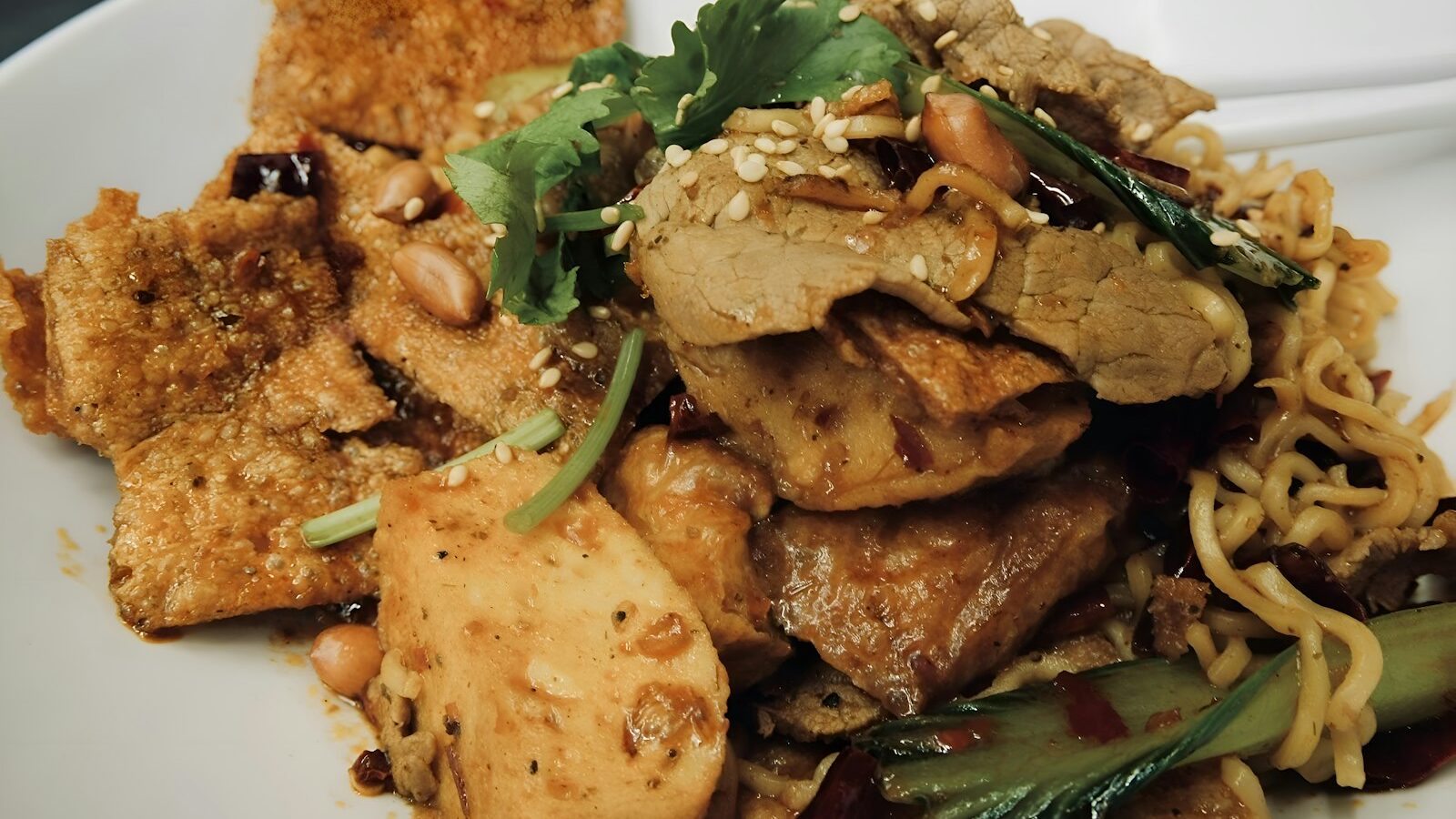
Some dishes are all about the mixing. Chili pan mee is one of them. It arrives deceptively plain, a bowl of springy noodles topped with a glistening poached or runny egg, a scatter of savoury minced meat, crisp fried anchovies and a handful of blanched greens. Then you reach for the small dish of dried chilli flakes beside it, spoon in as much as you dare, break the yolk, and toss everything together until the noodles turn glossy, fiery and utterly moreish. That ritual, that moment of transformation, is the soul of the dish.
Chili pan mee, sometimes written chilli pan mee, has its roots in Kuala Lumpur, where it grew from the older tradition of pan mee, a homely Hakka noodle dish whose name loosely means flat flour noodle. The dry, chilli-topped version became a runaway favourite and crossed the Causeway into Singapore, where it has earned a devoted following in coffee shops and casual noodle stalls. It is comfort food with a kick, simple, satisfying and endlessly customisable to your own spice tolerance.
What Goes Into A Bowl
The foundation is the noodle. Pan mee noodles are made from wheat flour and traditionally come in a few shapes, from thin ribbons to thicker hand-torn pieces with a wonderfully chewy bite. For chili pan mee, the noodles are usually served dry, tossed in a light savoury seasoning rather than soup, so every strand can carry the chilli.
On top sits the supporting cast. A soft-cooked or poached egg brings richness, its runny yolk acting as a sauce once broken. Seasoned minced pork adds savoury depth. Crisp fried ikan bilis, the little anchovies, contribute salt and crunch. A few blanched leafy greens lend freshness and balance. Some versions include fried shallots or a sprinkle of sesame.
But the star is the chilli. This is a coarse, dried chilli flake blend, toasted and sometimes fried until fragrant and smoky, served on the side so you control the heat. Stir in a little for a gentle warmth, or pile it on for a proper fiery hit. It is this build-your-own quality that makes the dish so personal.
The Ritual Of Mixing
Chili pan mee is not a dish to eat as it arrives. The whole point is assembly. First, add your chilli, starting modestly if you are unsure, since you can always add more. Break the egg so the yolk runs down over the noodles. Then toss, lifting the noodles from the bottom, coating everything in yolk, seasoning and chilli until the bowl glows a rich red-brown and the aromas of toasted chilli and anchovy rise up.
Done right, the result is a beautiful tangle, springy noodles, savoury mince, crunchy anchovies and a slick of eggy, spicy sauce clinging to every strand. Eat it while it is hot and the textures are at their best.
Many stalls also serve a soup version of pan mee, often with the same toppings in a light anchovy-based broth, for those who prefer something gentler. Both belong to the same family.
Where To Find It And What To Look For
Chili pan mee turns up in coffee shops, food courts and dedicated noodle stalls across Singapore, often at places specialising in Malaysian-style noodles. As with any noodle dish, quality varies, so it helps to know what a good bowl looks like.
A note on allergens and diet. Chili pan mee typically contains wheat noodles, egg, pork and dried anchovies, so those with wheat, egg, seafood or pork restrictions should ask about ingredients. As it commonly includes pork and anchovies and is served at non-halal stalls, halal diners should look for certified alternatives and check current information for any specific place.
| Element | A good bowl | A weaker bowl |
|---|---|---|
| Noodles | Springy, chewy, well seasoned | Soft, clumpy or bland |
| Chilli | Fragrant, toasty, adjustable heat | Dull, bitter or one-note |
| Egg | Runny yolk that coats the noodles | Overcooked and firm |
| Anchovies | Crisp and freshly fried | Soggy or stale |
| Balance | Savoury, spicy, fresh greens | Greasy or flat |
A Noodle With Roots
Pan mee itself is an old Hakka dish, a homely bowl of hand-torn or cut wheat noodles in a simple anchovy broth that generations grew up with. It was thrifty, filling food, the kind of thing a family could put together from a few pantry staples. The dry, chilli-topped chili pan mee is a more modern reinvention, and in Kuala Lumpur it became something of a phenomenon, drawing long queues and inspiring countless imitators. Its arrival in Singapore added another beloved noodle option to a city already spoilt for choice, and it slotted neatly into the local love of build-your-own, spice-forward dishes.
What makes it stand apart from Singapore’s many other noodle bowls is that emphasis on dried chilli and the interactive ritual of assembly. Where bak chor mee leans on vinegar and where wanton mee has its own sweet-savoury sauce, chili pan mee puts toasted chilli flakes and a runny egg front and centre, handing you the controls. It is a dish that trusts the eater to finish the job, and that small act of participation is a big part of why people grow so fond of it.
Making It Your Own
The joy of chili pan mee is that no two bowls need be the same. Your neighbour might drown theirs in chilli while you keep things mild, and both of you leave happy. Start with a moderate spoon of chilli, taste, and adjust, that is the beauty of a dish built around your own preferences.
Pair it with a cooling drink to temper the heat, and if the stall offers extra anchovies or a soft-boiled egg on the side, both are worth adding. Whether you are chasing a fiery lunch or a comforting, chewy bowl of noodles, chili pan mee delivers, one satisfying, self-assembled mouthful at a time.