
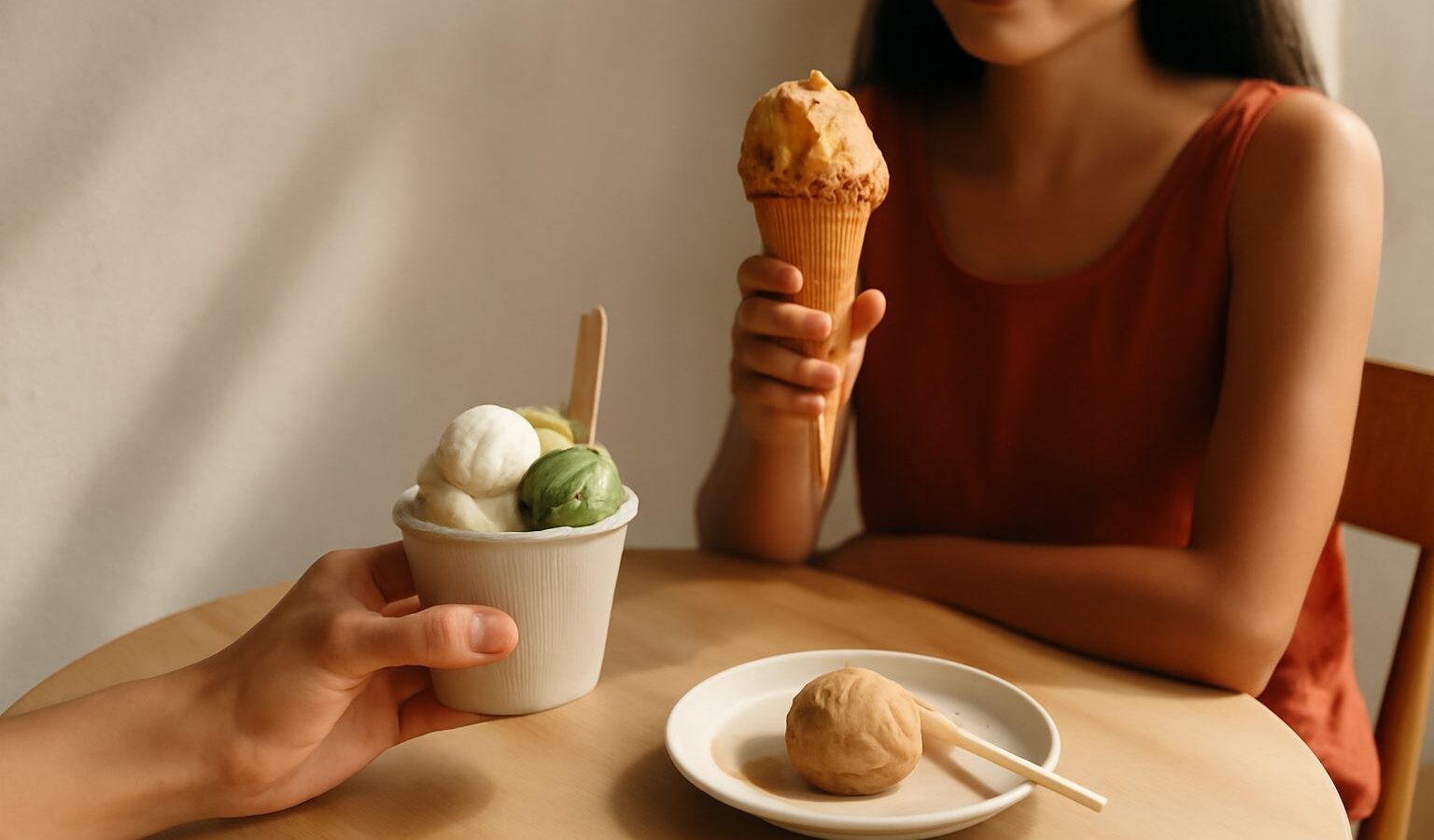
Gelato in Singapore has grown from a handful of Italian-style counters into a proper scene, with specialist gelaterias making small batches daily and experimenting with flavours you will only find here. But not every scoop labelled “gelato” is the real thing. This guide is about gelato specifically: what makes its texture different, the styles you will meet, how to judge a specialist shop, and which classic and local flavours are worth seeking out. If you want a general list of ice cream parlours, that is a different conversation. Here, we focus on the dense, silky, intensely flavoured scoop that Italians grew up with.
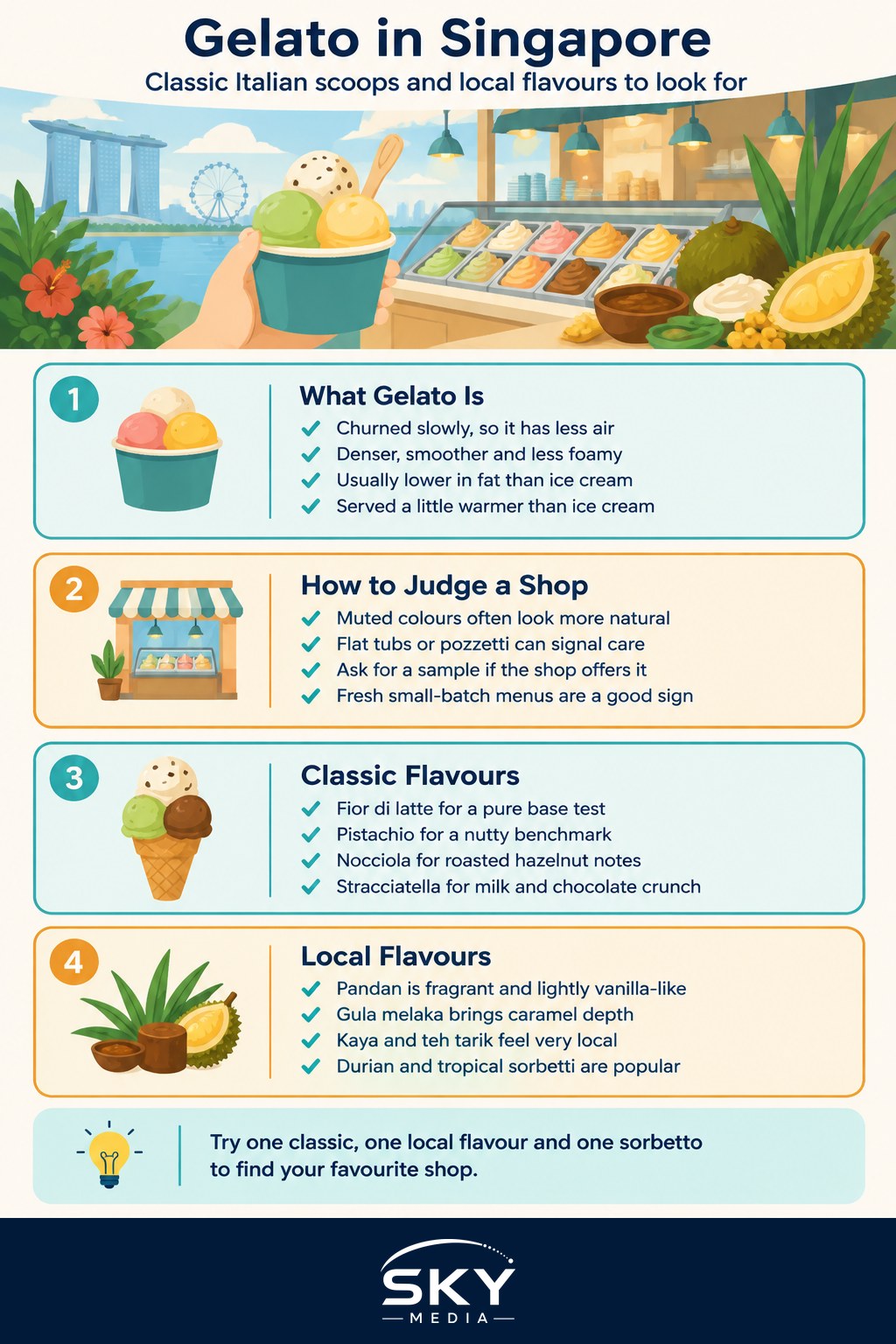
What Makes Gelato Different From Ice Cream
Gelato and ice cream share ingredients, but the way they are balanced and churned changes everything in the cup.
- Less air. Gelato is churned more slowly, so less air is whipped in. The result is denser and heavier in the spoon, with no fluffy, foamy feel.
- Less fat, more milk. Traditional gelato leans on milk more than cream, and many recipes use few or no egg yolks. Lower fat means flavours come through more clearly, because fat coats the tongue and dulls taste.
- Warmer serving temperature. Gelato is usually kept a few degrees warmer than hard ice cream. That makes it softer, glossier and quicker to release its flavour.
- Fresh, short shelf life. Good gelato is made in small batches and meant to be eaten within days. It is not designed to sit in a freezer for weeks.
In Singapore’s heat, that softness is a double-edged sword. Gelato melts faster than hard ice cream, so it is best eaten in air-conditioned comfort or quickly in a cup rather than a cone.
Gelato Styles You Will Meet in Singapore
Specialist shops tend to fall into a few broad styles. Knowing them helps you pick the right place for your mood.
| Style | Texture and taste | What to look for | Best for |
|---|---|---|---|
| Traditional Italian | Dense, smooth, milky, restrained sweetness | Classic flavours like fior di latte, pistachio, hazelnut | Purists and first-timers |
| Sorbetto (fruit) | Dairy-free, clean, bright, often vegan | Seasonal fruit listed by name, vivid natural colour | Hot afternoons, light eaters |
| Local-inspired | Creamy base carrying Southeast Asian flavours | Pandan, gula melaka, durian, teh tarik, kaya | Visitors and curious locals |
| Plant-based gelato | Nut, oat or coconut milk base | Clear labelling of base and allergens | Dairy-free and vegan diets |
| Experimental or dessert-style | Swirls, cookie bits, sauces folded in | Rotating menus and limited editions | Sweet tooth, sharing |
Many gelaterias here mix several styles in one counter, so you can pair a traditional pistachio with a local pandan in the same cup.
How to Spot Good Gelato at a Specialist Shop
You do not need to be an expert to tell a careful gelateria from a so-so one. A few visual and taste cues go a long way.
- Look at the colours. Real pistachio gelato is a muted, brownish green, not neon. Banana should be a pale cream, not bright yellow. Very bright colours often suggest added colouring rather than fresh ingredients.
- Check the height of the tubs. Gelato piled high into towering mounds usually has stabilisers and extra air to hold its shape. Gelato that sits flat, or is kept in covered metal pozzetti tubs, is often closer to the traditional method.
- Ask for a taste. Most specialist shops are happy to offer a small sample. Taste for clean flavour, a smooth texture with no icy crystals, and sweetness that supports the main ingredient rather than masking it.
- Read the flavour board. A short, rotating list made fresh is often a better sign than a huge permanent menu. Seasonal fruit sorbetti that change with what is available are a good signal.
- Notice the texture as it melts. Good gelato melts into a smooth cream. Gelato that turns foamy or separates may have been over-churned or stored too long.
If you are curious about the process behind these cues, our guide to making gelato and sorbet at home in Singapore explains how base, sugar and churning affect the final texture.
Classic Italian Flavours Worth Trying
If you are judging a new gelateria, start with the classics. They are simple, so there is nowhere for a weak recipe to hide.
- Fior di latte. Literally “flower of milk”, this is a plain milk and sugar gelato. It is the purest test of a shop’s base.
- Pistachio. The benchmark flavour for many fans. Look for a deep nutty taste, a slightly savoury edge, and that muted colour.
- Nocciola (hazelnut). Toasty and rich, it should taste of roasted nuts rather than artificial flavouring.
- Stracciatella. Milk gelato with thin shards of chocolate drizzled in while churning, giving a delicate crunch.
- Bacio or gianduja. Chocolate and hazelnut together, a natural pairing for anyone who likes nutty desserts.
- Limone. A sharp lemon sorbetto that works well as a palate cleanser in the heat.
Pair a classic gelato with an Italian dessert crawl, such as hunting down the best tiramisu in Singapore, for an afternoon built around Italian sweets.
Local Flavours That Shine as Gelato
Singapore’s flavour pantry suits gelato surprisingly well. The low-fat, milk-forward base lets aromatic ingredients come through clearly.
- Pandan. Grassy, fragrant and lightly vanilla-like, pandan is one of the most popular local gelato flavours.
- Gula melaka. Palm sugar gives a deep caramel and smoky sweetness. It is often paired with coconut for a chendol-like effect.
- Kaya. Coconut and egg jam flavours turn gelato into something close to a kaya toast breakfast.
- Teh tarik and kopi. Milky tea and local coffee flavours bring a familiar kopitiam taste to dessert.
- Durian. Divisive, as always. Fans love the custardy richness, while others keep their distance.
- Tropical fruit sorbetti. Mango, soursop, calamansi and similar fruits make refreshing dairy-free options.
These local notes connect well with home baking too. If pandan and gula melaka are your favourites, our guide to baking with pandan and gula melaka flavours shows how to use them in cakes and kueh.
Practical Tips for Your Gelato Run
A little planning makes your gelato outing more enjoyable, especially in the tropical climate.
- Choose a cup on hot days. Cones drip quickly outdoors. A cup lets you take your time and share flavours.
- Try two contrasting flavours. Pair a rich nut gelato with a sharp fruit sorbetto. The contrast keeps each spoonful interesting.
- Go earlier for the full menu. Popular flavours at small-batch shops can sell out by evening, especially on weekends and public holidays.
- Ask about allergens. Nuts are common in gelaterias and scoops can cross over. If you have an allergy, ask the staff how they handle scoops and storage.
- Check dietary labels. Some shops label vegan, dairy-free or halal-friendly options. If halal certification matters to you, look for the certificate on display or check with the shop, since certification applies to specific outlets.
- Takeaway with care. Ask for an insulated box or ice pack if you are travelling home, and put it in the freezer straight away. Gelato is best eaten fresh, so plan to finish it within a day or two.
Prices, menus and opening hours change often, so check a shop’s latest information on its own website or social media before you make a special trip.
Finding Your Own Favourite Gelateria
The best gelato in Singapore is partly a matter of taste. Some people want the most faithful Italian pistachio, others want a gula melaka scoop that tastes like home. A good approach is to treat each new gelateria as a quick tasting session: sample one classic, one local flavour and one sorbetto. Within a few visits you will know which shops get the texture right and which flavours you keep coming back for.
Explore more: Making Gelato and Sorbet at Home in Singapore, Best Tiramisu in Singapore.
Frequently Asked Questions
Is gelato healthier than ice cream? Not automatically. Traditional gelato usually has less fat because it leans on milk, but it can still be high in sugar and calories, and portions vary. A fruit sorbetto may be lighter. Enjoy it as a treat, and check ingredients if you watch your sugar.
Can I eat gelato if I am lactose intolerant? Milk-based gelato contains lactose, so it may not suit you. Fruit sorbetti are usually dairy-free, and some shops offer plant-based scoops. Ask staff how they label and store them, since scoops can cross over. A pharmacist or doctor can advise on lactose.
Can I refreeze gelato that has melted? It is better not to. Refrozen gelato often turns icy and grainy because its structure has broken down, and there are food safety concerns if it stayed warm for long. Eat it fresh or keep it cold with an insulated box and ice pack.
Why does some gelato taste icy? Icy texture can come from poor balance of sugar and fat, a long time in storage or temperature swings that melt and refreeze it. Good gelato should feel smooth. If a scoop is gritty, try a different shop or ask when the batch was made.
Is small-batch gelato worth paying more for? Often yes if you value flavour, since small batches use fresher ingredients and get eaten within days. Taste a sample before committing, and compare how clean the flavour is and how smooth the texture feels. Prices vary, so check each shop’s current menu.